
















DJI Dock 3: Autonomous Drone-in-a-Box with Matrice 4D and 4TD for 24/7 Remote Inspection and Response
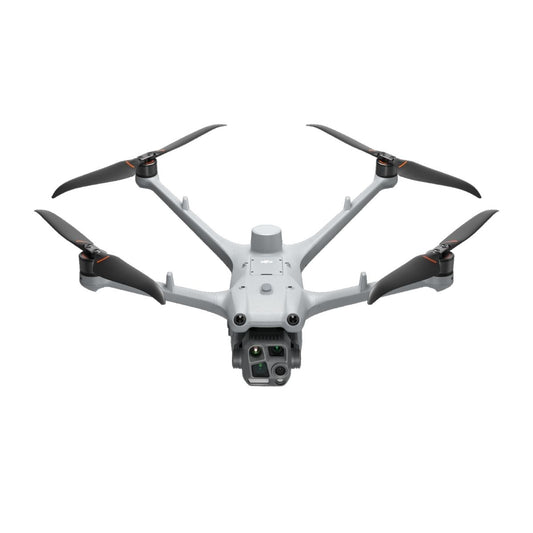
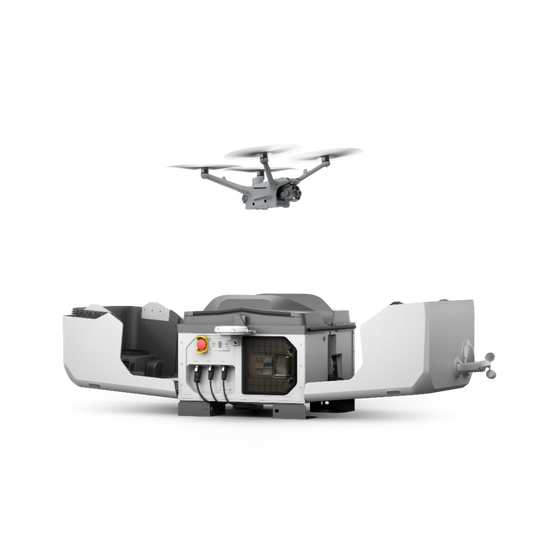
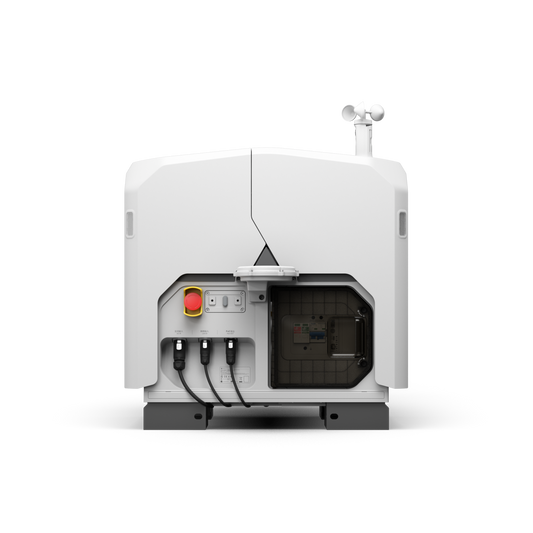
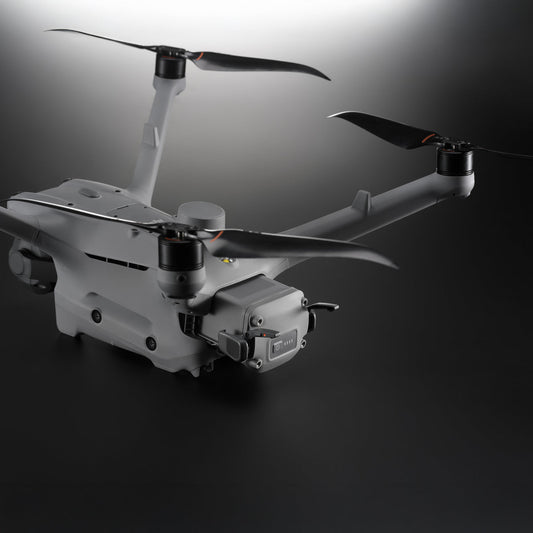
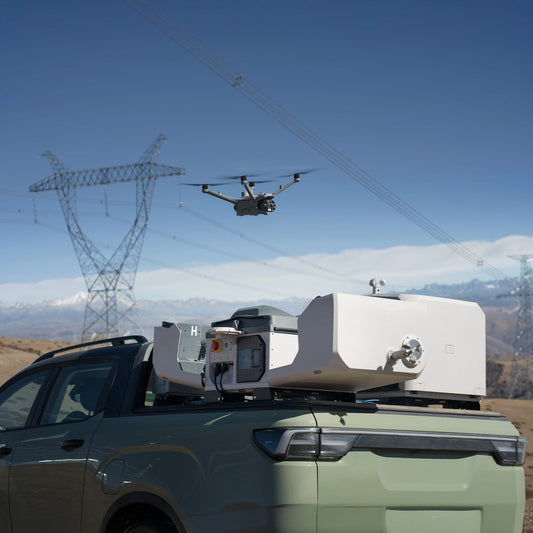
The DJI Dock 3 is an IP56-rated autonomous drone docking station that pairs with the Matrice 4D or Matrice 4TD aircraft to form a complete drone-in-a-box system for 24/7 unattended aerial operations. Launched in February 2025, it is the first DJI dock to support vehicle-mounted deployment—the station can be mounted to a vehicle, repositioned to an active incident, and recalibrated through DJI FlightHub 2 without on-site pilot involvement.
The dock handles autonomous launch, landing, and battery charging, bringing a depleted aircraft to 95% charge in 27 minutes and returning it to operational status for back-to-back sortie cycles without any manual intervention between flights.
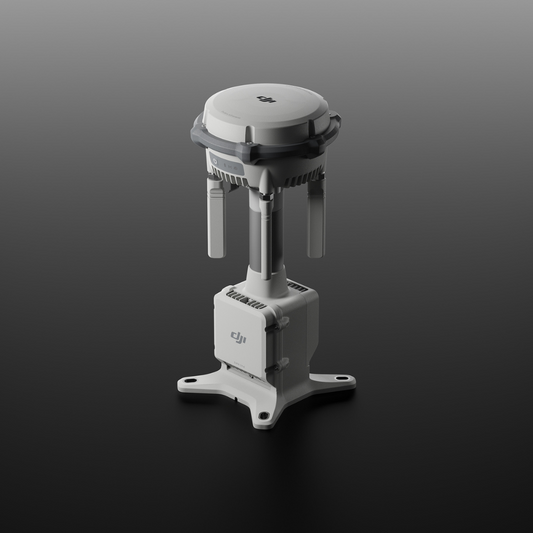
At DSLRPros, the Dock 3 is available as a standalone unit, as a complete bundle with the Matrice 4TD, and alongside the full accessory and charging ecosystem—Obstacle Sensing Module, AL1 Spotlight, AS1 Speaker, Vehicle-Mounted Gimbal Mount, D-RTK 3 Relay, batteries, charging hub, 240W power adapter, and the AVSS Drone Parachute Recovery System.
DSLRPros also offers Dock-in-a-Box Deployment Services for organizations that need end-to-end setup, site survey, and commissioning support. Contact DSLRPros for configuration guidance or to request a quote on a complete Dock 3 deployment.
Matrice 4D and Matrice 4TD: How the Two Aircraft Differ
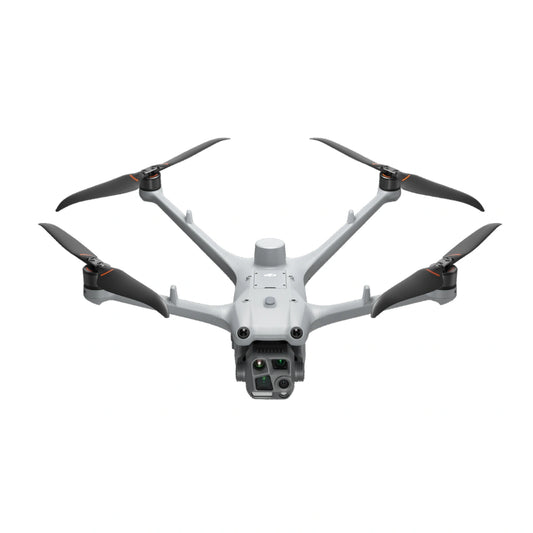
Both Matrice 4D Series aircraft share the same airframe, battery, propulsion system, and O4+ Enterprise transmission architecture. The difference is in the integrated camera system: the Matrice 4D is configured for optical inspection and precision mapping with a 4/3-inch 20 MP mechanical shutter wide camera and DNG (RAW) output; the Matrice 4TD adds a 640 x 512 radiometric thermal camera, NIR auxiliary light, and a faster f/1.7 wide camera aperture for low-light and thermal response operations.
| Specification | Mapping / Optical Inspection Matrice 4D | Thermal / Public Safety Matrice 4TD |
|---|---|---|
| Weight (with battery and props) | 1,850 g (4.1 lbs) | 1,850 g (4.1 lbs) |
| Max flight time | 54 min (12 m/s forward, sea level) | 54 min (12 m/s forward, sea level) |
| Max hovering time | 47 min | 47 min |
| Max operating radius | 10 km from dock | 10 km from dock |
| Wide camera sensor | 4/3-inch CMOS, 20 MP | 1/1.3-inch CMOS, 48 MP |
| Wide camera aperture | f/2.8–f/11 | f/1.7 |
| Wide camera shutter | Mechanical (2–1/2000 s) + Electronic (2–1/8000 s) | Electronic (2–1/8000 s) only |
| Wide photo format | JPEG / DNG (RAW) | JPEG only |
| Min photo interval | 0.5 s | 0.7 s |
| Medium tele camera | 1/1.3-inch CMOS, 48 MP, f/2.8, 70 mm EFL | 1/1.3-inch CMOS, 48 MP, f/2.8, 70 mm EFL |
| Tele camera | 1/1.5-inch CMOS, 48 MP, f/2.8, 168 mm EFL, 112x hybrid zoom | 1/1.5-inch CMOS, 48 MP, f/2.8, 168 mm EFL, 112x hybrid zoom |
| Thermal camera | Not available | 640×512 VOx, 12 µm, 30 Hz, f/1.0, 45° DFOV, 53 mm EFL |
| Thermal temp range | Not available | -40°C to 150°C (high gain); 0°C to 500°C (low gain) |
| Thermal super-res (UHR) | Not available | 1,280×1,024 @ 30fps |
| NIR auxiliary light | Not available | Yes — 5.7° FOV, effective to 100 m |
| Laser range finder | 1,800 m range, 1 m blind zone | 1,800 m range, 1 m blind zone |
| Integrated RTK | Yes | Yes |
| Gimbal tilt (mechanical) | -140° to +50° | -140° to +113° |
| Night scene ISO (tele) | ISO 100 to 409600 | ISO 100 to 819200 |
| Lens defogging | All three cameras supported | All three cameras supported |
| Ingress protection | IP55 | IP55 |
| Primary mission | Photogrammetry, mapping, optical inspection | Thermal inspection, SAR, public safety, firefighting |
Scroll horizontally to view all specifications.
DJI Dock 3 Specifications and Autonomous Operation Architecture
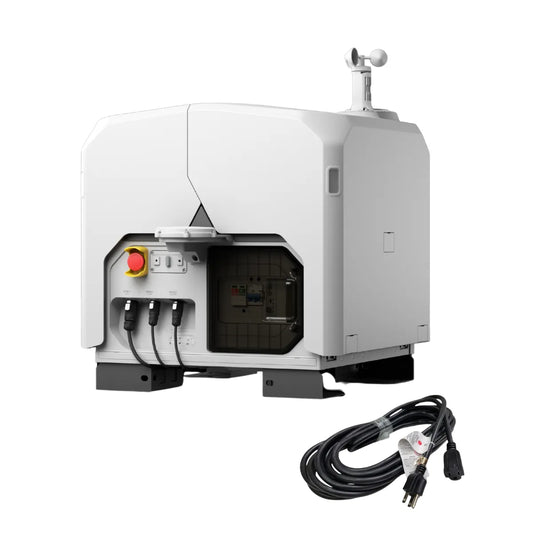
The dock weighs 55 kg without aircraft, operates between -30°C and 50°C (-22°F to 122°F), and carries an IP56 ingress protection rating. It draws 100–240V AC at up to 800W input power and charges the aircraft battery from 15% to 95% in 27 minutes at 25°C. An internal compressor-based air conditioning system maintains safe cabin temperatures across the full operating range, and an integrated 12 Ah lead-acid backup battery sustains dock operations for more than 4 hours following a power outage.
The dock's built-in RTK base station provides 1 cm + 1 ppm horizontal and 2 cm + 1 ppm vertical positioning accuracy directly from the station without requiring an external reference. Internal and external security cameras — each at 1920 x 1080 with 151° FOV and auxiliary white light — provide continuous site monitoring when the aircraft is docked.
The full Dock 3 specification table is below.
| Specification | DJI Dock 3 Value |
|---|---|
| Weight (without aircraft) | 55 kg |
| Dimensions (cover closed) | 640 x 745 x 770 mm (L x W x H) |
| Dimensions (cover open) | 1,760 x 745 x 485 mm (L x W x H) |
| Input voltage | 100–240V AC, 50/60 Hz |
| Max input power | 800W |
| Charging time (15% to 95%) | 27 minutes at 25°C |
| Charging output voltage | 35V DC |
| Ingress protection | IP56 |
| Operating temperature | -30°C to 50°C (-22°F to 122°F) |
| Max operating altitude | 4,500 m (14,764 ft) |
| Max landing wind speed | 12 m/s (23 knots) |
| Air conditioning | Compressor-based; 48V DC operating voltage |
| Backup battery | 12 Ah lead-acid; 12V output; over 4 hours runtime |
| RTK base station | Integrated; 1 cm + 1 ppm H / 2 cm + 1 ppm V |
| Transmission system | O4+ Enterprise; 9 antennas, 2T4R, intelligent switching |
| Max transmission range | 25 km (FCC); 12 km (CE/SRRC/MIC) |
| Network access | 10/100/1000 Mbps Ethernet; 4G via DJI Cellular Dongle 2 |
| Security cameras | Internal + external; 1920×1080, 151° FOV, auxiliary white light |
| Environmental sensors | Wind speed, rainfall, ambient temp, water immersion, in-cabin temp and humidity |
| Lightning protection (AC) | 20 kA; meets EN 61643-11 Type 2 / IEC 61643-1 Class II |
| Lightning protection (Ethernet) | 10 kA; meets EN/IEC 61643-21 Category C |
| Vehicle mounting | Supported via Vehicle-Mounted Gimbal Mount (sold separately) |
| Edge computing | Supported via external switch data communication |
| Supported software | FlightHub 2, FlightHub 2 On-Premises, FlightHub Sync, DJI Cloud API |
| Drones accommodated | 1 per dock; supports one drone with multiple docks (multi-dock task) |
RTK base station positioning accuracy measured in controlled conditions; actual results may vary.
Matrice 4D Series Integrated Camera Systems, Field-Attachable Accessories, and Ground Hardware
Matrice 4D integrated camera system:
- Wide camera: 4/3-inch CMOS, 20 MP, f/2.8–f/11, 84° FOV, 24 mm equivalent focal length; mechanical shutter 2–1/2000 s eliminates rolling shutter distortion in forward-flight mapping; DNG (RAW) output; 0.5 s minimum interval; ISO 100 to 204800 Night Scene Mode
- Medium tele camera: 1/1.3-inch CMOS, 48 MP, f/2.8, 35° FOV, 70 mm equivalent focal length; ISO 100 to 409600 Night Scene Mode
- Tele camera: 1/1.5-inch CMOS, 48 MP, f/2.8, 15° FOV, 168 mm equivalent focal length; 112x hybrid zoom (16x digital); ISO 100 to 409600 Night Scene Mode
- Laser range finder: 1,800 m normal incidence range at 20% reflectivity target; accuracy ±(0.2 + 0.0015D) m; real-time GPS coordinate and altitude output per measurement
- Lens defogging: supported on wide, medium tele, and tele cameras — prevents condensation-related image degradation when aircraft launches from a temperature-controlled dock cabin into cooler outside air
Matrice 4TD integrated camera system:
- Wide camera: 1/1.3-inch CMOS, 48 MP, f/1.7 aperture, 82° FOV, 24 mm equivalent focal length; enhanced low-light performance; electronic shutter 2–1/8000 s; ISO 100 to 409600 Night Scene Mode
- Medium tele camera: 1/1.3-inch CMOS, 48 MP, f/2.8, 35° FOV, 70 mm equivalent focal length (same as 4D)
- Tele camera: 1/1.5-inch CMOS, 48 MP, f/2.8, 15° FOV, 168 mm equivalent focal length; 112x hybrid zoom; ISO 100 to 819200 Night Scene Mode
- Thermal camera: 640 x 512 uncooled VOx microbolometer, 12 µm pixel pitch, f/1.0, 45° DFOV, 53 mm equivalent focal length; UHR mode outputs 1,280 x 1,024 at 30fps; temperature range -40°C to 150°C (high gain) and 0°C to 500°C (low gain); accuracy ±2°C or ±2% (high gain); 28x digital zoom
- NIR auxiliary light: 5.7° FOV infrared illumination effective to 100 m for near-total-darkness operations
- Laser range finder: 1,800 m range with real-time GPS coordinate output; same specifications as 4D
- Lens defogging: supported on all three cameras
Field-attachable accessories (both aircraft):
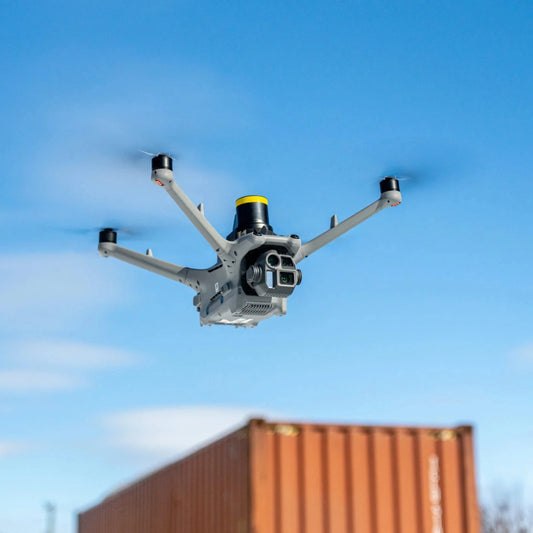
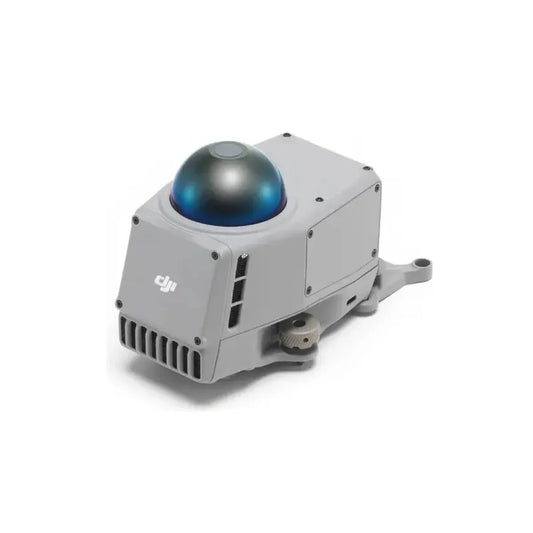
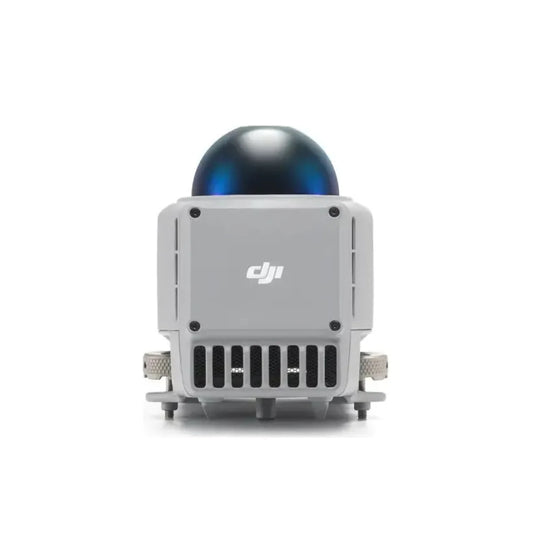
- DJI Matrice 4 Obstacle Sensing Module: rotating LiDAR combined with five-direction millimeter-wave radar; detects 12 mm steel-core aluminum stranded wire at flight speeds up to 15 m/s; 100 m maximum detection range; IP55; weight 235 g
- DJI AL1 Spotlight: 32W; 4.3 lux at 100 m; 1,300 m² effective illumination at 100 m (Normal mode); 23° effective illumination angle; always-on and strobe modes; gimbal-linked tilt -90° to +35°; IP55; 99 g with bracket
- DJI AS1 Speaker: 15W; 114 dB at 1 m; 300 m effective broadcast range; real-time voice, record and broadcast, file input, text-to-speech (English and Mandarin Chinese); IP55; 92.5 g with bracket
- DJI Dock 3 Vehicle-Mounted Gimbal Mount: enables mobile vehicle deployment; IP55; operating temperature -30°C to 50°C; 14V power supply; 440 g right bracket and gimbal support
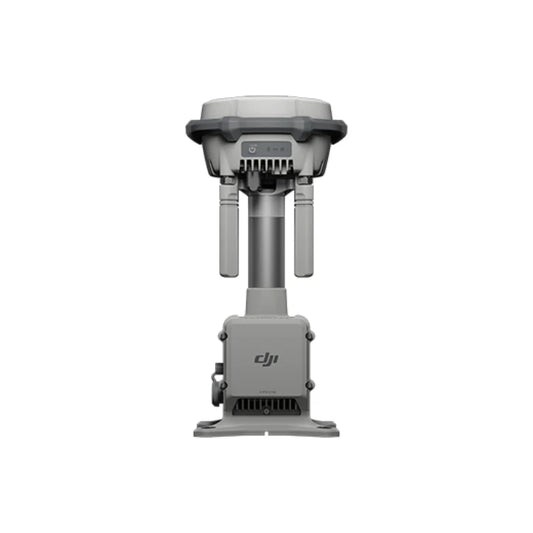
- DJI D-RTK 3 Relay (Fixed Deployment Version): extends effective transmission to 25 km in obstructed environments near high-rise buildings, communication towers, or complex terrain
- AVSS Drone Parachute Recovery System: certified parachute recovery system compatible with DJI Dock 3 and Matrice 4D/4TD for operations requiring parachute recovery compliance
Ground support and control hardware:
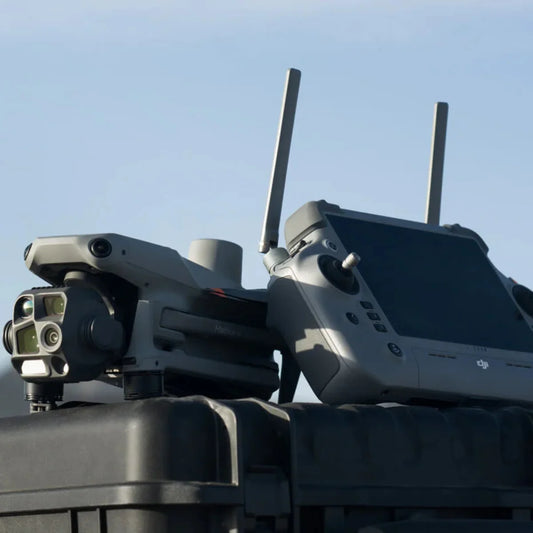
- DJI RC Plus 2 Enterprise: 7.02-inch 1,400-nit display, 3.8-hour internal battery, Android 11, HDMI 1.4 output, 128 GB ROM, 25 km FCC transmission range; enables standalone aircraft operation independent of Dock 3
- DJI Matrice 4D Series Battery: 149.9 Wh, 6,768 mAh, 22.14V Li-ion 6S, 640 g, 400-cycle rated; low-temperature self-heating charging supported
- DJI 240W Charging Hub for Matrice 4D Series: charges up to 3 batteries sequentially; Standard Mode (100% SOC) and Ready-to-Fly Mode (90% SOC)
- DJI 240W Power Adapter: compatible with Matrice 4 and 4D Series batteries
What the DJI Dock 3 System Delivers for Autonomous Operations Programs
- Vehicle-mounted deployment: first DJI dock to support mobile vehicle mounting — relocate aerial capability with the response team using the Vehicle-Mounted Gimbal Mount and recalibrate position via FlightHub 2
- Dual-dock vehicle configuration: two Dock 3 units deployable on a single vehicle simultaneously with automated take-over patterns that prevent mid-air conflicts during handoff between sorties
- 27-minute fast charging: aircraft returns to 95% charge from 15% in 27 minutes at 25°C, enabling high-sortie-rate operations without manual battery handling
- 54-minute max flight time: Matrice 4D/4TD delivers 54 minutes forward flight and 47 minutes hovering — a 37% improvement over the Matrice 30 Series at comparable speeds
- 10 km operating radius: maximum round-trip mission radius from the dock at 15% safe battery reserve, 15 m/s round-trip speed, and 18 minutes of hover time per sortie
- Integrated dock RTK: centimeter-level positioning built into the dock station without requiring a separate external RTK reference station on site
- IP56 dock / IP55 aircraft: combined system weather rating for continuous operation in rain, dust, and temperature extremes from -30°C to 50°C at the dock
- Lens defogging: all cameras on both aircraft support lens defogging — prevents condensation build-up when the aircraft transitions from a heated dock cabin to outdoor air temperatures
- Environmental sensor suite: wind speed, rainfall, ambient temperature, water immersion, in-cabin temperature and humidity — all reported to FlightHub 2 for automated go/no-go decision support
- Obstacle Sensing Module: rotating LiDAR and millimeter-wave radar combination resolves 12 mm wire-level obstacles at operational flight speeds for power line inspection corridors
- 4-hour backup power: integrated lead-acid battery sustains dock operation during power outages without aircraft charging, air conditioning, or heating functions active
- Lightning protection: 20 kA on AC port and 10 kA on Ethernet port meeting IEC 61643 standards for permanent fixed installations
- O4+ Enterprise transmission: 25 km FCC range via 9-antenna 2T4R system with intelligent switching; 4G supplement via DJI Cellular Dongle 2
- 20 MB/s data download: imagery transfers from aircraft through dock directly via FlightHub 2 without manual media handling
Where the DJI Dock 3 System Gets Deployed
- Power line and substation inspection: Obstacle Sensing Module resolves 12 mm wire-level obstacles at speed; Matrice 4TD thermal camera identifies energized equipment hotspots on autonomous grid sorties
- Vehicle-based public safety and first response: dual-dock vehicle configuration rotates continuous aerial coverage at active incidents with automated drone handoff between sorties
- 24/7 fixed-site security and monitoring: dock operates unattended at substations, industrial facilities, and rooftops with scheduled autonomous sorties managed through FlightHub 2
- Solar farm inspection: Matrice 4TD thermal camera maps temperature anomalies across large arrays during autonomous grid-pattern sorties from a fixed or mobile dock
- Search and rescue: 4TD thermal sensor and NIR auxiliary light maintain detection capability in low-visibility conditions; laser range finder provides GPS coordinates for ground team navigation
- Bridge and infrastructure inspection: tele and medium tele cameras document structural surfaces at standoff distance; laser range finder supports dimensional data per measurement point
- Photogrammetry and construction monitoring: Matrice 4D 4/3-inch mechanical shutter camera with DNG output and 0.5 s minimum interval supports mapping and 3D site documentation at survey grade
- Emergency management: vehicle-mounted configuration repositions aerial assets with ground response teams; spotlight and speaker accessories extend scene management capability from the air
FlightHub 2, DJI Cloud API, and Dock 3 Workflow Integration
FlightHub 2 is the primary software layer for all Dock 3 autonomous operations — mission planning, sortie scheduling, live feed monitoring, data management, and fleet coordination are all handled through a cloud-based interface accessible to teams anywhere without on-site presence.
The on-premises version of FlightHub 2 keeps all mission data, flight logs, and imagery within a private server environment for organizations with data sovereignty or security compliance requirements; FlightHub Sync bridges the on-premises and cloud environments when intermittent connectivity makes full cloud operation impractical. FlightHub 2 also integrates with external alarm systems through the DJI API, enabling automated aerial response to perimeter triggers and security events without dispatcher intervention.
The DJI Cloud API gives enterprise IT and software teams programmatic access to dock control, mission management, aircraft telemetry, and data retrieval — allowing the Dock 3 system to integrate directly into existing command, dispatch, SCADA, or asset management platforms without requiring operators to switch between systems. Edge computing support via external switch communication enables local data processing at the dock site before transmission, reducing bandwidth requirements for high-frequency autonomous inspection programs.
Aircraft imagery downloads through the dock at up to 20 MB/s, eliminating the need for manual microSD card handling between sorties. The RC Plus 2 Enterprise controller enables standalone aircraft operation independent of the dock when manual pilot control is needed during setup, commissioning, or non-autonomous sorties.
Choosing the Right Dock 3 Configuration
- Aircraft selection: choose the Matrice 4D for optical inspection, photogrammetry, and mapping missions where the mechanical shutter wide camera, DNG output, and 0.5 s interval are required; choose the Matrice 4TD for thermal response, nighttime operations, public safety, and any mission where infrared detection and NIR illumination are operational requirements
- Obstacle Sensing Module: required for power line inspection corridors and any autonomous route where wire-level obstacle clearance at operational speed is a safety requirement; adds rotating LiDAR and five-direction millimeter-wave radar coverage
- Vehicle mounting: add the Vehicle-Mounted Gimbal Mount when operations require the dock to relocate with ground response teams rather than operate from a fixed installation; enables dual-dock vehicle configuration for continuous aerial rotation
- D-RTK 3 Relay: add when the dock installation site is near high-rise buildings, communication towers, or terrain that degrades RTK signal or O4+ transmission quality; extends effective range to 25 km in obstructed environments
- FlightHub 2 On-Premises: required when data governance, security clearance, or network policy prohibits cloud storage of flight logs, mission data, or captured imagery; FlightHub Sync handles connectivity bridging
- AVSS Parachute System: required for operations in airspace or jurisdictions where parachute recovery systems are mandated for beyond visual line of sight or urban autonomous operations
- Battery and charging configuration: the 400-cycle IB388 battery and 240W charging hub support high-sortie-rate programs; size the battery count based on expected daily sortie frequency and the 27-minute charge cycle per battery
DSLRPros Care Extended Warranty for the DJI Matrice 4TD
The DJI Matrice 4TD Aircraft is eligible for the DSLRPros Care Extended Warranty — exclusive coverage available only to buyers who purchase directly from DSLRPros. Coverage runs for 13 months from the date of shipment and includes accidental damage from pilot error, collisions, drops, water exposure, signal interference, and internal malfunctions. Up to one replacement unit is provided during the coverage term, new or refurbished at DSLRPros's discretion.
The policy must be purchased before the product ships and applies to the original purchaser only. To file a claim, contact support@dslrpros.com within 7 days of an incident. Full terms, conditions, and the complete list of eligible products are available on the DSLRPros Care Extended Warranty page.
Shop the DJI Dock 3 System at DSLRPros
The DJI Dock 3 system replaces on-site pilot presence with a permanent aerial infrastructure layer—a dock that monitors its environment, charges autonomously, and deploys on schedule or on demand, day and night, across fixed and mobile configurations. For programs moving from manned sortie operations to persistent autonomous coverage, it provides the hardware, software, and sensor ecosystem to make that transition without operational gaps.
DSLRPros is an authorized DJI Enterprise Gold Partner dealer for the Dock 3 system, stocking both aircraft variants, all accessories, and the complete charging and ground hardware lineup.
Our team also offers Dock-in-a-Box Deployment Services for organizations that need end-to-end site survey, setup, and commissioning support. Shop the full DJI Dock 3 collection at DSLRPros and contact us to configure your autonomous operations program.
FAQs
Does the DJI Dock 3 require a pilot on site to operate?
No. The Dock 3 is designed for fully autonomous unattended operation. Once commissioned and connected to DJI FlightHub 2, the dock launches, lands, and charges the aircraft without any on-site personnel. Mission planning, live video monitoring, and data management all occur remotely through FlightHub 2. A pilot must be available for system commissioning and for manual RC Plus 2 Enterprise operations, but routine autonomous sorties do not require anyone on location.
What happens to the DJI Dock 3 during a power outage?
The dock includes an integrated 12 Ah lead-acid backup battery that sustains dock operations for more than 4 hours following an AC power outage at 25°C. During backup power operation, aircraft charging, air conditioning, dock cover heating, and wind speed gauge heating are suspended — the dock and connected systems remain active for monitoring and communication, but the aircraft cannot complete charge cycles until AC power is restored.
What is the difference between the Matrice 4D and Matrice 4TD for Dock 3 operations?
The Matrice 4D is configured for optical inspection and precision mapping, with a 4/3-inch 20 MP mechanical shutter wide camera, DNG (RAW) output, and a 0.5 s minimum capture interval. It is the correct aircraft for photogrammetric deliverables, construction progress monitoring, and survey-grade mapping workflows. The Matrice 4TD is configured for thermal response, nighttime operations, and public safety — its wide camera uses a 1/1.3-inch sensor at f/1.7 for better low-light performance, and it adds a 640 x 512 radiometric thermal camera with UHR 1,280 x 1,024 resolution, a NIR auxiliary light effective to 100 m, and an extended ISO 819200 telephoto for total-darkness operations. Both aircraft share the same airframe, battery, transmission system, and accessory ecosystem.
What does the Obstacle Sensing Module add to the Dock 3 system?
The Obstacle Sensing Module adds a rotating LiDAR sensor combined with five-direction millimeter-wave radar that can detect a 12 mm steel-core aluminum stranded wire — the diameter of standard power distribution conductor — at flight speeds up to 15 m/s. The aircraft's standard binocular vision sensing cannot reliably detect wire-diameter obstacles at operational speeds. The module is required for autonomous inspection routes that pass through power line corridors, substation environments, or any airspace where thin-cable avoidance at speed is a safety or operational requirement. It is IP55-rated and weighs 235 g.
How does vehicle-mounted deployment work with the DJI Dock 3?
The DJI Dock 3 Vehicle-Mounted Gimbal Mount attaches the dock to a vehicle — truck bed, utility vehicle, or similar platform — using an IP55-rated bracket system with a 14V power supply connection. When the vehicle repositions to a new location, the dock recalibrates its GPS position and RTK reference data through DJI FlightHub 2 via cloud-based location calibration, allowing autonomous sorties to resume from the new position without manual reconfiguration. A dual-dock vehicle configuration supports two Dock 3 units on a single vehicle simultaneously, with automated take-over patterns that prevent mid-air conflicts when one aircraft lands and the other launches.
What is the Matrice 4D Series battery and how does it differ from the Matrice 4 Series battery?
The Matrice 4D Series uses a dedicated 149.9 Wh, 6,768 mAh Li-ion 6S battery rated at 400 cycles, weighing 640 g. This is a different battery from the Matrice 4 Series (99.5 Wh, 6,741 mAh, Li-ion 4S, 401 g, 200 cycles) — the two are not interchangeable. The Matrice 4D Series battery supports low-temperature self-heating charging, enabling operation in cold environments, and is rated to 400 cycles versus 200 for the standard Matrice 4 Series battery. The 240W Charging Hub charges up to three Matrice 4D Series batteries sequentially in Standard Mode (100% SOC) or Ready-to-Fly Mode (90% SOC).
Does the DJI Dock 3 support FlightHub 2 on-premises for data-sensitive operations?
Yes. The Dock 3 system is fully compatible with the on-premises version of FlightHub 2, which stores all flight logs, mission data, and captured imagery on a private server rather than DJI's cloud infrastructure. This version is designed for organizations with data sovereignty requirements, security clearance mandates, or network policies that prohibit external cloud storage of operational data. FlightHub Sync bridges the on-premises environment with cloud connectivity when intermittent network access is available. The DJI Cloud API also supports custom integration with third-party command, dispatch, and asset management platforms for organizations building proprietary operational workflows.


