
About the Collection
DJI Zenmuse L3: Long-Range, Survey-Grade LiDAR Mapping for the Matrice 400
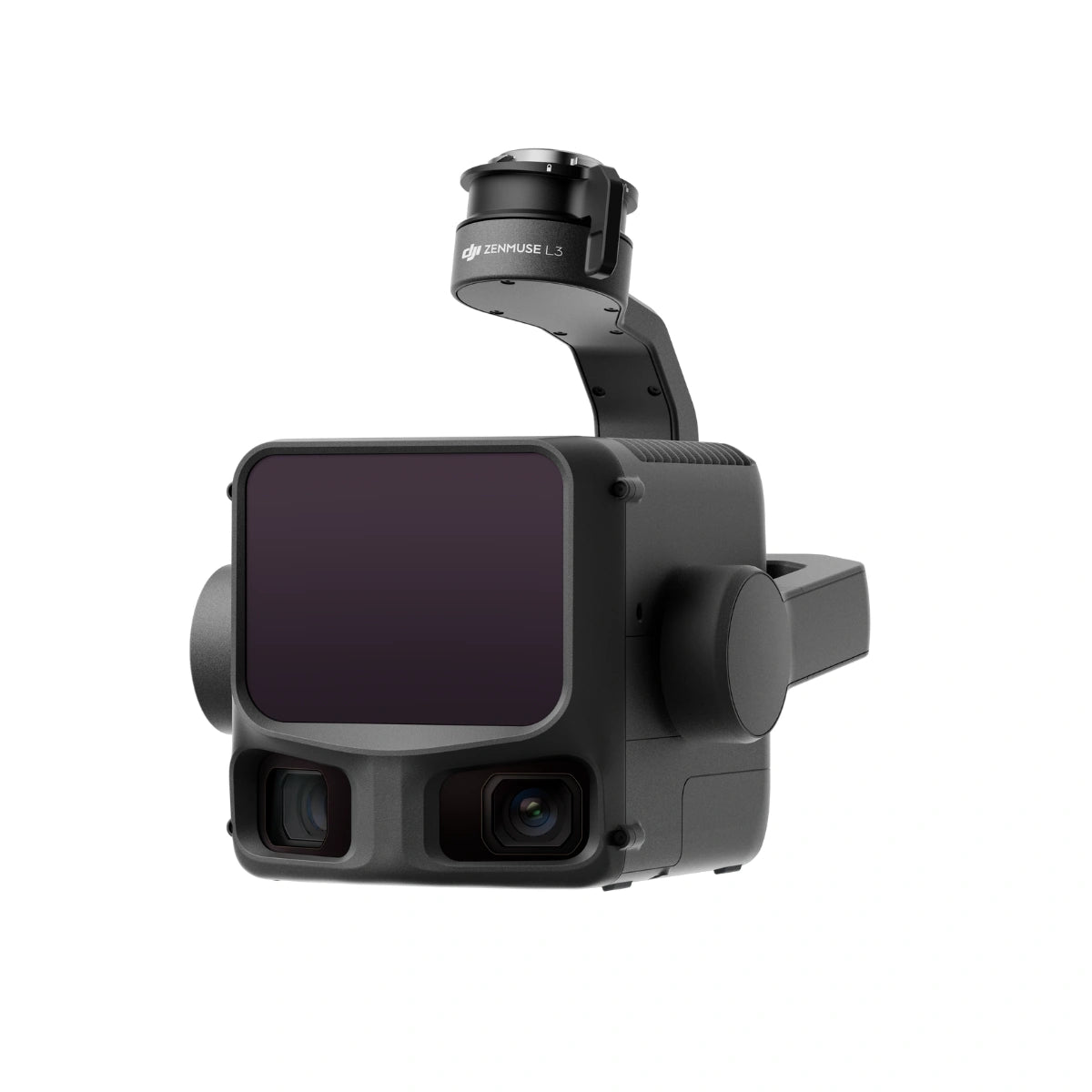
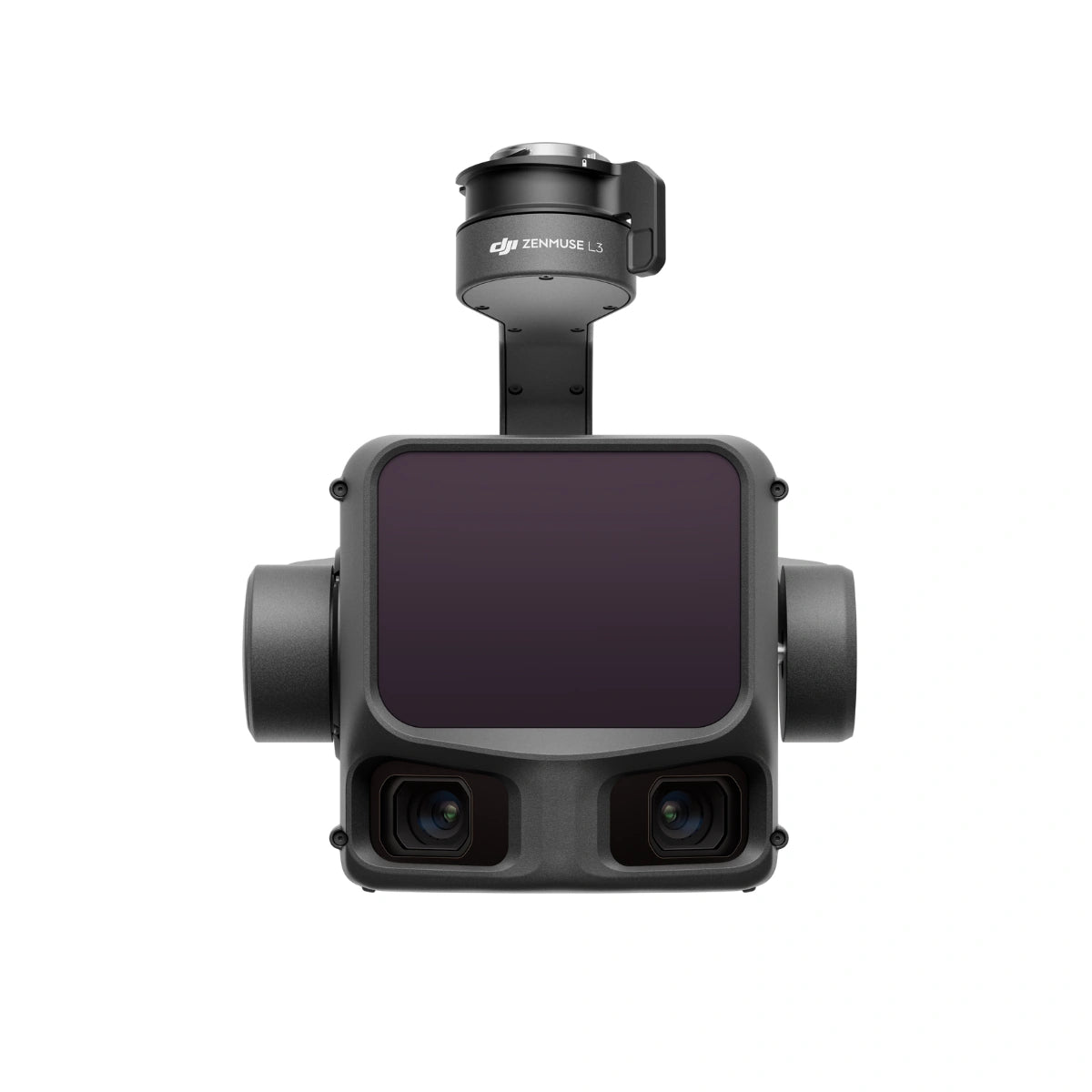
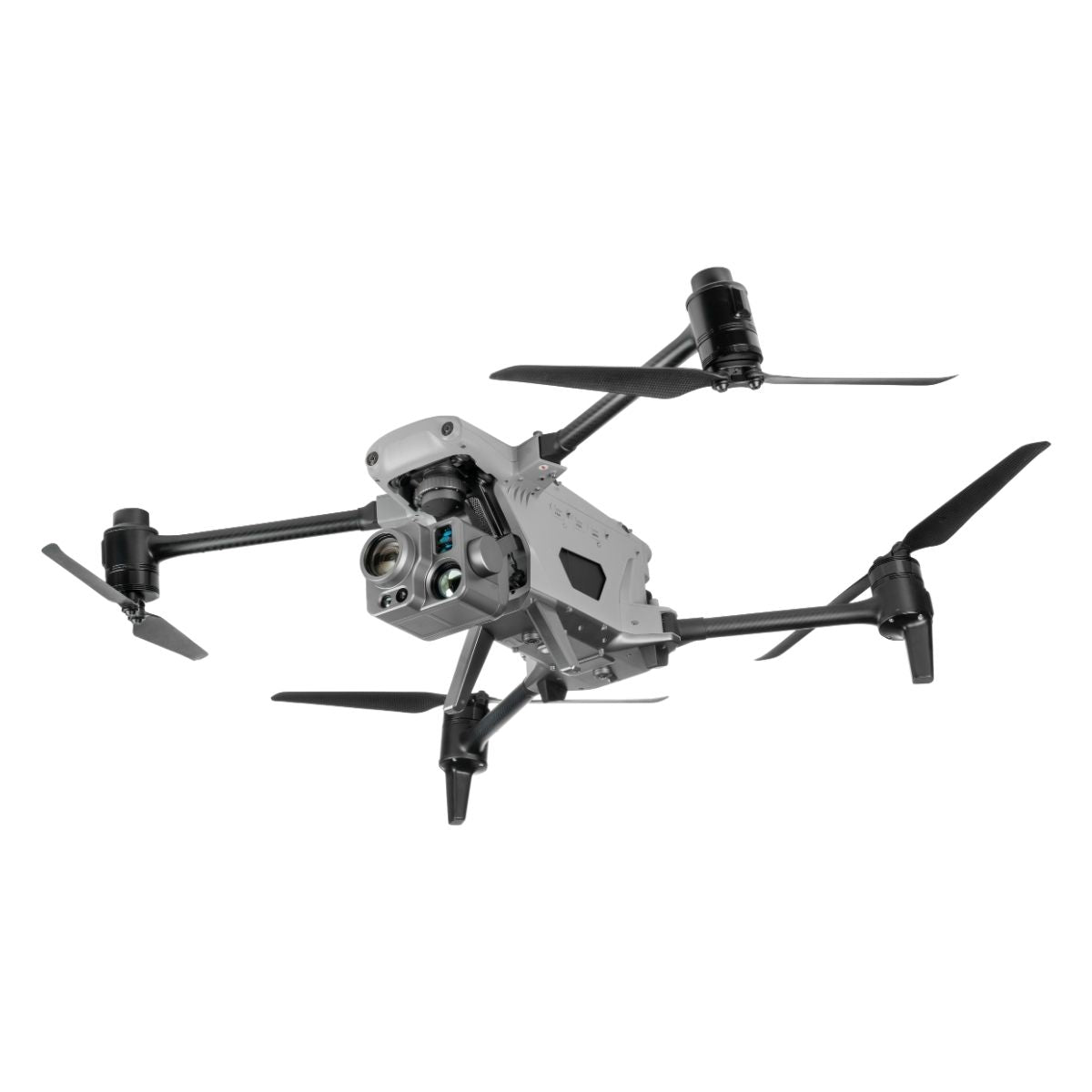
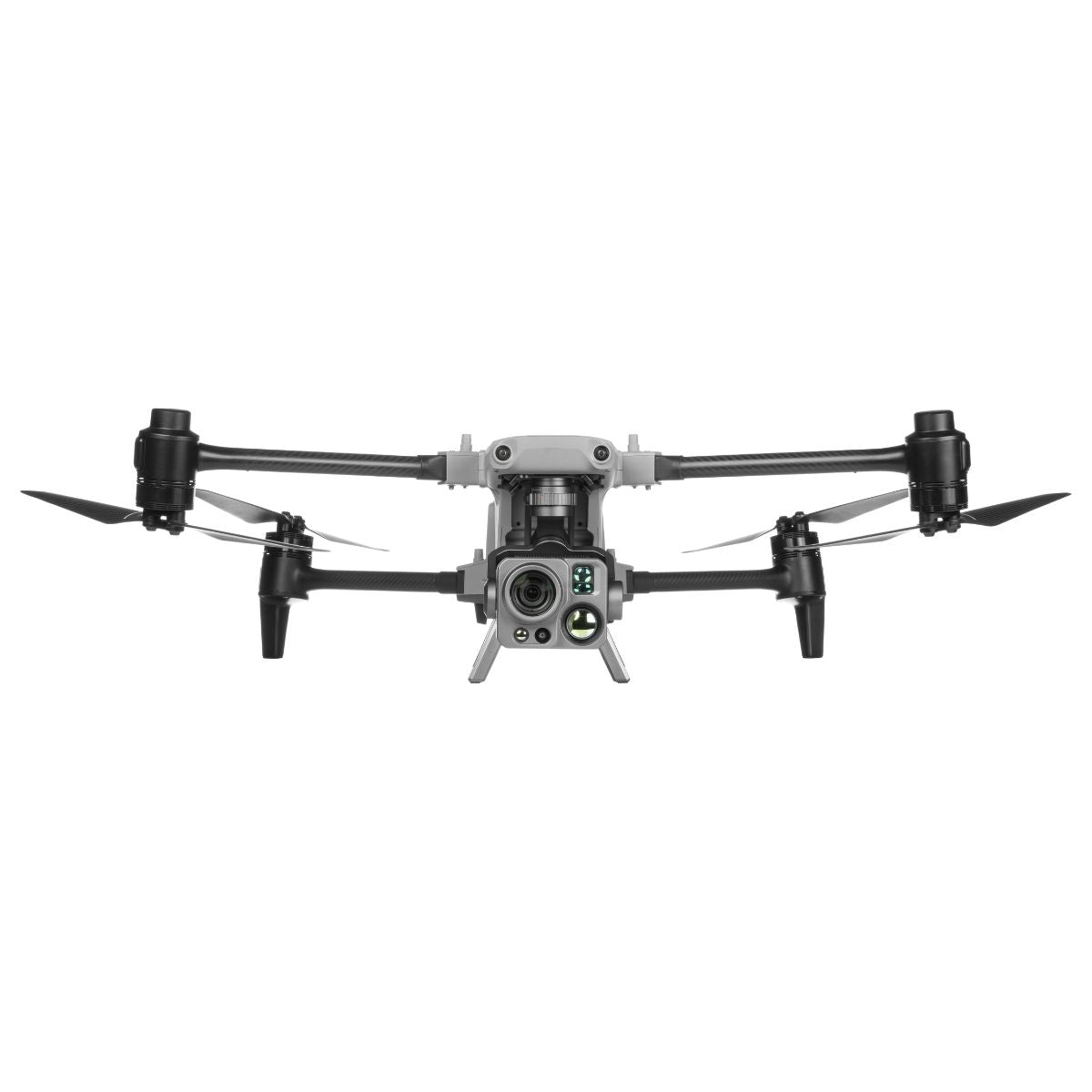
The DJI Zenmuse L3 is a long-range LiDAR payload that pairs a 1535 nm laser with dual 100 MP RGB mapping cameras and a high-accuracy positioning system in one stabilized gimbal. Built for the DJI Matrice 400, it captures dense, colorized point clouds from higher altitudes than short-range LiDAR, so survey teams can cover more ground per flight while holding centimeter-level accuracy.
Detection range reaches up to 950 m at 10% reflectivity, and up to 16 returns per pulse help the laser reach the ground beneath vegetation. Point cloud accuracy is rated at 3 cm vertical and 4 cm horizontal at 120 m, giving surveyors, engineers, utilities, and forestry teams data they can deliver with confidence.
How the Zenmuse L3 Turns Laser Returns Into Accurate 3D Data
The L3 fires laser pulses toward the ground and measures the time each return takes to come back, recording millions of distance measurements as the Matrice 400 flies its route. A high-accuracy POS system tracks the payload's exact position and orientation throughout the flight, so every laser return lands in the right place in the final point cloud. Operators choose a pulse frequency to match altitude, from 100 kHz for high, long-range flights to 2,000 kHz for dense, low-altitude capture, and a scanning mode to match the terrain. At the same time, the dual RGB mapping cameras capture overlapping 100 MP photos that color the point cloud and support 2D and 3D reconstruction. In DJI Pilot 2, crews can preview the expected point cloud before takeoff and review a task quality report after landing, then process the data in DJI Terra with RTK or PPK positioning.
| Spec | DJIZenmuse L3 |
|---|---|
| Laser wavelength | 1535 nm, Class 1 eye-safe |
| Max detection range | 950 m (3,117 ft) at 10% reflectivity; 2,000 m (6,562 ft) at 80% reflectivity |
| Pulse frequencies | 100, 350, 1,000, and 2,000 kHz |
| Returns | Up to 16 |
| Ranging accuracy | ±10 mm, repeatability under 5 mm |
| Point cloud accuracy | 3 cm vertical, 4 cm horizontal at 120 m (394 ft); 5 cm vertical, 7.5 cm horizontal at 300 m (984 ft) |
| POS accuracy | Heading 0.02°, pitch and roll 0.01° (post-processed) |
| Scanning modes | Linear repetitive, star-shaped repetitive, non-repetitive |
| RGB mapping cameras | Dual 4/3 CMOS, 100 MP, mechanical shutter, 107° combined horizontal FOV |
| GSD | 3 cm (1.18 in) at 300 m (984 ft) |
| Weight and protection | 3.53 lb (1.60 kg), IP54 |
| Supported aircraft | DJI Matrice 400 |
Scroll horizontally to view all columns on smaller screens.
Range, Accuracy, and Imaging Specs That Set the L3 Apart
- Long detection range: reaches up to 950 m (3,117 ft) at 10% reflectivity and 2,000 m (6,562 ft) on highly reflective surfaces.
- Vegetation penetration: up to 16 returns per pulse capture ground points beneath tree canopy and brush.
- Narrow beam: 0.25 mrad beam divergence keeps the laser footprint small for sharper detail at distance.
- Survey-grade accuracy: rated at 3 cm vertical and 4 cm horizontal at 120 m under DJI test conditions.
- Precise ranging: ±10 mm ranging accuracy with repeatability under 5 mm.
- Stable orientation: post-processed heading accuracy of 0.02° and pitch and roll accuracy of 0.01°.
- Dual 100 MP RGB cameras: a 107° combined horizontal view colors point clouds and supports photogrammetry.
- High-altitude imaging: 3 cm GSD at 300 m for detailed orthomosaics from efficient flight heights.
- Flexible pulse frequencies: 100 kHz to 2,000 kHz to match altitude and point density needs.
- Weather protection: IP54 rating with an operating range of -4°F to 122°F (-20°C to 50°C).
Scanning Modes, Flight Planning, and Processing Software
- Linear repetitive scanning: consistent point distribution for high-accuracy terrain mapping.
- Star-shaped repetitive scanning: well suited to forests and dense urban environments.
- Non-repetitive scanning: captures fuller tree trunks and transmission tower models for forestry and power work.
- Route options: waypoint, area, and linear routes in DJI Pilot 2, including 3D oblique collection.
- Point cloud preview: estimates density and recommends parameters before the flight begins.
- Task quality report: flags low-quality segments automatically so crews can re-fly them on site.
- Power Line Follow: an automated mode that tracks overhead transmission and distribution lines.
- DJI Terra: processes point clouds with RTK or PPK positioning and exports LAS, LAZ, PLY, PCD, and more.
- DJI Modify and DJI FlightHub 2: refine mapping results and share data with remote teams.
Survey, Utility, Forestry, and Construction Applications
- Topographic surveying: produce accurate terrain models and contours over large sites.
- Power line inspection: map conductors, towers, and vegetation clearance along transmission corridors.
- Forestry and vegetation: measure canopy height, trunk structure, and ground beneath dense cover.
- Construction and earthworks: track progress, cut and fill, and stockpile volumes.
- Mining and quarrying: survey pits and slopes from a safe standoff altitude.
- Corridor mapping: capture roads, railways, and pipelines in long linear flights.
- Urban modeling: build detailed 3D city and infrastructure models with colorized point clouds.
Planning a Zenmuse L3 Mapping Program
- Confirm the aircraft: the L3 mounts to the DJI Matrice 400 through the single gimbal connector.
- Match frequency to altitude: lower frequencies suit high, long-range flights, while higher frequencies suit dense, low-altitude capture.
- Plan positioning: use network RTK, a D-RTK 3 station, or a third-party base station for PPK processing.
- Budget for processing: DJI Terra is required to process L3 point cloud data.
- Plan storage: data records to CFexpress Type B cards for fast transfer of large datasets.
- Protect the payload: add DSLRPros Care Plus before your order ships to cover accidental damage such as collisions, drops, and water damage.
The Zenmuse L3 gives Matrice 400 operators a LiDAR payload that reaches farther, captures more returns, and colors every point with high-resolution imagery. For survey, utility, and forestry programs that need accurate 3D data across large or complex sites, it covers more ground per flight without giving up the accuracy clients expect.
DSLRPros helps survey and enterprise teams build complete Zenmuse L3 systems, including the Matrice 400, batteries, RTK hardware, DJI Terra licensing, and training. The L3 is also eligible for DSLRPros Care Plus, which covers accidental damage and includes one replacement during the coverage term. Contact our team or order the DJI Zenmuse L3 from DSLRPros today.
Frequently Asked Questions
Which drone is compatible with the DJI Zenmuse L3?
The Zenmuse L3 is designed for the DJI Matrice 400 and mounts through the aircraft’s single gimbal connector. It requires activation through the DJI Pilot 2 app before first use. Data collection runs in DJI Pilot 2, and point cloud processing is handled in DJI Terra. Make sure the aircraft firmware is current before installing the payload.
What is the maximum range of the Zenmuse L3?
The L3 is rated for up to 950 m at 10% reflectivity at 100 kHz, and up to 2,000 m on surfaces with 80% reflectivity. The maximum detection range is set to 900 m by default, and the extended range is available through DJI support or an authorized dealer. Actual range depends on target reflectivity, weather, and the selected pulse frequency. Higher pulse frequencies are recommended for lower flight altitudes.
How accurate is the Zenmuse L3?
Under DJI test conditions, point cloud accuracy is 3 cm vertical and 4 cm horizontal at 120 m, and 5 cm vertical and 7.5 cm horizontal at 300 m. Ranging accuracy is ±10 mm with repeatability under 5 mm. Post-processed heading accuracy is 0.02°, with pitch and roll accuracy of 0.01°. Achieving these results requires RTK positioning and processing in DJI Terra.
Which scanning mode should I use?
Linear repetitive scanning delivers consistent point distribution for high-accuracy terrain mapping. Star-shaped repetitive scanning is well suited to forests and dense urban areas. Non-repetitive scanning is recommended for power lines and forestry work where complete tree trunks and tower models matter. The DJI Pilot 2 app can recommend parameters based on the planned task.
What do the dual RGB cameras add?
The two 100 MP mapping cameras capture photos with a combined 107° horizontal field of view during each LiDAR flight. These images color the point cloud so features are easier to interpret. The same photos can be used for 2D orthomosaics and 3D reconstruction. RGB coloring is recommended for daytime flights and can be disabled for night operations.
What software do I need to process Zenmuse L3 data?
DJI Terra is required to process L3 point clouds, including PPK calculations when a base station is used. Terra exports common formats such as LAS, LAZ, PLY, and PCD for use in other GIS and survey software. DJI Modify can refine the results further, and DJI FlightHub 2 supports sharing real-time point cloud results with remote teams. Data is recorded to CFexpress Type B cards in the payload.
Is the Zenmuse L3 eligible for DSLRPros Care Plus?
Yes. DSLRPros Care Plus covers accidental damage to the Zenmuse L3, including pilot error, collisions, drops, water damage, and signal interference, with one replacement during the coverage term. Coverage lasts 13 months from the date the product ships and must be added before your order leaves the DSLRPros warehouse. It applies to the original purchaser only and does not cover loss, theft, normal wear, or cosmetic damage. Full terms are on the DSLRPros Care Plus page.