















DJI Dock Series: Autonomous Drone-in-a-Box Systems for 24/7 Remote Inspection, Monitoring, and Response
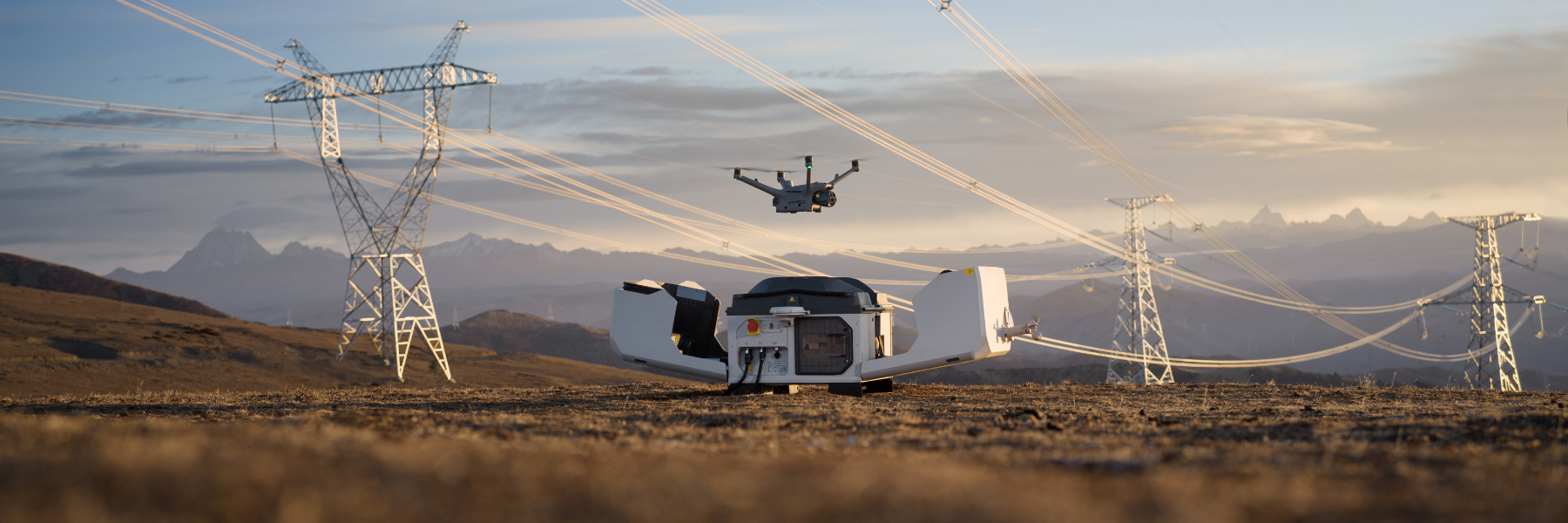
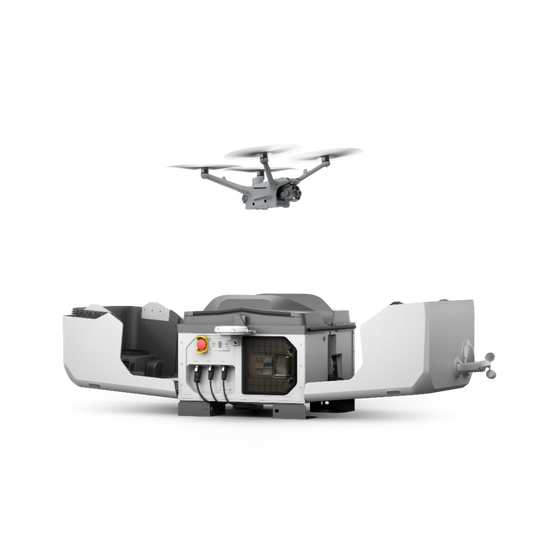
The DJI Dock Series is DJI's line of autonomous drone docking stations—weatherproof ground units that launch, land, and charge a paired enterprise aircraft without any on-site personnel. Once installed and commissioned through DJI FlightHub 2, a dock-based system executes scheduled and event-triggered sorties continuously, uploads imagery and data automatically, and returns the aircraft to a charged, mission-ready state between flights.
DSLRPros carries two generations of the DJI Dock Series: the Dock 2 (paired with Matrice 3D/3TD aircraft) and the Dock 3 (paired with Matrice 4D/4TD aircraft). Each generation includes its own dock station, aircraft variants, accessories, and software ecosystem, all stocked at DSLRPros alongside FlytBase third-party fleet management software for programs requiring expanded autonomous operations capabilities.
DSLRPros is an authorized DJI Enterprise Gold Partner and also offers Dock-in-a-Box Deployment Services for organizations that need end-to-end site survey, network setup, hardware installation, FlightHub 2 configuration, and first-flight verification. Contact DSLRPros to discuss configuration options or to request a quote on a complete dock deployment.
DJI Dock Series at a Glance: Dock 2 vs. Dock 3
The two generations differ in dock weight, environmental rating, operating temperature range, aircraft compatibility, transmission system, and vehicle-mounting capability. The table below maps every key differentiator side by side.
| Specification | Gen 2 — Mapping / Inspection DJI Dock 2 | Gen 3 — Response / Heavy-Duty DJI Dock 3 |
|---|---|---|
| Weight (without aircraft) | 34 kg (75 lbs) | 55 kg (121 lbs) |
| Dimensions (cover closed) | 570 × 583 × 465 mm | 640 × 745 × 770 mm |
| Ingress protection | IP55 | IP56 |
| Operating temperature | -25°C to 45°C (-13°F to 113°F) | -30°C to 50°C (-22°F to 122°F) |
| Max operating altitude | 4,000 m (13,123 ft) | 4,500 m (14,764 ft) |
| Max landing wind speed | 12 m/s (23 knots) | 12 m/s (23 knots) |
| Charging time (to ~95%) | ~50 min (0–100%) | 27 min (15–95% at 25°C) |
| Backup battery runtime | 5 hours | 4+ hours |
| Integrated RTK | Yes — 1 cm + 1 ppm H / 2 cm + 1 ppm V | Yes — 1 cm + 1 ppm H / 2 cm + 1 ppm V |
| Transmission system | O4+ Enterprise; 25 km FCC | O4+ Enterprise; 25 km FCC |
| Dock antennas | 9 antennas, 2T4R | 9 antennas, 2T4R |
| Security cameras | Internal + external; 1920×1080; 151° FOV | Internal + external; 1920×1080; 151° FOV |
| Lightning protection (AC) | 20 kA; IEC 61643-1 Class II | 20 kA; IEC 61643-1 Class II |
| Vehicle mounting | Not supported | Supported via Vehicle-Mounted Gimbal Mount |
| Quick takeoff | Not supported | Supported (ready as soon as cover opens) |
| Paired aircraft | Matrice 3D / Matrice 3TD | Matrice 4D / Matrice 4TD |
| Aircraft IP rating | IP54 | IP55 |
| Aircraft max flight time | 50 min | 54 min |
| Aircraft max operating radius | ~10 km (6 miles) | 10 km |
| DSLRPros Care warranty | Not listed | Dock 3 and Matrice 4TD both eligible |
Scroll horizontally to view all specifications.
DJI Dock 2 and Matrice 3D/3TD: Compact Autonomous Deployment
The DJI Dock 2 is the lighter of the two generations at 34 kg without aircraft, making it more practical for rooftop, pole, and ground installations where weight limits constrain fixed mounting options. It is IP55-rated, operates between -25°C and 45°C, and supports a maximum operating altitude of 4,000 m.
The integrated backup battery sustains 5 hours of dock operation following an AC power outage. An integrated RTK base station provides centimeter-level positioning directly from the dock without a separate external reference station. Internal and external 1920 x 1080 security cameras with 151° FOV provide site monitoring between sorties.
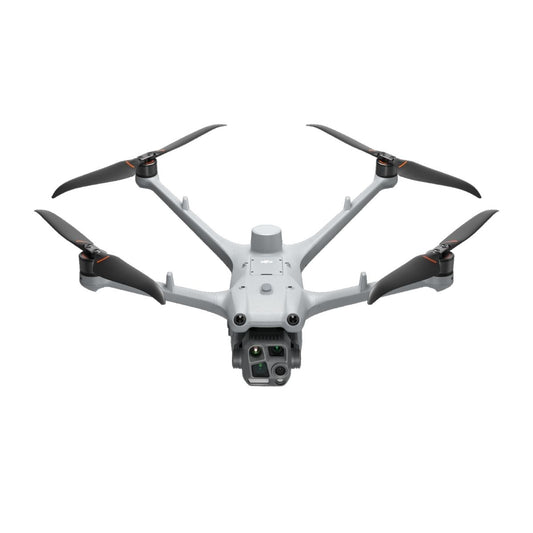
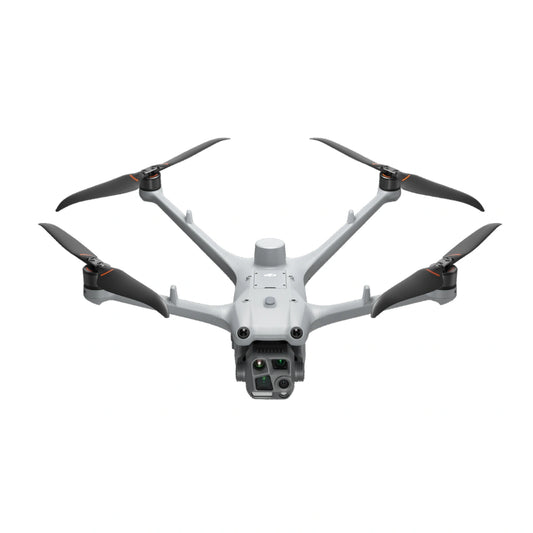
The Dock 2 is paired exclusively with the Matrice 3D and Matrice 3TD aircraft, both of which are designed specifically for dock-based autonomous flight with integrated RTK antennas, omnidirectional obstacle sensing with automatic bypass, IP54 weather resistance, a 50-minute maximum flight time, and a 400-cycle battery rating. The Matrice 3D is configured for optical inspection and mapping with a 4/3-inch 20 MP mechanical shutter wide camera (DNG RAW output, f/2.8–f/11) and a 12 MP tele camera at 162 mm equivalent.
The Matrice 3TD adds a 640 x 512 thermal camera (f/1.0, 61° DFOV, UHR 1,280 x 1,024) and uses a 48 MP f/1.7 wide camera optimized for low-light performance rather than the M3D's mapping-grade mechanical shutter. Both aircraft support lens defogging on all cameras—preventing condensation build-up when the aircraft launches from a temperature-controlled dock cabin into cooler outdoor air.
DJI Dock 3 and Matrice 4D/4TD: Extended Environmental Range and Vehicle Deployment
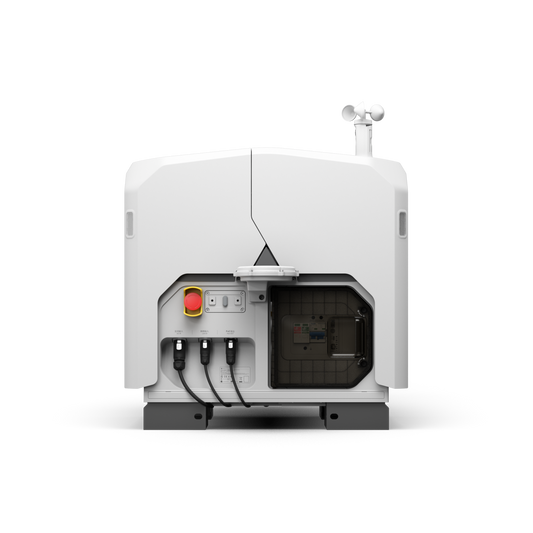
The DJI Dock 3 is the current-generation dock, rated IP56 versus the Dock 2's IP55, and extending the operating temperature floor from -25°C to -30°C while raising the ceiling from 45°C to 50°C. Maximum operating altitude increases to 4,500 m. The most operationally significant addition is vehicle-mounting support—the Dock 3 can be mounted to a vehicle via the Vehicle-Mounted Gimbal Mount accessory and recalibrated to a new GPS position through FlightHub 2 without dismounting, enabling mobile deployment with ground response teams.
Dock 3 also introduces quick takeoff: the aircraft is ready to fly as soon as the cover opens, reducing response time versus the Dock 2's sequential launch sequence. The charging system brings a depleted aircraft battery from 15% to 95% in 27 minutes at 25°C, significantly faster than the Dock 2's approximately 50-minute full charge.
The Dock 3 pairs with the Matrice 4D and Matrice 4TD—both sharing the same 1,850 g airframe, 149.9 Wh Li-ion 6S battery, IP55 aircraft rating, 54-minute max flight time, 10 km operating radius, and the O4+ Enterprise transmission system at 25 km FCC range. The Matrice 4D uses a 4/3-inch 20 MP mechanical shutter wide camera with DNG output and 0.5 s minimum capture interval for mapping workflows.
The Matrice 4TD uses a 48 MP f/1.7 wide camera and adds a 640 x 512 radiometric thermal camera, NIR auxiliary light (100 m), and extended ISO 819200 telephoto for thermal response and nighttime operations. Both aircraft support lens defogging across all three cameras. Full Dock 3 and M4D/M4TD specifications are covered in the dedicated DJI Dock 3 + Matrice 4D Series collection.
Products in This Collection: Aircraft, Accessories, Software, and Safety Systems
Dock 3 configurations and bundles (DSLRPros):
- DJI Dock 3 (standalone dock unit): dock hardware only for organizations pairing with separately sourced Matrice 4D/4TD aircraft
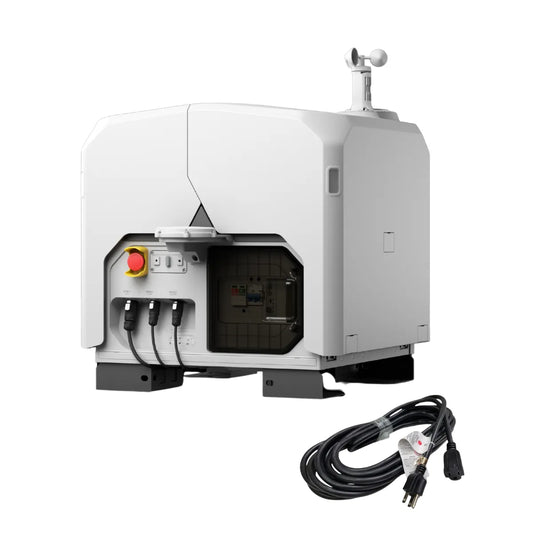
- DJI Dock 3 + 25 ft 14/3 Gauge Power Extension Cord: dock plus a 25-foot field power extension for installations where AC supply is not immediately adjacent to the mounting location
- DJI Dock 3 + Matrice 4TD: standard dock and aircraft bundle with DJI Care Enterprise Plus
- DJI Dock 3 + Matrice 4TD Standalone Unit Bundle: dock plus Matrice 4TD aircraft with RC Plus 2 Enterprise Enhanced controller, 240W Charging Hub, hard case, and 64GB microSD — for programs requiring both dock-based autonomous operations and independent manual flight capability
Dock 2 configurations (DSLRPros):
- DJI Dock 2 (standalone dock unit): dock hardware for organizations with existing Matrice 3D/3TD aircraft or sourcing aircraft separately
Aircraft available independently:
- DJI Matrice 3TD with DJI Care Enterprise Basic: dock-compatible thermal aircraft sold as a standalone unit with DJI Care Enterprise Basic coverage
- DJI Matrice 4TD (Aircraft Only): dock-compatible thermal aircraft without dock station
- DJI Matrice 4TD with RC Plus 2 Enterprise Enhanced Controller: 4TD aircraft with controller for standalone manual deployment independent of Dock 3
- DJI Matrice 4D (Aircraft Only): dock-compatible mapping aircraft without dock station
- DJI Matrice 4D with RC Plus 2 Enterprise Enhanced Controller (Standalone Unit): contact DSLRPros for pricing
Field-attachable accessories (Dock 3 / Matrice 4D/4TD):
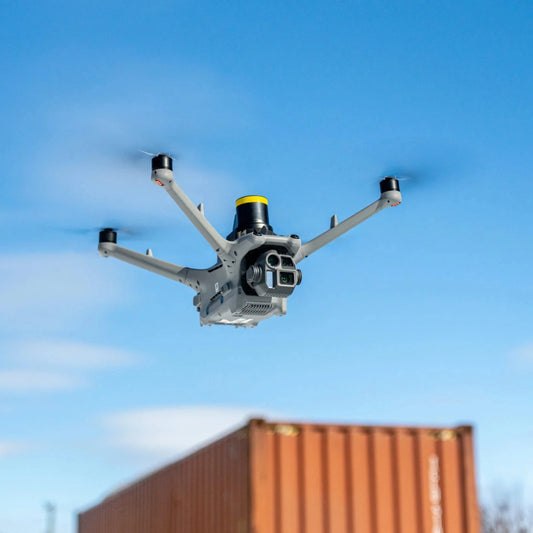
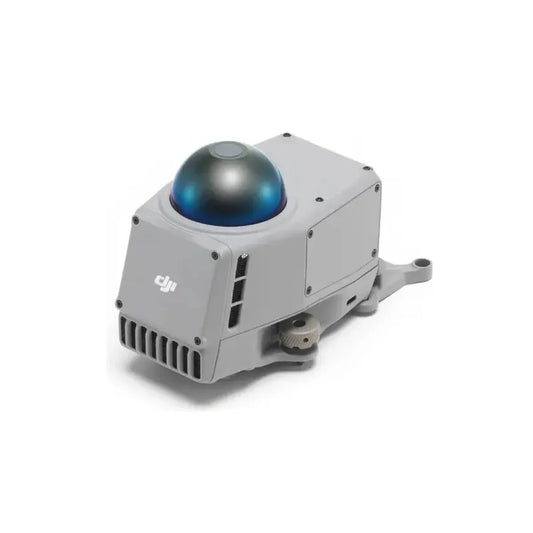
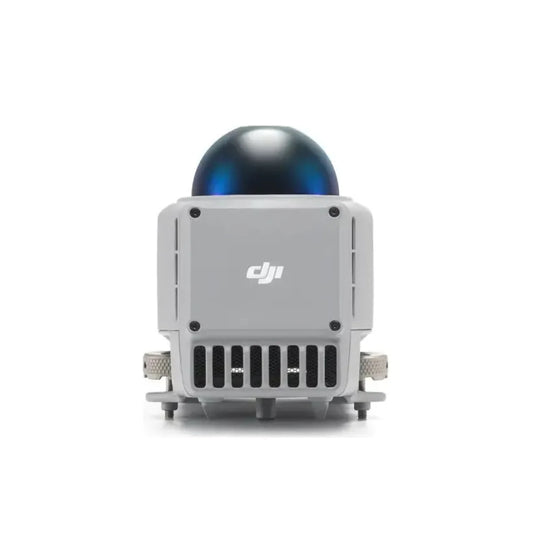
- DJI Obstacle Sensing Module: rotating LiDAR and five-direction millimeter-wave radar; detects 12 mm steel-core wire at flight speeds up to 15 m/s; IP55; for power line inspection corridors and wire-hazard environments
- DJI RC Plus 2 Enterprise Enhanced: standalone controller for manual operation of the Matrice 4D/4TD independent of the dock
- DJI Matrice 4D Series Battery: 149.9 Wh, 6,768 mAh, 22.14V Li-ion 6S, 640 g, 400-cycle rated; low-temperature self-heating supported
- DJI Dock 3 Vehicle-Mounted Gimbal Mount: IP55-rated mounting system enabling mobile vehicle deployment of the Dock 3; 14V power supply; -30°C to 50°C operating range
- DJI 240W Charging Hub for Matrice 4D Series: charges up to 3 batteries sequentially; Standard and Ready-to-Fly modes
- DJI 240W Power Adapter: high-output adapter compatible with Matrice 4 and 4D Series batteries
RTK and positioning hardware:
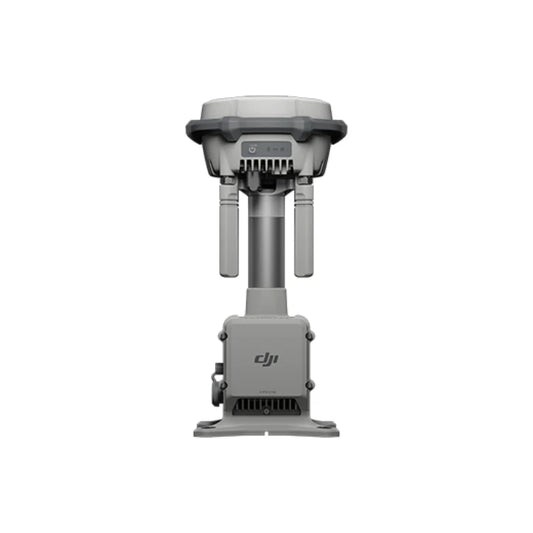
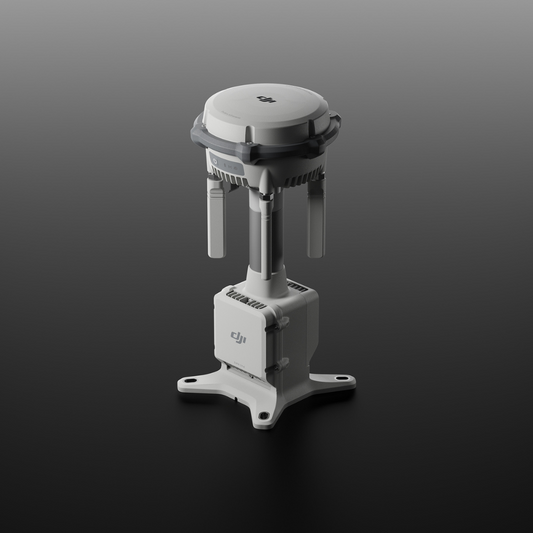
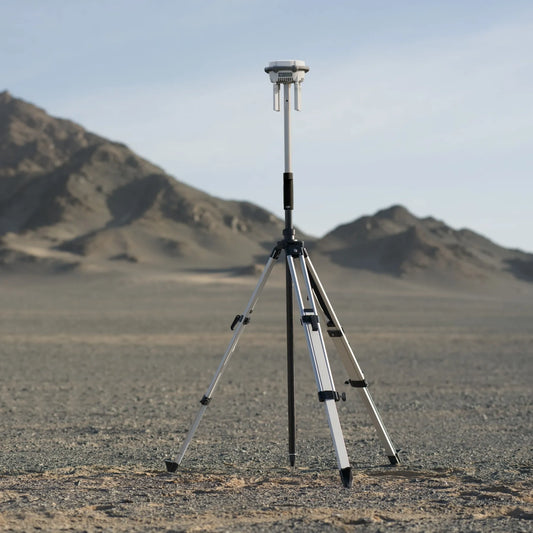
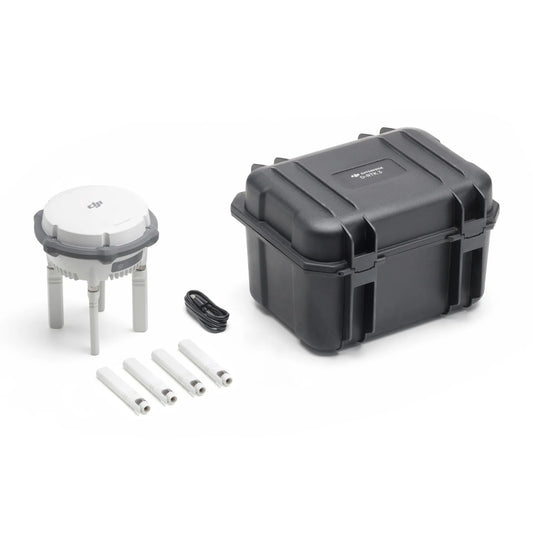
- DJI D-RTK 3 Multifunctional Station + Survey Pole and Tripod Kit with DJI Care Basic: complete RTK base station bundle with field deployment hardware and DJI Care coverage
- DJI D-RTK 3 Relay Fixed Deployment Version: extends effective transmission range in obstructed environments near tall structures, communication towers, or complex terrain
Parachute recovery systems:
- AVSS Drone Parachute Recovery System for DJI Dock 3 and Matrice 4D/4TD: certified parachute recovery for BVLOS compliance and jurisdictions requiring parachute systems for autonomous operations
- AVSS Drone Parachute Recovery System for DJI Dock 2 and Matrice 3D/3TD: certified parachute recovery for Dock 2 programs
Third-party software (FlytBase):
- FlytBase Enterprise AI-R for DJI Dock 1 and Dock 2 (M3D/M3TD): AI-powered fleet management software adding automated threat detection, security integration, and advanced response logic to Dock 1 and Dock 2 deployments
- FlytBase Enterprise Base Package for Dock 2: foundational fleet management and mission automation software for Dock 2 programs
What Dock-Based Autonomous Operations Enable
- Unattended 24/7 operation: dock handles takeoff, landing, and battery charging autonomously — no on-site pilot required for scheduled or event-triggered sorties
- Scheduled and on-demand missions: FlightHub 2 supports both timed recurring flights (e.g., daily perimeter patrols at defined intervals) and on-demand remote dispatch from any location with internet access
- Environmental go/no-go: integrated weather sensors (wind speed, rainfall, ambient temperature, water immersion, in-cabin temperature and humidity) report to FlightHub 2 for automated pre-flight safety assessment
- Integrated RTK positioning: centimeter-level aircraft positioning from the dock's built-in RTK base station without external equipment; supports repeatable autonomous waypoint accuracy across sorties
- Backup power continuity: both dock generations include internal backup batteries sustaining dock operations through AC power outages without mission interruption (aircraft charging suspended during outage)
- Lightning protection: 20 kA AC port and 10 kA Ethernet port protection meeting IEC 61643 standards for permanent outdoor installation
- Vehicle-mounted mobile deployment (Dock 3): relocate the dock to an active incident with the ground response team; recalibrate via FlightHub 2; resume autonomous sorties from the new position
- Dual-dock vehicle configuration (Dock 3): two Dock 3 units on a single vehicle with automated take-over patterns for continuous aerial coverage rotation between sorties
- Security monitoring: internal and external dock cameras at 1920 x 1080 with 151° FOV and auxiliary white light monitor the installation site between flights
- 20 MB/s data download: imagery transfers from aircraft through dock directly to FlightHub 2 without manual microSD handling between sorties
- FlightHub 2 On-Premises: organizations with data sovereignty or security compliance requirements can keep all flight logs, mission data, and imagery on a private server with FlightHub Sync bridging connectivity gaps
- DJI Cloud API: programmatic integration with third-party command, dispatch, SCADA, and asset management systems for fully embedded autonomous operations
Where DJI Dock Series Systems Get Deployed
- 24/7 facility and perimeter security: docks operate on scheduled patrol routes over substations, industrial facilities, logistics yards, and campuses, triggering on-demand dispatch when integrated alarm systems detect events via FlightHub 2 API
- Power line and energy infrastructure inspection: automated grid-pattern sorties cover transmission corridors regularly; Matrice 4D Obstacle Sensing Module resolves 12 mm wire-level obstacles at operational speed on the Dock 3 system
- Construction progress monitoring: Matrice 4D mechanical shutter camera with DNG output captures repeatable site documentation from consistent altitudes and angles across project phases without pilot deployment costs per visit
- Vehicle-based public safety response (Dock 3): dual-dock vehicle configuration provides persistent aerial coverage that relocates with ground teams to active incidents; Matrice 4TD thermal and NIR capabilities extend night operations
- Solar farm inspection: Matrice 3TD or 4TD thermal cameras map temperature anomalies across large arrays during autonomous grid sorties from a fixed dock on-site
- Search and rescue support: event-triggered dispatch launches thermal aircraft within minutes of an alert; laser rangefinder provides GPS coordinates to ground teams; NIR auxiliary light extends detection into darkness (Matrice 4TD)
- Bridge and infrastructure inspection: tele cameras document structural surfaces at standoff; laser rangefinder outputs dimensional measurements; repeatable autonomous routes eliminate the variability of manually flown inspection sorties
- Environmental monitoring and wildlife management: scheduled autonomous sorties cover defined survey areas on recurring intervals without the logistical overhead of deploying a pilot and crew for each flight
Choosing Between Dock 2 and Dock 3
- New programs: Dock 3 is the current-generation system and the recommended choice for new deployments — faster charging, wider operating temperature range, IP56 rating, quick takeoff, and vehicle-mounting support provide meaningful operational advantages over Dock 2
- Existing Dock 2 programs: the Dock 2 remains fully supported with the Matrice 3D/3TD aircraft and FlytBase software; spare aircraft, accessories, and parachute systems remain available (check stock status at DSLRPros)
- Mapping and survey as primary mission: the Matrice 3D (Dock 2) and Matrice 4D (Dock 3) both provide mechanical shutter wide cameras with DNG output for photogrammetric workflows; the Matrice 4D's 4/3-inch sensor, 0.5 s minimum interval, and IP55 aircraft rating give it an advantage for high-frequency mapping in variable weather
- Thermal response as primary mission: the Matrice 3TD (Dock 2) and Matrice 4TD (Dock 3) both provide 640 x 512 thermal cameras; the 4TD adds NIR auxiliary light, extended ISO 819200 telephoto, and a wider gimbal tilt range (-140° to +113°) compared to the 3TD
- Vehicle mounting required: only the Dock 3 supports vehicle mounting via the Vehicle-Mounted Gimbal Mount accessory; the Dock 2 is fixed-installation only
- Weight-constrained installation: the Dock 2 at 34 kg is meaningfully lighter than the Dock 3 at 55 kg; for rooftop or structural installations with load limits, Dock 2 may be the better fit
- BVLOS compliance requiring parachute systems: AVSS recovery systems are available for both dock generations (check current stock status with DSLRPros)
- Third-party fleet management: FlytBase Enterprise AI-R adds AI-powered detection, alarm integration, and advanced automation to Dock 1 and Dock 2 deployments; for Dock 3 programs, DJI FlightHub 2 and the DJI Cloud API provide the primary fleet management and integration path
DSLRPros Care Extended Warranty for the DJI Dock Series
The DJI Dock 3 and the DJI Matrice 4TD Aircraft are both explicitly listed as eligible products under the DSLRPros Care Extended Warranty—exclusive coverage available only to buyers purchasing directly from DSLRPros.
Coverage runs for 13 months from the date of shipment and includes accidental damage from pilot error, collisions, drops, water exposure, signal interference, and internal malfunctions. Up to one replacement unit is provided during the coverage term, new or refurbished at DSLRPros's discretion.
The policy must be purchased before the product ships and applies to the original purchaser only. To file a claim, contact support@dslrpros.com within 7 days of an incident. Full terms, conditions, and the complete eligible product list are available on the DSLRPros Care Extended Warranty page.
Shop the DJI Dock Series at DSLRPros
The DJI Dock Series converts drone programs from manually dispatched tool deployments into persistent autonomous aerial infrastructure—systems that inspect, patrol, monitor, and respond on schedule or on demand, day and night, without requiring a pilot at the location. For programs moving from manned sorties to continuous autonomous coverage, both Dock generations provide the hardware, software, and sensor ecosystem to make that transition without gaps in operational capability.
DSLRPros is an authorized DJI Enterprise Gold Partner stocking both Dock generations, all aircraft variants, accessories, FlytBase software, and parachute recovery systems. Our team also offers Dock-in-a-Box Deployment Services for end-to-end site survey, hardware installation, network setup, and commissioning support.
Shop the full DJI Dock Series collection at DSLRPros today or contact us to configure your autonomous operations program.
FAQs
What is the difference between DJI Dock 2 and DJI Dock 3?
The Dock 3 is the current generation, with several meaningful advantages over Dock 2: an IP56 rating versus IP55, a wider operating temperature range (-30°C to 50°C versus -25°C to 45°C), a higher maximum operating altitude (4,500 m versus 4,000 m), significantly faster charging (27 minutes from 15% to 95% versus approximately 50 minutes for a full charge on Dock 2), vehicle-mounting support via the Vehicle-Mounted Gimbal Mount accessory, and a quick takeoff mode that readies the aircraft as soon as the cover opens. The Dock 3 pairs with the Matrice 4D and 4TD aircraft; the Dock 2 pairs with the Matrice 3D and 3TD. For new deployments, Dock 3 is the recommended choice.
What aircraft are compatible with DJI Dock 2 and DJI Dock 3?
The DJI Dock 2 is exclusively paired with the DJI Matrice 3D (optimized for optical mapping) and DJI Matrice 3TD (adds thermal imaging). Standard Matrice 3 Series aircraft without the Dock designation are not compatible. The DJI Dock 3 is exclusively paired with the DJI Matrice 4D (optical mapping) and DJI Matrice 4TD (adds thermal imaging and NIR auxiliary light). The aircraft between the two dock generations are not interchangeable — each dock generation uses a dedicated aircraft designed for its charging interface, RTK integration, and landing system.
Does the DJI Dock Series require a pilot on site to operate?
No. Both Dock 2 and Dock 3 are designed for fully autonomous unattended operation. Once commissioned and connected to DJI FlightHub 2, the dock launches, lands, and charges the aircraft without any personnel at the location. Missions are planned, dispatched, and monitored remotely through FlightHub 2 via cloud or on-premises server. A qualified pilot must be involved in system commissioning and responsible for the operation under applicable regulations, but routine autonomous sorties do not require an operator at the dock site.
How does the DJI Dock 3's vehicle-mounting work and what does it require?
The Dock 3 attaches to a vehicle — truck bed, utility vehicle, or similar platform — using the DJI Dock 3 Vehicle-Mounted Gimbal Mount accessory (IP55-rated, 14V power supply, -30°C to 50°C operating range). When the vehicle repositions to a new location, FlightHub 2 performs cloud-based location calibration from the new GPS position, allowing autonomous sorties to resume without dismounting the dock or manual reconfiguration. A dual-dock vehicle configuration supports two Dock 3 units simultaneously with automated take-over patterns preventing mid-air conflicts during aircraft handoff.
What is FlytBase and how does it relate to the DJI Dock Series?
FlytBase is a third-party fleet management and automation software platform that integrates with DJI Dock hardware. DSLRPros carries FlytBase Enterprise AI-R for Dock 1 and 2 and FlytBase Enterprise Base Package for Dock 2. These products add capabilities beyond what DJI FlightHub 2 provides natively, including AI-powered detection, security alarm integration, and advanced automated response logic. For Dock 3 programs, DJI FlightHub 2 and the DJI Cloud API are the primary software layers; FlytBase compatibility with Dock 3 should be confirmed with FlytBase directly before purchase.
Are DJI Dock Series products eligible for the DSLRPros Care Extended Warranty?
Yes, for the current-generation products. The DJI Dock 3 and the DJI Matrice 4TD Aircraft are both explicitly listed as eligible products under the DSLRPros Care Extended Warranty. Coverage runs 13 months from the ship date and includes accidental damage from pilot error, collisions, drops, water exposure, signal interference, and internal malfunctions, with up to one replacement per coverage term. The Dock 2, Matrice 3D, and Matrice 3TD are not on the confirmed eligible products list. The DSLRPros Care policy must be purchased before the product ships.
What happens to the dock during a power outage?
Both dock generations include an integrated backup battery that sustains dock operations through AC power outages. The Dock 2 backup battery provides approximately 5 hours of runtime; the Dock 3's 12 Ah lead-acid battery provides more than 4 hours. During backup power operation, aircraft charging, air conditioning, and heating functions are suspended — the dock and network connection remain active for monitoring and communication, but the aircraft cannot complete charge cycles until AC power is restored. FlightHub 2 sends alert notifications if a power event affects mission status.


