






AIRINS Sniffer4D H2S Sensing Module
AIRINS Sniffer4D H2S Sensing Module
SKU:S-AIN-S4D-N2P-H2S

- Description
- Specifications
- In the Box
- FAQ
Sniffer4D H2S Sensing Module: Detect Hydrogen Sulfide for Oil and Gas Inspection
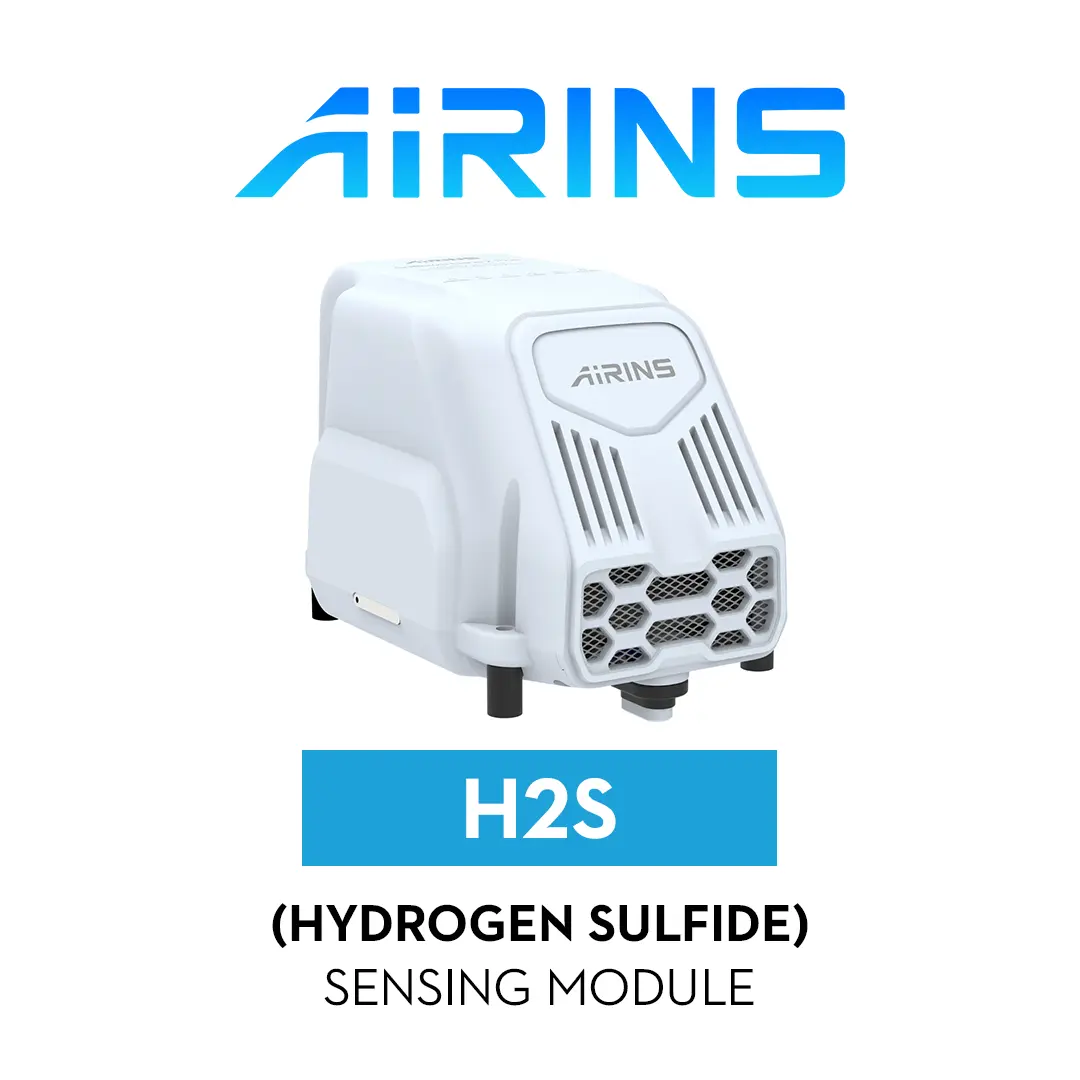
The Sniffer4D H2S Sensing Module gives oil and gas inspection teams a dedicated hydrogen sulfide reading, installing into a single slot on the Sniffer4D Nano 2 Plus Base Unit alongside whatever other gas modules a mission requires. It uses an electrochemical sensor tuned specifically to hydrogen sulfide detection.
With a wider detection range than most other gas modules in the lineup, up to 90 ppm, and a 3 minute warm-up time, it trades a slightly longer startup for coverage across a broader concentration span, useful when hydrogen sulfide levels are unpredictable in the field. That range makes it well suited to both routine screening and higher risk inspection scenarios.
Key Features and Benefits
- Electrochemical sensing: measures hydrogen sulfide concentration with high precision accuracy.
- 0.03 ppm detection limit: catches low level hydrogen sulfide events early.
- 90 ppm linear range: covers trace levels through high concentration events.
- Under 55 second response: delivers readings across 0 to 2ppm range.
- 0.01 ppm resolution: captures fine shifts in hydrogen sulfide concentration.
- 24 month service life: supports extended field deployment before replacement.
- Wide temperature range: operates reliably from -30 to 50 degrees Celsius.
- Wide humidity range: functions up to 90 percent RH conditions.
- Single slot install: adds H2S sensing without claiming the full array.
The H2S Sensing Module exists to give oil and gas inspection programs a dependable way to screen for hydrogen sulfide before crews approach a site. Its wide detection range means it captures both trace leaks and dangerous concentration spikes in the same flight.
Oil and gas inspectors need dependable hydrogen sulfide readings in the field, and DSLRPros tests every H2S Sensing Module before it leaves our facility. Order the H2S Sensing Module from DSLRPros and add hydrogen sulfide detection to your next flight.


