

















DJI FlyCart 100: Heavy-Lift Delivery Built for Field-Ready Cargo Operations
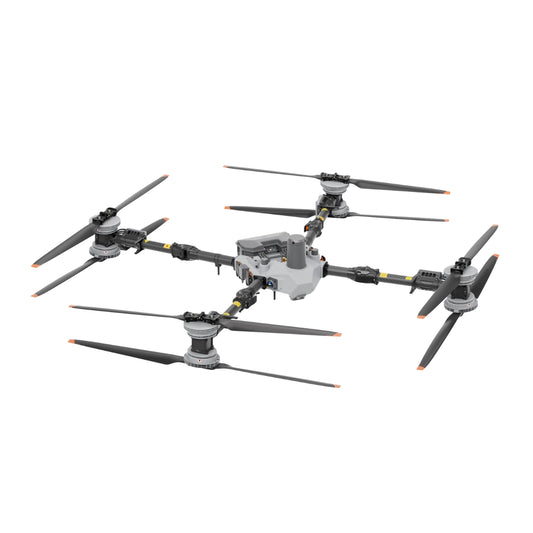
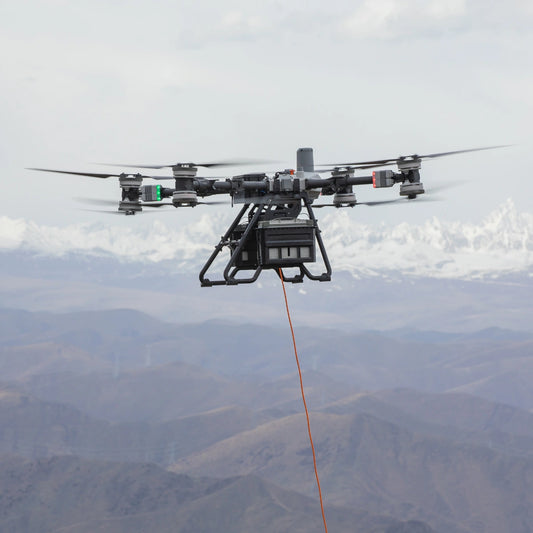
DJI FlyCart 100 is a heavy-lift delivery drone built to move substantial cargo into places trucks, helicopters, and foot teams cannot reliably reach. Operators running search and rescue support, remote resupply, powerline construction, or last-mile logistics use it to close the gap between a supply point and a site with no road access.
The aircraft flies as a coaxial, eight-rotor platform that carries up to 100 kg on a single battery or 85 kg in dual-battery configuration, with a maximum takeoff weight of up to 170 kg where local regulations allow it.
Every FlyCart 100 platform pairs a cargo delivery method, either the Flagship Winch System or the Dual-Battery Lifting System, with a parachute kit for emergency descent and a safety suite built around LiDAR, radar, and multi-direction vision.
Field crews configure the aircraft around mission needs, choosing hook-and-winch delivery for confined drop zones or a direct lifting configuration for higher payload throughput, then support it with the ground charging and control hardware needed to keep it flying through a full operational day.
FlyCart 100 Configurations and Ground Support Options
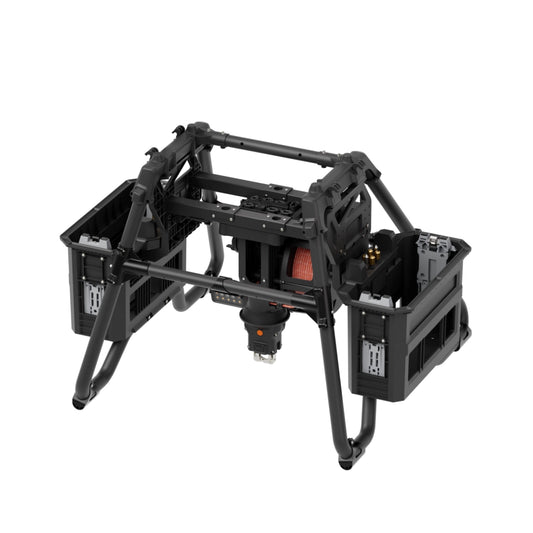
- Flagship Winch System configuration: hook-and-cable delivery for confined or inaccessible drop zones
- Dual-Battery Lifting System configuration: higher-payload direct lift for open-area delivery
- FC100 Parachute Kit: required safety hardware for controlled descent in emergency conditions
- DB2160 Intelligent Flight Battery (Global): primary flight power source, sold individually or in sets
- RC Plus 2 (Delivery): dedicated ground controller paired to the DJI Delivery App
- C12000 Intelligent Power Supply: high-speed AC and three-phase ground charging solution
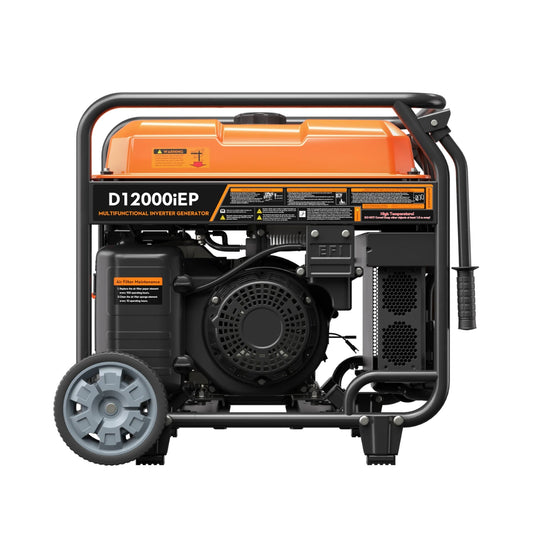
- D14000iE Multifunctional Inverter Generator (NA): field-deployable charging power for off-grid sites
- DB2160 Air-Cooled Heat Sink: accelerated battery cooling between charge cycles
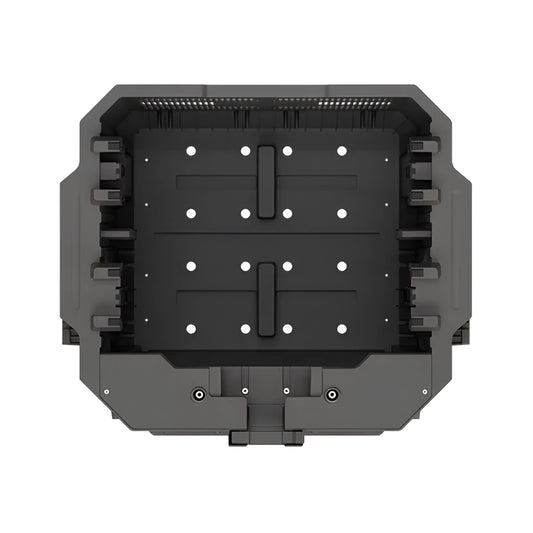
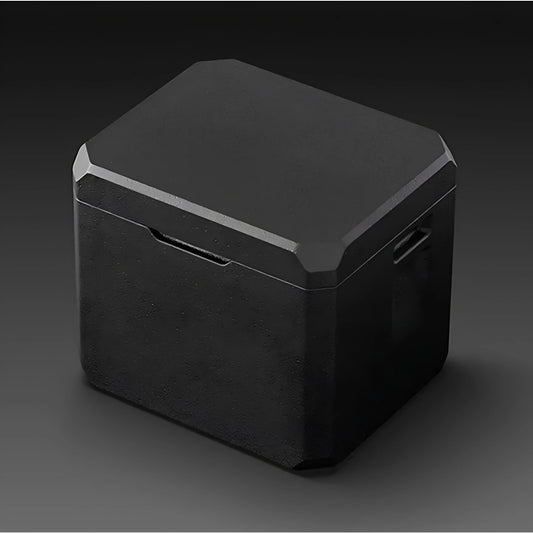
- DJI Battery Incubator (21 L): cold-weather battery preheating for winter operations
FlyCart 100 Performance Specs: Payload, Range, and Endurance
The FlyCart 100 airframe weighs 55.2 kg without payload when configured with the Dual-Battery Lifting System, or 60.2 kg with the Flagship Winch System installed, excluding batteries and cable-and-hook hardware. Maximum takeoff weight reaches 170 kg where permitted, with several countries capping the figure at 150 kg by local regulation.
In dual-battery mode the aircraft covers up to 12 km and holds a hover for up to 12 minutes at a 149.9 kg takeoff weight, with a maximum flight time of 14 minutes under the same load; single-battery mode, reserved for emergency use, cuts those figures roughly in half. The aircraft sustains a maximum horizontal speed of 20 m/s and climbs or descends at up to 5 m/s in dual-battery mode.
It operates from -20°C to 40°C, carries an IP55 ingress rating, and holds position within ±10 cm horizontally and vertically with RTK enabled. Maximum wind resistance during takeoff and landing is 12 m/s, and the platform can fly up to 6,000 m above sea level.
FlyCart 100 Onboard Systems, Delivery Hardware, and Ground Support Equipment
Integrated onboard systems:
- Safety and vision suite: front and rear millimeter-wave radar, downward radar, LiDAR, and quad-vision cameras for obstacle sensing
- FPV camera: forward-facing view for pilot situational awareness during flight
- O4 video transmission: four-antenna 2T4R system with up to 20 km range on FCC and 1080p live view
Field-attachable delivery and safety accessories:
- FC100 Parachute Kit: automatic or manual deployment for emergency descent, installed in the field
- Flagship Winch System: hook-and-cable delivery with a 30 m retractable cable and 1.2 m/s retraction speed
- Dual-Battery Lifting System: direct-lift cargo delivery with a 10 m cable, recommended at 10 to 15 m
Ground support and control hardware:
- RC Plus 2 (Delivery): 7-inch, 1,400 cd/m² touchscreen controller running the DJI Delivery App
- C12000 Intelligent Power Supply: 12,000 W three-phase or 3,000 W single-phase output, 9-minute fast charge
- D14000iE Multifunctional Inverter Generator (NA): gasoline-powered 9-minute charging for off-grid sites
- DB2160 Air-Cooled Heat Sink: active cooling for the DB2160 battery between charge cycles
- DJI Battery Incubator (21 L): pre-heats the DB2160 battery for cold-weather deployment
What the FlyCart 100 Delivers in the Field
- Hot-swappable batteries: dual DB2160 batteries support uninterrupted multi-flight operations
- Emergency single-battery mode: continued flight capability if one battery fails mid-mission
- Automatic parachute deployment: activates during extreme in-flight emergencies for controlled descent
- Multi-sensor obstacle avoidance: LiDAR, radar, and vision system combine for collision prevention
- Weatherproof build: IP55 rating withstands rain, dust, and coastal humidity
- Wide operating range: functions reliably from -20°C to 40°C
- Fast ground charging: C12000 supply recharges a battery in approximately 9 minutes
- Off-grid power option: D14000iE generator supports charging away from fixed infrastructure
- Dual delivery methods: switch between winch-and-hook and direct-lift configurations by mission
- Relay-extended control: optional D-RTK 3 station boosts signal through severe obstructions
- Dual operator handoff: RC Plus 2 supports mid-mission control transfer between two controllers
- Cold-weather readiness: Battery Incubator brings batteries to operating temperature before launch
Where Field Teams Deploy the FlyCart 100
- Disaster response resupply: deliver emergency supplies to sites blocked by damaged roads
- Remote infrastructure support: transport parts and tools to towers, dams, or pipelines
- Search and rescue logistics: move gear to responders operating in difficult terrain
- Construction site delivery: lift materials to elevated or otherwise inaccessible work areas
- Maritime and coastal operations: support vessels or shoreline crews beyond road access
- Powerline and utility work: deliver hardware to line crews in remote corridors
- Agricultural and rural logistics: move supplies across large properties without ground transport
DJI Delivery App and DeliveryHub Integration
Every FlyCart 100 pairs with the DJI Delivery App running on the RC Plus 2 controller, giving operators mission planning, real-time telemetry, and battery status in a single interface.
The app manages waypoint routes, monitors payload weight against the recommended limit for current conditions, and surfaces safety system alerts from the onboard radar, LiDAR, and vision array during flight. For teams coordinating multiple aircraft or sites, DJI DeliveryHub extends that visibility to fleet-level mission tracking and operational data logging, letting a dispatcher see aircraft status across a wider area rather than one controller at a time.
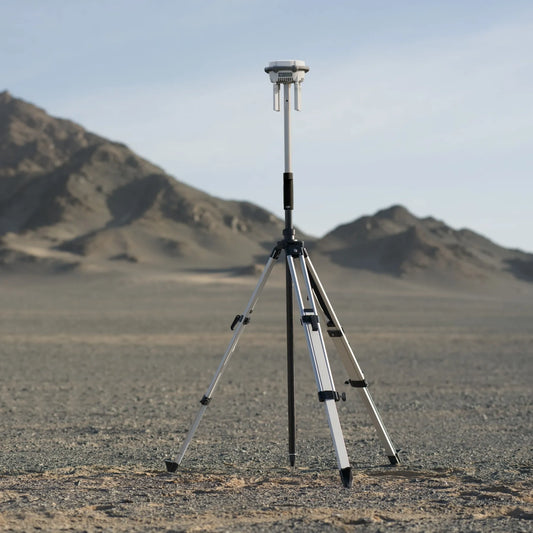
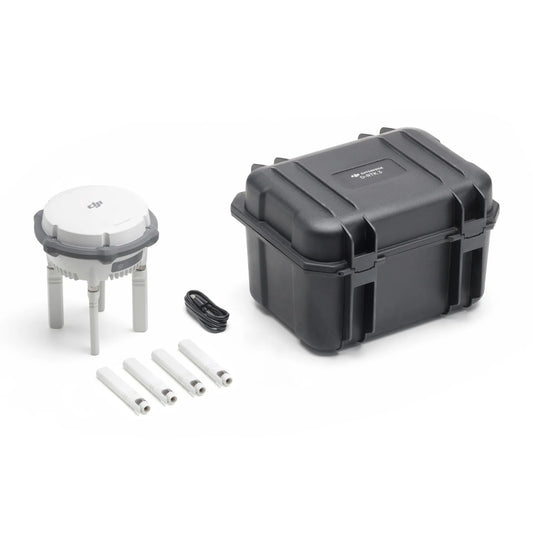
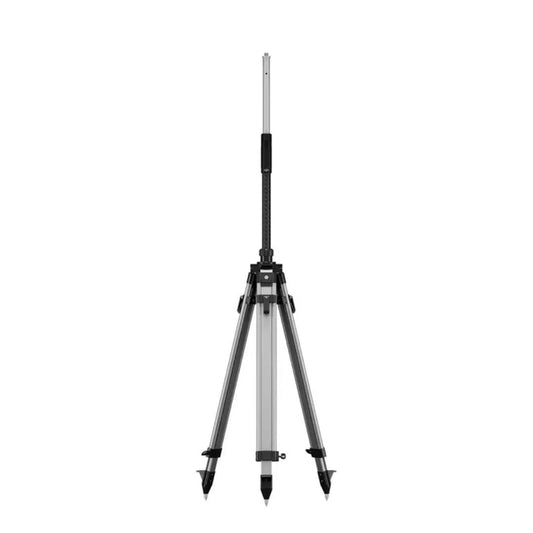
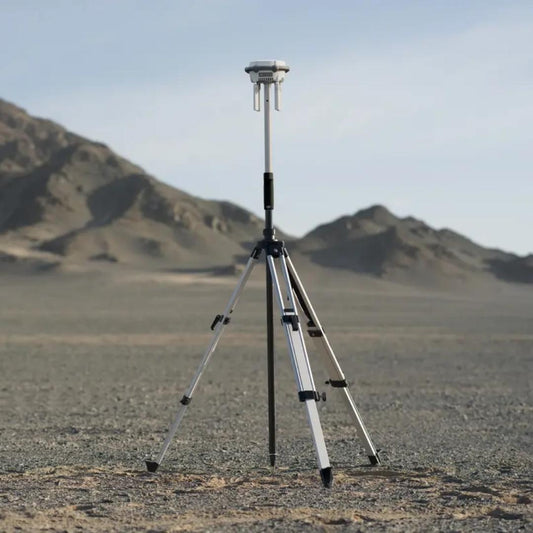
The platform also supports an optional D-RTK 3 Multifunctional Station, which functions as a base station for high-precision positioning or as a relay station that extends O4 control range through obstructions such as buildings or dense terrain. Firmware for the aircraft, controller, and DB2160 battery updates through DJI Pilot 2 or DJI Assistant 2, keeping the full delivery system current without separate update paths for each component.
Choosing Between Winch and Lifting System Configurations
- Confined drop zones: choose the Flagship Winch System for hook-and-cable delivery
- Higher payload runs: choose the Dual-Battery Lifting System for direct-lift throughput
- Cold climate deployment: add the Battery Incubator to preheat batteries before flight
- High-tempo charging cycles: pair the DB2160 Air-Cooled Heat Sink with ground charging
- Off-grid missions: add the D14000iE generator where fixed AC power is unavailable
- Extended control range: add the D-RTK 3 station in relay mode for obstructed sites
The FlyCart 100 is built to move meaningful payload into places ground transport cannot reach on schedule, without forcing a field crew to trade away safety systems or charging speed to get there. Its dual delivery methods, redundant battery design, and rapid ground charging keep a mission moving even when terrain, weather, or damaged infrastructure rule out every other transport option.
DSLRPros configures each FlyCart 100 system around the delivery method, charging setup, and cold-weather hardware your operation actually needs, so the aircraft that arrives is ready to fly rather than something to piece together on day one. Our team can walk through winch versus lifting system selection, ground power requirements, and battery quantity before you order. Reach out to the DSLRPros team to configure your FlyCart 100 system.
Frequently Asked Questions
What is the difference between the winch system and the lifting system on the FlyCart 100?
The Flagship Winch System lowers cargo on a retractable cable up to 30 meters long, which makes it suited to confined or inaccessible drop zones where the aircraft cannot land. The Dual-Battery Lifting System uses a shorter 10-meter cable, recommended between 10 and 15 meters, and is built for higher-throughput direct-lift delivery in more open areas. Both systems include weighing and auto balance control to manage cargo during descent. The right choice depends on the drop zone layout and how often the mission requires precision placement versus speed.
Can the FlyCart 100 keep flying if one battery fails?
Yes. The aircraft supports a single-battery emergency mode that allows continued flight if one DB2160 battery is lost mid-mission, though flight distance and endurance are reduced compared to dual-battery operation. Under a 149.9 kg takeoff weight, single-battery mode delivers roughly half the range and flight time of dual-battery mode. This redundancy is built into the platform rather than requiring separate emergency hardware.
How fast can the DB2160 battery be recharged in the field?
With the C12000 Intelligent Power Supply, a DB2160 battery can recharge from 30 percent to 95 percent in approximately 9 minutes under sea-level conditions between 15 and 40°C. The D14000iE generator delivers the same 9-minute charging window for sites without fixed AC power. DJI's documentation notes that a three-phase generator rated at 15,000 W or higher is required to run the C12000 at full output.
What cold-weather accessories does the FlyCart 100 support?
The DJI Battery Incubator (21 L) preheats a DB2160 battery before flight in low-temperature environments, which helps prevent the reduced performance that comes from launching on a cold battery. It is externally powered and is recommended for use ahead of takeoff rather than during flight. The DB2160 Air-Cooled Heat Sink complements this by actively cooling batteries between charge cycles during high-tempo operations.
Is the RC Plus 2 controller compatible with other DJI delivery drones?
The RC Plus 2 (Delivery) is built specifically for the FlyCart 100 and is not compatible with the earlier FlyCart 30 platform, according to DJI's own product documentation. It supports dual operator mode, which requires purchasing a second RC Plus 2 separately for mid-mission control handoff. The controller runs the DJI Delivery App and includes RTK positioning support for high-precision operation.
What extends the FlyCart 100's control range in obstructed areas?
The optional D-RTK 3 Multifunctional Station can be deployed in relay station mode to extend O4 control range, with DJI reporting a 3 to 5 times performance improvement around severe obstructions like buildings or mountains, and a 1 to 3 times improvement around minor obstructions like trees or glass. The station needs to be placed in a high, unobstructed location to work effectively. The same hardware can also run in base station mode for high-precision positioning.


