

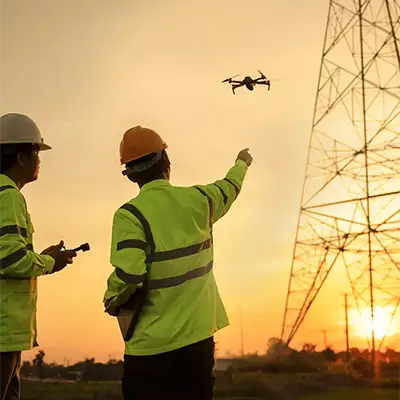


Top 5 Thermal Drones for Public Safety, SAR, and Industrial Operations in 2026
Why Thermal Drones Are Becoming Standard Equipment for Field Operations
During nighttime operations, wildfire response, or industrial inspections, critical information often exists beyond what standard cameras can capture. Thermal sensors reveal heat signatures that help locate missing persons, identify hotspots, and detect equipment issues early.
Thermal drones are now widely used by:
- fire departments
- search and rescue teams
- infrastructure inspection crews
- industrial maintenance teams
These teams rely on thermal imaging when visibility is limited or conditions are unpredictable.
Not all thermal drones are built for professional use. Many lack the sensor capability, reliability, or endurance required for real operations.
This guide focuses on five thermal drone systems designed for field deployment—platforms used by public safety and industrial teams that depend on consistent performance.
What Is the Best Thermal Drone for Professional Operations?
The most reliable thermal drone platforms in 2026 include:
- DJI Matrice 4T — best all-around platform
- Autel EVO Max 4T XE — best for complex environments
- DJI Matrice 30T — best for all-weather response
- ACSL SOTEN Thermal — best NDAA-conscious option
- GDU S220 Pro — best value option
These systems combine radiometric thermal sensors, stable flight performance, and mission-ready design for real-world operations.
What This Guide Covers
This guide outlines how to evaluate and select a professional thermal drone system.
You’ll find:
- a quick comparison of leading platforms
- how thermal drones differ from standard cameras
- detailed breakdowns of the top five systems
- mission-based recommendations for field operations
- key factors that affect thermal performance
- cost considerations for professional deployment
- common mistakes to avoid when selecting a system
The Best Thermal Drones in 2026 — Quick Comparison
These are the most widely used thermal drone platforms for public safety and industrial operations. Each system is designed for a specific type of mission.
| Drone | Best For | Thermal Sensor | Flight Time |
|---|---|---|---|
| DJI Matrice 4T | All-around operations | 640 × 512 radiometric | ~45 min |
| Autel EVO Max 4T XE | Complex environments | 640 × 512 radiometric | ~42 min |
| DJI Matrice 30T | All-weather response | 640 × 512 radiometric | ~41 min |
| ACSL SOTEN Thermal | NDAA-conscious use | 640 × 512 | ~25 min |
| GDU S220 Pro | Budget deployments | 640-class payload | ~35 min |
These platforms cover the most common operational needs across firefighting, search and rescue, and industrial inspection.
What is the best thermal drone for public safety?
The DJI Matrice 4T is the most balanced thermal drone for public safety. It combines radiometric imaging, long flight time, and multi-sensor capability for fire, search and rescue, and inspection operations.
How We Evaluated the Best Thermal Drones
These platforms were selected based on how they perform in real operations, not just specifications.
We focused on the factors that directly impact deployment in public safety and industrial environments.
Thermal Sensor Capability
Thermal performance determines what the drone can detect and measure.
We evaluated:
- radiometric vs non-radiometric sensors
- thermal resolution (320 vs 640)
- ability to capture usable inspection data
Flight Performance and Endurance
Flight capability affects coverage and efficiency in the field.
We considered:
- flight time under real conditions
- stability in complex environments
- overall reliability during extended operations
Operational Reliability
These systems are used in time-critical scenarios where consistency matters.
We assessed:
- deployment speed and ease of use
- performance in variable conditions
- system dependability across missions
Compliance and Procurement Considerations
Procurement decisions are increasingly influenced by regulatory changes and platform eligibility. This is especially relevant for public safety teams evaluating DJI-based systems under current FCC guidance, as outlined in this update on DFR programs and regulatory changes.
We reviewed:
- NDAA and regulatory considerations
- platform availability for government use
- supply chain and long-term support
Why These Criteria Matter
The goal is not to compare specifications in isolation, but to identify platforms that perform reliably in real-world operations.
Thermal Drones vs Standard Drone Cameras
Standard drones use visible-light cameras. They capture images similar to what the human eye sees.
Thermal drones detect heat differences. They reveal information that is not visible in low light or obscured environments.

When Thermal Matters
Thermal imaging is useful when visibility is limited:
- nighttime operations
- smoke, fog, or haze
- locating heat sources or anomalies
Key Differences
| Feature | Standard Drone Camera | Thermal Drone |
|---|---|---|
| Imaging Type | Visible light (RGB) | Infrared heat detection |
| Detect heat sources | No | Yes |
| Night operations | Limited | Excellent |
| Inspection capability | Visual observation | Temperature analysis |
| Typical applications | Photography, mapping | Fire response, SAR, inspections |
For most public safety and inspection workflows, thermal imaging is essential when visibility is limited.
Thermal imaging enables teams to detect hotspots, locate people during search operations, and identify overheating infrastructure components that cannot be seen with conventional cameras.
Top 5 Thermal Drones for Professional Operations
These five thermal drone platforms are widely used across public safety and industrial operations. Each one is built for a specific type of mission—not just general thermal imaging.
This is not a spec-based ranking. These platforms are selected based on how they actually perform in the field.
Some are optimized for rapid emergency response. Others are better suited for inspection accuracy, complex environments, or budget-conscious deployment.
Use this section to understand what each system does best. Then review the detailed breakdowns below to see how they perform in real operations.
Quick Navigation:
Jump directly to the platform that fits your mission:
Each drone below is selected based on real-world deployment use—not just specifications.

DJI Matrice 4T — Best Thermal Drone for Field Operations
| Specification | Details |
|---|---|
| Thermal Sensor | 640 × 512 radiometric |
| Flight Time | ~45 minutes |
| Camera System | Thermal + zoom + wide |
| Obstacle Avoidance | Omnidirectional sensing |
| Primary Use Cases | Fire response, SAR, inspections |
Operational Snapshot
Best suited for:
- firefighting and emergency response
- search and rescue operations
- multi-role public safety missions
- general-purpose inspection work
Strengths:
- balanced performance across mission types
- integrated multi-sensor payload
- long flight endurance for extended coverage
- stable flight in complex environments
Operational considerations:
- larger platform than compact drones
- higher system cost than entry-level options
The DJI Matrice 4T is designed for teams that need a single platform capable of handling multiple mission types without switching systems.
Its main advantage is flexibility. The integrated payload allows operators to switch between thermal and visual perspectives during flight, which is critical when both detection and confirmation are required.
Best suited for teams that need one platform across multiple mission types without switching systems.

Autel EVO Max 4T XE — Best for Complex Environments
| Specification | Details |
|---|---|
| Thermal Sensor | Radiometric 640 × 512 |
| Flight Time | ~42 minutes |
| Camera System | Thermal + wide + zoom |
| Autonomy | Advanced obstacle avoidance |
| Primary Use Cases | Infrastructure inspections, industrial monitoring |
Operational Snapshot
Ideal for:
- urban search and rescue
- infrastructure inspection in dense environments
- operations around obstacles and structures
Strengths:
- advanced obstacle avoidance and navigation\
- stable flight near structures and confined spaces
- radiometric thermal imaging for inspection workflows
Limitations:
- smaller ecosystem compared to DJI enterprise platforms
- support availability may vary by region
The Autel EVO Max 4T XE is built for environments where navigation is as critical as sensor performance.
Its key advantage is obstacle awareness. In urban search operations or infrastructure inspections, maintaining stable flight near buildings, towers, or confined spaces is often more challenging than detecting heat signatures.
This platform allows operators to maintain control in those environments without relying heavily on manual piloting adjustments. Best suited for operations in dense or obstructed environments where navigation is critical.
See Autel EVO Max 4T XE Configurations

DJI Matrice 30T — Best for All-Weather Emergency Response
| Specification | Details |
|---|---|
| Thermal Sensor | 640 × 512 radiometric |
| Flight Time | ~41 minutes |
| Weather Rating | IP55 |
| Camera System | Thermal + zoom + wide |
| Primary Use Cases | Emergency response, public safety |
Operational Snapshot
Use this when:
- emergency response and disaster deployment
- wildfire monitoring in unstable conditions
- law enforcement overwatch
- operations in wind, rain, or low-visibility environments
Strengths:
- IP55-rated weather resistance
- consistent performance in adverse conditions
- dependable integrated sensor system
- fast deployment for time-critical missions
Trade-offs:
- shorter flight time compared to larger platforms
- less flexible than multi-role systems like the Matrice 4T
The DJI Matrice 30T is built for teams that need a system they can deploy without hesitation in unpredictable conditions.
Its primary advantage is reliability. In emergency response scenarios, weather conditions are often less than ideal. Wind, smoke, and light rain can limit the effectiveness of less rugged platforms.
The M30T is designed to operate in those environments without requiring additional setup or adjustments. Best suited for teams that need consistent performance in harsh or unpredictable conditions.
View Matrice 30T Deployment Packages

ACSL SOTEN Thermal — Best NDAA-Conscious Thermal Drone
| Specification | Details |
|---|---|
| Thermal Sensor | 640 × 512 |
| Flight Time | ~25 minutes |
| Platform Type | Compact tactical platform |
| Procurement Status | NDAA-conscious platform |
| Primary Use Cases | Public safety, security operations |
Operational Snapshot
Works best for:
- agencies with procurement restrictions
- government and defense-related operations
- teams requiring non-Chinese platforms
- mobile or rapid deployment units
Strengths:
- procurement-friendly platform for regulated environments
- compact and portable airframe
- suitable for agencies with strict compliance requirements
Limitations::
- shorter flight time than larger enterprise drones
- smaller ecosystem and accessory support
The ACSL SOTEN Thermal is designed for agencies that cannot deploy standard enterprise platforms due to procurement or compliance constraints.
Its main advantage is not performance—it is eligibility. For organizations operating under NDAA or similar restrictions, platform availability is often limited.
The SOTEN provides a viable option that allows teams to maintain thermal capability while meeting procurement requirements. Best suited for agencies where procurement requirements limit platform selection.
Check SOTEN Thermal Availability

GDU S220 Pro — Best Value Professional Thermal Drone
| Specification | Details |
|---|---|
| Thermal Sensor | 640-class thermal payload |
| Flight Time | ~35 minutes |
| Platform Type | Mid-size enterprise drone |
| Sensor Options | Modular payload options |
| Primary Use Cases | Inspections, budget-conscious deployments |
Operational Snapshot
Recommended for:
- inspection teams starting thermal operations
- facilities and asset management
- municipal and local agency deployments
- organizations with budget constraints
Strengths:
- cost-efficient entry into thermal capability
- flexible payload configurations
- straightforward deployment and operation
Operational considerations:
- fewer advanced features than premium platforms
- not designed for high-risk or complex environments
The GDU S220 Pro is built for teams that need thermal capability without committing to a higher-cost enterprise system.
Its value comes from accessibility. Not every organization requires a full-scale platform for emergency response or complex operations. For many teams, the priority is adding thermal inspection capability in a practical and cost-controlled way.
This platform allows organizations to deploy thermal imaging for routine inspections and monitoring without overinvesting in features they may not need. Best suited for teams starting thermal operations or working within budget constraints.
Need Help Choosing the Right Thermal Drone?
Selecting the right system depends on your mission, environment, and operational requirements. The DSLRPros team works with public safety agencies and industrial teams to configure mission-ready thermal drone systems.
Speak With a Drone Specialist
Explore Thermal Drone Systems
Choosing the Right Thermal Drone for Your Mission
Choosing the right thermal drone comes down to one thing: matching the platform to the mission.
Not all thermal drones are built for the same type of work. A system that performs well in firefighting may not be the best choice for inspection or search operations.
Focus on the capabilities that directly impact your operation.
Start with these questions:
- Do you need rapid deployment or extended flight time?
- Is your priority detection (finding heat) or measurement (analyzing temperature)?
- Will you operate in complex terrain or controlled environments?
- Are there procurement or NDAA requirements to consider?
Typical mission priorities:
- Fire response: fast deployment, durability, thermal sensitivity
- Search and rescue: long endurance, wide-area coverage
- Inspection: radiometric accuracy, stable flight, repeatability
- Once these priorities are clear, the right platform becomes easier to identify.
The sections below map common missions to the platforms that perform best in each scenario.
Best Thermal Drone for Firefighting Operations
Fire response requires fast deployment and reliable thermal detection in unstable conditions. Crews need to identify hotspots, track fire spread, and assess structural risk without delay.
Thermal drones give incident commanders real-time visibility during active fires, helping identify hotspots and track fire spread. Many departments are already integrating drones into daily operations, as seen in how fire agencies are using UAVs in real deployments.
Key priorities:
- high thermal sensitivity for hotspot detection
- rapid deployment at the scene
- durable airframe for smoke and heat conditions
The DJI Matrice 4T is widely used for firefighting because it combines radiometric thermal imaging with strong flight endurance and a multi-sensor system for situational awareness.
For teams operating in harsher weather conditions, the Matrice 30T provides a more rugged option with IP-rated protection.

How Thermal Drones Support Fire Response Operations
Thermal drones provide fast aerial awareness during active fire incidents. They help teams identify hazards and make decisions without exposing personnel to risk.
Typical workflow:
- Initial Scene Assessment: Identify active fire zones, heat signatures, and immediate hazards.
- Hotspot Detection: Locate hidden hotspots beneath debris, vegetation, or structures.
- Fire Spread Monitoring: Track heat patterns to understand fire movement and prioritize response.
- Post-Fire Inspection: Detect remaining hotspots that may cause re-ignition.
This workflow improves situational awareness while reducing risk to personnel during operations.
Explore firefighting drones used in real-world emergency response operations.
Best Thermal Drone for Search and Rescue
Search and rescue operations require consistent detection across large areas and difficult terrain. Teams need to locate heat signatures quickly while maintaining stable flight in remote environments.

Key priorities:
- strong detection capability at distance
- extended flight time for area coverage
- reliable transmission in complex terrain
The DJI Matrice 4T is commonly used for SAR missions due to its balance of thermal performance and endurance.
For teams operating in more demanding environments, the Matrice 30T offers additional durability with slightly reduced flight time.
See how search and rescue drones are used for real-world field deployments.
Thermal Drones for Industrial Inspection and Utilities
Inspection work requires accurate temperature measurement and consistent flight control around infrastructure. Unlike emergency response, the focus is on precision and repeatability.

Radiometric thermal drones are widely used to detect overheating components and prevent failures before they escalate. In many cases, these systems play a direct role in reducing risk, including how thermal drones help prevent industrial accidents.
Key priorities:
- radiometric thermal sensors for temperature analysis
- stable flight for repeatable inspections
- data capture for reporting and documentation
The Autel EVO Max 4T XE is well suited for inspection workflows due to its radiometric capability and stable performance in complex environments.
The GDU S220 Pro provides a more cost-efficient option for teams entering thermal inspection programs.
Explore thermal drone systems for inspection used in infrastructure and asset monitoring.
Still comparing platforms? Review the full system breakdown above to see how each drone performs in real operations.
Radiometric vs Non-Radiometric Thermal Cameras
Not all thermal cameras capture heat data the same way. The key difference is whether the sensor records measurable temperature values or only shows heat patterns.
What is the difference between radiometric and non-radiometric thermal cameras?
Radiometric thermal cameras measure the exact temperature of each pixel. This allows for detailed analysis and inspection reporting.
Non-radiometric cameras show heat differences visually but do not provide measurable temperature data.
What Actually Matters in Practice
The difference comes down to how the data is used.
Radiometric cameras are used when measurement matters:
- infrastructure inspections
- electrical and mechanical diagnostics
- engineering analysis and reporting
Non-radiometric cameras are used for detection:
- locating people at night
- identifying general heat signatures
- situational awareness in emergency response

When to Choose Radiometric
Radiometric sensors are required when thermal data supports decisions.
Use radiometric if you need to:
- confirm overheating components
- document temperature anomalies
- generate inspection reports
When Non-Radiometric Is Enough
Non-radiometric sensors are suitable when the goal is simply to detect heat.
Use non-radiometric if you need to:
- find people or animals
- scan large areas quickly
- monitor general heat patterns
Key Differences
| Feature | Radiometric | Non-Radiometric |
|---|---|---|
| Temperature Measurement | Yes | No |
| Inspection Reporting | Excellent | Limited |
| Best For | Infrastructure inspections, utilities, industrial analysis | Situational awareness and detection |
Understanding Thermal Camera Performance
Not all thermal cameras perform the same. Several technical factors determine how effectively a sensor detects heat differences during real operations.
For teams evaluating thermal drones, understanding these factors helps ensure the system can support both emergency response and inspection workflows.
Sensor Resolution
Thermal resolution refers to the number of pixels in the sensor. Higher resolution sensors produce clearer thermal images and improve detection distance.
Two resolutions are most common in professional thermal drone systems:
| Resolution | Typical Use |
|---|---|
| 320 × 240 | Basic detection and situational awareness |
| 640 × 512 | Professional inspections and detailed analysis |
A 320-resolution sensor can detect general heat patterns. However, it may struggle to distinguish small temperature differences during detailed inspections.
A 640-resolution sensor provides clearer imagery and greater detection distance. For most professional operations, this resolution has effectively become the standard.
Thermal Sensitivity (NETD)
NETD measures the smallest temperature difference a sensor can detect.
Lower NETD values indicate higher sensitivity and allow operators to identify subtle temperature variations across equipment, structures, or terrain.
This is especially important for infrastructure inspections where small temperature differences can signal developing equipment failures.
Frame Rate
Frame rate affects how smoothly thermal video is displayed.
Higher frame rates improve image stability when tracking moving subjects or operating drones during dynamic missions such as search and rescue.
Lens and Field of View
The thermal lens influences how much area the sensor can observe and how far it can detect heat signatures.
Narrow lenses improve long-range detection. Wider lenses capture larger areas, which can be helpful during search operations.
These technical factors together determine how well a thermal drone performs in real operational environments.
Thermal Drone Detection Range (Typical Conditions)
| Thermal Resolution | Human Detection Range |
|---|---|
| 320 × 240 | ~200–300 ft |
| 640 × 512 | ~500–800 ft |
| 640 + optical zoom | 1,000+ ft |
Detection distance depends on altitude, terrain, and environmental conditions, but higher-resolution sensors significantly improve detection capability during search and rescue missions.
What Does a Professional Thermal Drone System Cost?
Thermal drone pricing depends on the system configuration, not just the aircraft. Most professional setups include payloads, batteries, software, and support tools.
How much does a professional thermal drone cost?
Most professional thermal drone systems cost between $6,000 and $25,000+, depending on sensor capability and system configuration.
Typical Price Ranges:
| System Type | Typical Investment | What’s Included |
|---|---|---|
| Entry-level thermal systems | $6,000 – $10,000 | Compact drone with integrated thermal sensor, basic accessories |
| Mid-range enterprise platforms | $10,000 – $18,000 | Higher resolution sensors, improved flight endurance, additional batteries and equipment |
| Advanced multi-sensor systems | $18,000 - 25,000+ | Advanced sensor platforms, extended flight kits, payload options, training and support |
What Drives the Cost
Thermal drone pricing is primarily influenced by three factors:
1. Sensor Capability
- radiometric vs non-radiometric
- thermal resolution (320 vs 640)
- additional camera systems (zoom, wide)
2. Platform Size and Performance
- flight time and battery capacity
- weather resistance and durability
- flight stability and control system
3. System Configuration
- batteries and charging equipment
- software and data tools
- accessories and payload upgrades
What Most Buyers Miss
The aircraft is only part of the investment.
A complete system typically includes:
- multiple batteries for extended operations
- software for data processing or inspection
- training and operational setup
Practical Guidance
- inspection programs typically fall in the mid-range
- public safety teams often require higher-end systems
- entry-level platforms can support basic thermal deployment
For most teams, the right system depends on how it will be used—not just the initial cost.
View available thermal drone packages and bundles to compare system configurations.
Common Thermal Drone Buying Mistakes
Most issues come from choosing based on specs instead of mission needs.
Avoid these common mistakes:
- choosing low thermal resolution for inspection work
- ignoring radiometric capability when measurement is required
- underestimating flight time for large-area operations
- focusing only on aircraft price instead of full system cost
- skipping training, workflow setup, or support planning
What to do instead
Match the system to how it will be used in the field. Prioritize sensor capability, deployment conditions, and long-term support over base specifications. The right system is defined by how it performs in your operation, not how it looks on a spec sheet.
Which Thermal Drone Should You Choose?
Use this quick reference to align your requirements with the right platform.
| Mission | Recommended Drone |
|---|---|
| Fire response | DJI Matrice 4T |
| Search and rescue | Matrice 4T / Matrice 30T |
| Industrial inspections | Autel EVO Max 4T XE |
| NDAA-conscious procurement | ACSL SOTEN Thermal |
| Budget professional operations | GDU S220 Pro |
No single platform is best for every use case. The right choice depends on how the system will be deployed in real operations.
The Future of Thermal Drone Technology
Thermal drone systems are becoming more integrated, automated, and data-driven.
Key developments to watch:
- higher-resolution thermal sensors for more precise detection
- AI-assisted detection of people, vehicles, and anomalies
- automated inspection workflows for repeatable data capture
- deeper integration with command and monitoring systems
These changes will improve how teams deploy thermal drones in public safety and industrial operations.
Frequently Asked Questions About Thermal Drones
Can thermal drones see through smoke?
Thermal drones do not see through smoke, but they can detect heat signatures that are difficult to see with standard cameras. Because thermal sensors measure infrared radiation, they can identify hotspots and heat sources in low-visibility conditions such as smoke, darkness, or haze.
Can thermal drones detect people at night?
Yes. Thermal drones detect people at night by capturing body heat. This allows operators to identify human heat signatures against cooler surroundings, making them effective for search and rescue, law enforcement, and nighttime operations.
Do you need a license to fly a thermal drone?
Yes. In the United States, most professional drone operations require an FAA Part 107 Remote Pilot Certificate. This certification covers airspace rules, safety procedures, and flight operations for commercial and public safety use.
Which industries use thermal drones most?
Thermal drones are commonly used in public safety, infrastructure inspection, and industrial operations. Typical applications include firefighting, search and rescue, electrical inspections, solar monitoring, and facility maintenance.
How far can a thermal drone detect a person?
A thermal drone with a 640-resolution sensor can typically detect a person from several hundred feet away. Detection range depends on altitude, terrain, and environmental conditions, but higher-resolution sensors improve accuracy and distance.
What is a radiometric thermal drone?
A radiometric thermal drone measures the exact temperature of each pixel in an image. This allows operators to analyze heat data, generate reports, and detect temperature anomalies during inspections.
Selecting the Right Thermal Drone System
The right thermal drone depends on how it will be used in the field. Mission requirements, operating conditions, and sensor capability matter more than specifications alone.
Some teams need a flexible platform for multiple scenarios. Others require systems built for inspection accuracy, harsh environments, or procurement constraints.
The goal is not to choose the most advanced drone, but the one that fits the operation.
DSLRPros works with public safety agencies and industrial teams to configure complete thermal drone systems based on real-world use.
Browse all thermal drone systems available for public safety and industrial use.


