Skip to product information
1 of 2

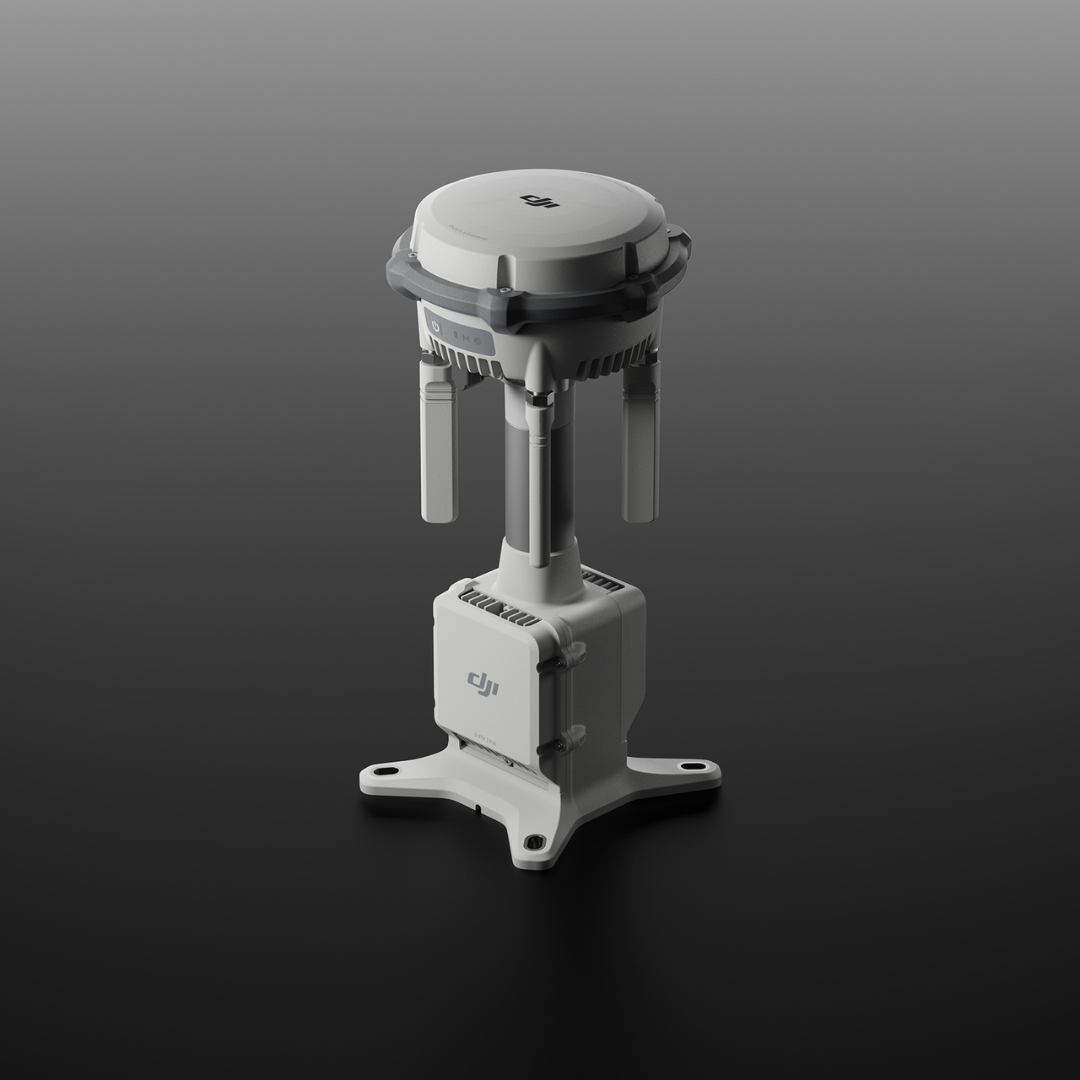
DJI D-RTK 3 Relay Fixed Deployment Version for Dock 3

DJI D-RTK 3 Relay Fixed Deployment Version for Dock 3

Regular price $3,500.00
Regular price Sale price $3,500.00
Sale Sold out
Shipping calculated at checkout.

SKU:S-DJI-RTK3-FDV

SKU S-DJI-RTK3-FDV MPN CP.EN.00000552.01 EAN 6937224104815
  • Dedicated relay station designed exclusively for DJI Dock 3
  • Extends communication range in obstructed operating environments
  • Supports centimeter-level RTK positioning for critical missions
  • Power-over-Ethernet simplifies permanent outdoor installation
  • IP67-rated enclosure supports continuous unattended operation
  • Remote relay access enables automatic aircraft connection
  • Optimized for fixed or semi-permanent deployments
  • Built for enterprise Dock-based drone operations

13 total reviews

View full details
  • Description
  • Specifications
  • In the Box
  • FAQ

DJI D-RTK 3 Relay Fixed Deployment Version for Dock 3: Fixed RTK relay station for extended Dock operations

The DJI D-RTK 3 Relay Fixed Deployment Version is a dedicated relay solution designed specifically for DJI Dock 3 operations in complex or obstructed environments. Operating exclusively in relay station mode, it bridges communication gaps between aircraft and Dock 3 while simultaneously supporting high-precision RTK positioning. Powered via Power-over-Ethernet, it connects directly to Dock 3 for streamlined installation and long-term outdoor deployment. With IP67 protection, wide operating temperature tolerance, and remote relay access capability, this fixed deployment version is built for continuous, unattended operation in demanding enterprise environments.

DJI D-RTK 3 Relay Fixed Deployment Version features

  • Relay-only operation: Designed exclusively for signal relay and RTK support.
  • Extended signal coverage: Bridges communication gaps caused by terrain and structures.
  • Centimeter-level RTK positioning: Supports high-accuracy missions with supported aircraft.
  • O4 Enterprise relay system: Enhances video and control link reliability.
  • Elevated deployment capability: Optimized for towers, rooftops, and vertical structures.
  • Direct Dock 3 integration: Connects to Dock 3 third port without additional hardware.
  • Remote relay access: Enables automatic aircraft discovery and relay connection.
  • Redundant system design: Reduces maintenance requirements for fixed installations.

Purpose-built for permanent and semi-permanent Dock 3 installations

The D-RTK 3 Relay Fixed Deployment Version is engineered for long-term outdoor installation where traditional base station placement is impractical. By operating solely in relay mode, it eliminates configuration complexity and focuses on maintaining stable communication paths between Dock 3 and deployed aircraft. Power-over-Ethernet support simplifies infrastructure planning by combining power and data through a single cable. This design allows operators to deploy Dock 3 systems in locations previously limited by terrain, buildings, or electromagnetic interference, expanding operational flexibility without increasing system complexity.

Environmental resilience and continuous outdoor operation

Designed for unattended outdoor use, the D-RTK 3 Relay Fixed Deployment Version features an IP67-rated enclosure and lightning surge protection to withstand harsh environmental conditions. DJI specifies stable operation across a temperature range of −30° to 50° C (−22° to 122° F), supporting year-round deployment in varied climates. Its maintenance-free design reduces operational overhead, allowing the relay station to remain continuously active once installed. These characteristics make it suitable for critical infrastructure monitoring, emergency response readiness, and persistent inspection operations.

System compatibility and power configuration

  • DJI Dock 3: Exclusive compatibility for relay deployment.
  • Operating mode: Relay station mode only.
  • Power input: Power-over-Ethernet from Dock 3.
  • External power support: Compatible with third-party PoE power sources.
  • Installation type: Permanent or semi-permanent fixed deployment.

Professional applications enabled by fixed relay deployment

  • Dock-based operations: Extend reliable communication for automated Dock 3 missions.
  • Surveying missions: Maintain stable RTK positioning in obstructed terrain.
  • Infrastructure inspections: Improve connectivity around buildings, bridges, and facilities.
  • Emergency response operations: Ensure dependable communication in complex environments.
  • Industrial monitoring: Support continuous operations with minimal human intervention.
  • Remote site deployments: Enable Dock installations in challenging geographic locations.
  • Urban operations: Overcome signal obstruction caused by dense structures.
  • Persistent mission readiness: Maintain always-on relay availability for rapid response.

Engineered for enterprise reliability and remote accessibility

The D-RTK 3 Relay Fixed Deployment Version is designed as a high-reliability infrastructure component within the DJI Dock ecosystem. Its relay station can be remotely accessed without manual button interaction, allowing nearby aircraft to automatically discover and connect to idle relay stations. Combined with redundant hardware and software design, this approach minimizes downtime and maintenance requirements. When paired with Dock 3, it enables scalable, resilient drone operations where communication reliability and positioning accuracy are critical.

The DJI D-RTK 3 Relay Fixed Deployment Version expands Dock 3 deployment possibilities through reliable relay and RTK support.

Available now from DSLRPros. Purchase today to strengthen Dock 3 operations in challenging environments.

GNSS Receiver

  • GNSS frequency support
  • GPS: L1C/A, L2C, L5
  • BDS: B1I, B2I, B3I, B1C, B2a, B2b
  • GALILEO: E1, E5a, E5b, E6
  • GLONASS: L1, L2
  • QZSS: L1C/A, L2C, L5
  • L-Band support

System Accuracy*

  • Supported modes: Base Station Mode (Broadcast Mode) and Relay Station Mode
  • Single point accuracy (uncalibrated): Horizontal 1.5 m RMS
  • Single point accuracy (uncalibrated): Vertical 3.0 m RMS
  • Satellite-based differential accuracy convergence time: 20 mins
  • Satellite-based differential accuracy: Horizontal 30 cm RMS
  • Satellite-based differential accuracy: Vertical 40 cm RMS
  • Network RTK calibration accuracy: Horizontal 1.0 cm RMS + 1 ppm
  • Network RTK calibration accuracy: Vertical 3.0 cm RMS + 1 ppm

Rover Station Mode Accuracy

  • RTK fixed survey accuracy: Horizontal 0.8 cm RMS + 1 ppm
  • RTK fixed survey accuracy: Vertical 1.5 cm RMS + 1 ppm
  • RTK tilt survey angle range: 0° to 60°
  • RTK tilt survey accuracy: 8 mm + 0.7 mm/° tilt (accuracy <2 cm within 30°)

Satellite-Based Precise Point Positioning*

  • Supported frequencies: BDS B2b, GALILEO E6, L-Band**
  • Convergence time: 20 mins
  • Horizontal accuracy: 30 cm RMS
  • Vertical accuracy: 40 cm RMS

Differential Data Transmission

  • Base station and relay station modes record RTCM 3.2 raw observation data in DAT format
  • Rover station and calibration modes support RTCM v3.0, v3.1, v3.2, v3.3
  • Supported MSM protocols: MSM4, MSM5, MSM6, MSM7
  • Recommended to use receivers supporting four or more GNSS systems

Initialization Reliability

  • Initialization reliability greater than 99.9%

Video Transmission

  • Video transmission system: O4 Enterprise
  • Relay Station Mode operating frequency: 2.4 GHz, 5.2 GHz, 5.8 GHz
  • Base Station Mode operating frequency: 2.4 GHz, 5.8 GHz
  • Rover Station Mode operating frequency: BLE 2.4 GHz
  • Operating frequencies vary by country and region

Transmitter Power (EIRP)

  • 2.4000–2.4835 GHz: <33 dBm (FCC), <20 dBm (CE/SRRC/MIC)
  • 5.150–5.250 GHz: <23 dBm (CE/FCC)
  • 5.725–5.850 GHz: <33 dBm (FCC), <30 dBm (SRRC), <14 dBm (CE)

Bluetooth

  • Bluetooth protocol: Bluetooth 5.1
  • Bluetooth frequency: 2.400–2.4835 GHz
  • Bluetooth transmitter power: <10 dBm

Maximum Transmission Distance (Unobstructed, Free of Interference)

  • Base station to Matrice 400: FCC 40 km; SRRC/CE/JP 20 km
  • Base station to other aircraft: FCC 15 km; SRRC 12 km; CE/JP 8 km
  • Rover station to mobile devices: 30 m
  • Measured in unobstructed outdoor environments free of interference
  • Data represents one-way, non-return flight distance under each standard
  • Always pay attention to RTH reminders during flight operations

Relay Station Mode Transmission Distance (Unobstructed, Free of Interference)

  • FCC aircraft to relay station: 25 km
  • SRRC aircraft to relay station: 12 km
  • CE aircraft to relay station: 10 km
  • Relay station to remote controller or DJI Dock 3: Recommended within 1 km; maximum 3 km
  • CE relay station to remote controller or DJI Dock 3: Recommended within 300 m; maximum 1 km
  • Relay station deployment requires prior field survey
  • Sites marked as unsuitable for dock deployment or RTK positioning are not recommended
  • Improper deployment may affect relay upgrades and log downloads
  • Recommended installation on rooftops, towers, or elevated, unobstructed locations

Transmission Distance (Unobstructed, With Interference)

  • Strong interference (urban): approx. 1.5–5 km
  • Medium interference (suburban): approx. 5–15 km
  • Low interference (remote or seaside): approx. 15–25 km
  • Tested under FCC standards; provided for reference only

Transmission Distance (Obstructed, With Interference)

  • Low interference obstructed by buildings: approx. 0–0.5 km
  • Low interference obstructed by trees: approx. 0.5–3 km
  • Tested under FCC standards; provided for reference only

Relay Station Range Extension Effect

  • Severe obstruction (buildings or mountains): 3x to 5x performance improvement
  • Mild obstruction (trees or glass): 1x to 3x performance improvement
  • Relay station must be deployed in elevated, unobstructed locations

Antenna

  • OcuSync 4 directional antennas ×4, 2T4R
  • Standard reverse-polarity SMA antenna connector

Other

  • D-RTK 3 Relay Fixed Deployment Version compatible with DJI Cellular Dongle 2

Electrical Properties

  • Relay Station power consumption: 14.5 W
  • Base Station power consumption: 7 W
  • Rover Station power consumption: 6.2 W
  • Maximum power consumption with heating: 36.5 W
  • Multifunctional Station power port: USB Type-C
  • Relay Fixed Deployment Version ports: USB Type-C and Ethernet (PoE)
  • Supported adapter: USB PD 3.0, 9–15 V output
  • Non-recommended 5 V chargers require device to be powered off before charging
  • Supported PoE supplies: IEEE 802.3bt Type 4 (52–57 V, 99.9 W max)
  • Supported PoE supplies: IEEE 802.3bt Type 3 (50–57 V, 60 W max)
  • Supported PoE supplies: IEEE 802.3at Type 2 (50–57 V, 30 W max)

Battery Operating Time (Normal Temperature)*

  • Relay Station runtime: approx. 4 hours
  • Base Station runtime: approx. 7 hours
  • Rover Station runtime: approx. 10 hours
  • Relay Fixed Deployment Version runtime: approx. 4 hours
  • When powered by PoE, battery enters preservation mode and does not fully charge
  • After PoE disconnection, internal battery provides up to 2 hours of runtime
  • Battery performance may decrease in low-temperature environments

Ethernet Cable Requirements

  • Multifunctional Station does not support Ethernet
  • Relay Fixed Deployment Version requires Cat 6 twisted-pair cable
  • Maximum Ethernet cable length: 100 m
  • Supported cable outer diameter: 6–9 mm

Battery

  • Battery type: LiPo
  • Capacity: 6500 mAh
  • Energy: 46.8 Wh

Physical Characteristics

  • Operating temperature (multifunctional): -20° to 55° C (-4° to 131° F)
  • Operating temperature (relay deployment): -30° to 55° C (-22° to 131° F)
  • Charging power is limited when shell temperature exceeds 48° C
  • Cold-stored devices must warm until internal battery exceeds 0° C before charging
  • Hot-stored devices must cool until internal battery is below 45° C before charging
  • Type 4 PoE enables heating for low-temperature startup on relay deployment version
  • Maximum operating altitude: 6000 m
  • Ingress protection rating: IP67
  • PoE port provides IPX5 protection; IP67 requires dedicated PoE connector and cable
  • Drop resistance: 2 m with pole
  • Dimensions (multifunctional): 163 × 89 mm
  • Dimensions (relay deployment): 163 × 344 mm
  • Weight (multifunctional): approx. 1.26 kg
  • Weight (relay deployment): approx. 2.24 kg

Footnotes

  • * Measurement accuracy depends on satellite visibility, ionospheric conditions, electromagnetic environment, and multipath interference
  • ** Satellite-based PPP L-band support will be enabled in later versions
  • *** Intense vibration or rapid rotation may affect inertial measurement accuracy
  • 1x DJI D-RTK 3 Relay Fixed Deployment Version
What is the DJI D-RTK 3 Relay Fixed Deployment Version used for?

It is a relay-only RTK station designed to extend communication and positioning support for DJI Dock 3 operations in complex environments.

Does the DJI D-RTK 3 Relay Fixed Deployment Version operate as a base station?

No. This version operates exclusively in relay station mode and does not support base or rover modes.

How is the DJI D-RTK 3 Relay Fixed Deployment Version powered?

It is powered via Power-over-Ethernet directly from DJI Dock 3 or supported third-party PoE sources.

Where can the DJI D-RTK 3 Relay Fixed Deployment Version be installed?

It can be installed on towers, rooftops, utility poles, parapet walls, and other elevated structures.

Is the DJI D-RTK 3 Relay Fixed Deployment Version suitable for outdoor use?

Yes. It features IP67 protection and is designed for continuous outdoor operation.