

About the Collection
DJI Agras T100: One 220 lb Capacity Ag Drone for Spraying, Spreading and Lifting
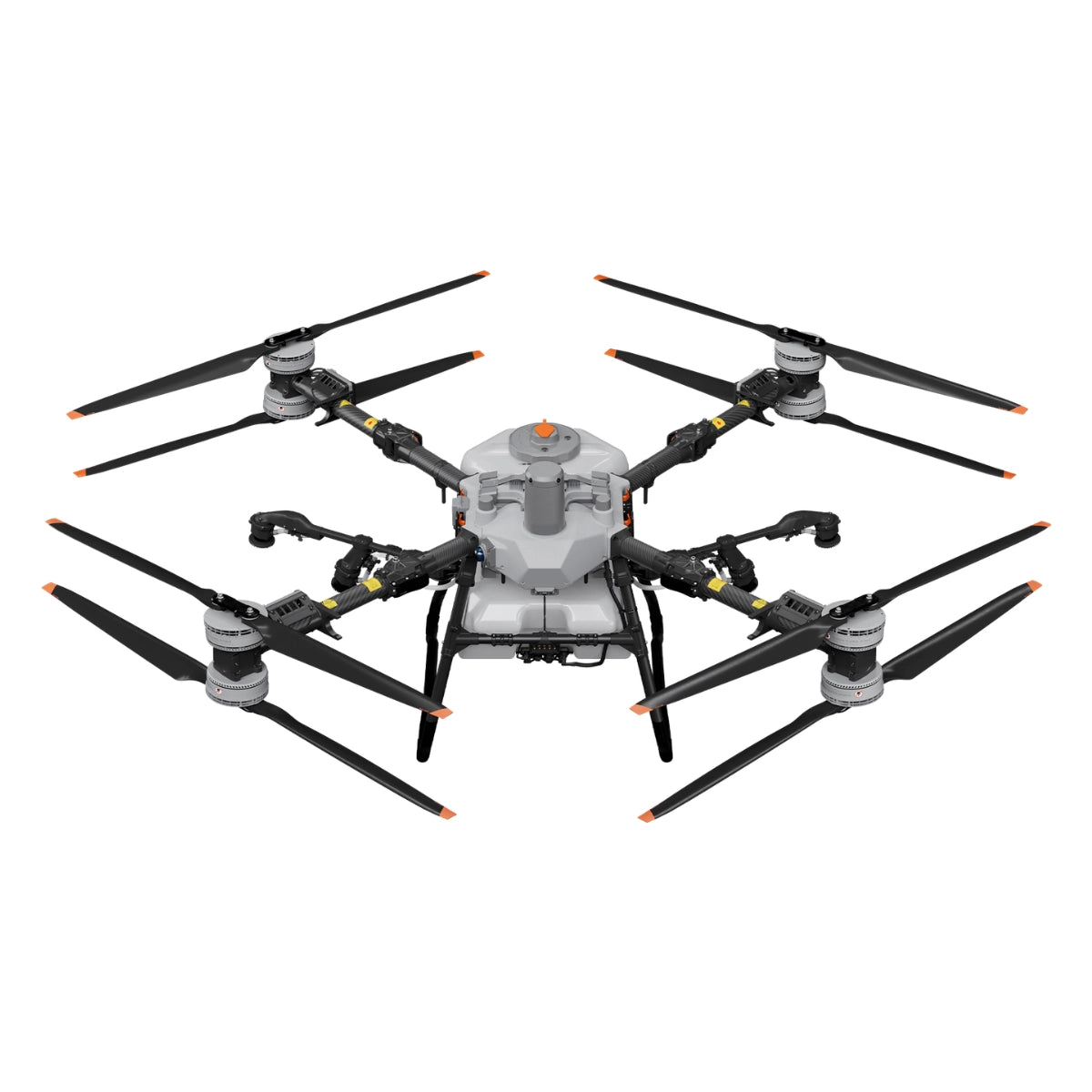
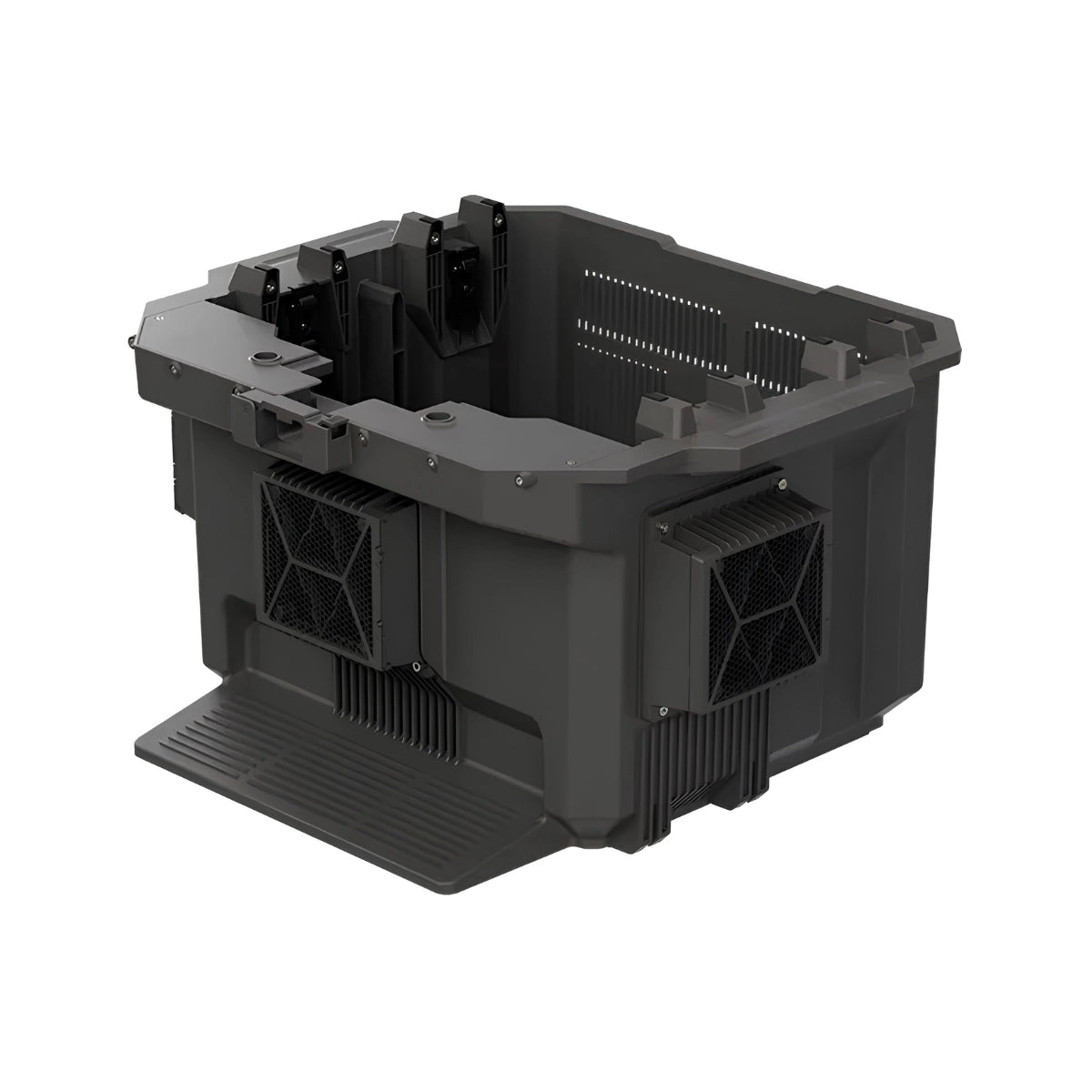
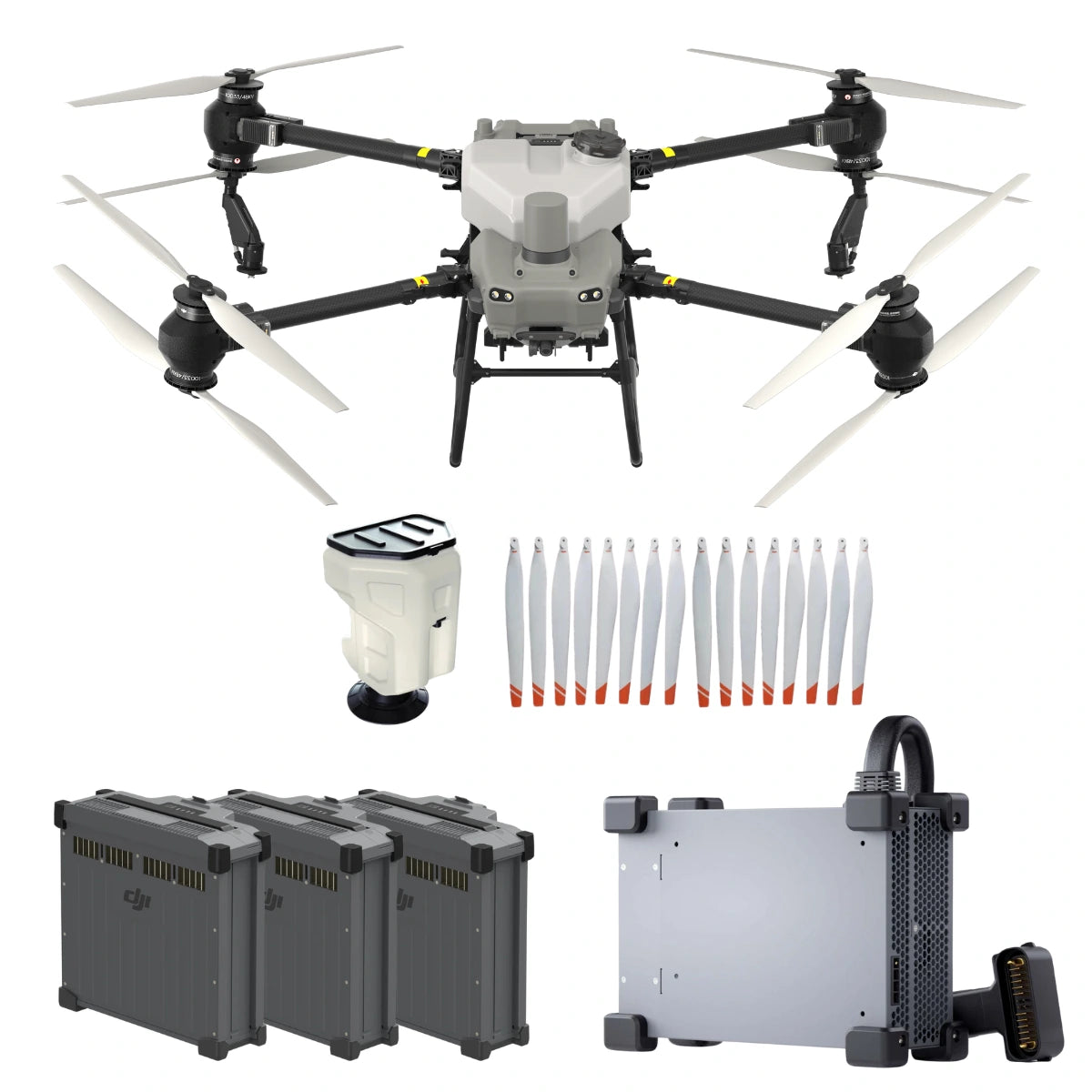
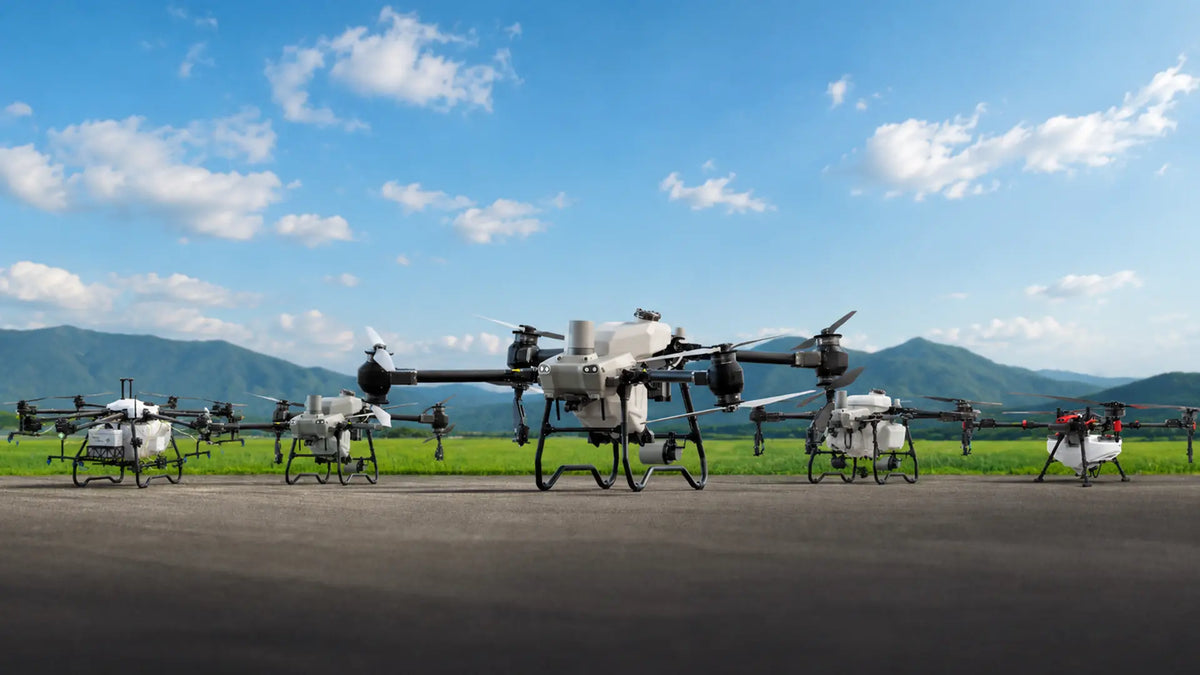
The DJI Agras T100 is a heavy agricultural drone platform built around one airframe that carries up to 220 lb (100 kg) at sea level and takes a different mission system for each job. Fit the spraying system for crop protection, the 150L spreading system for seed and fertilizer, or the dual-battery lifting system to move loads on a cable, then swap systems when the season changes.
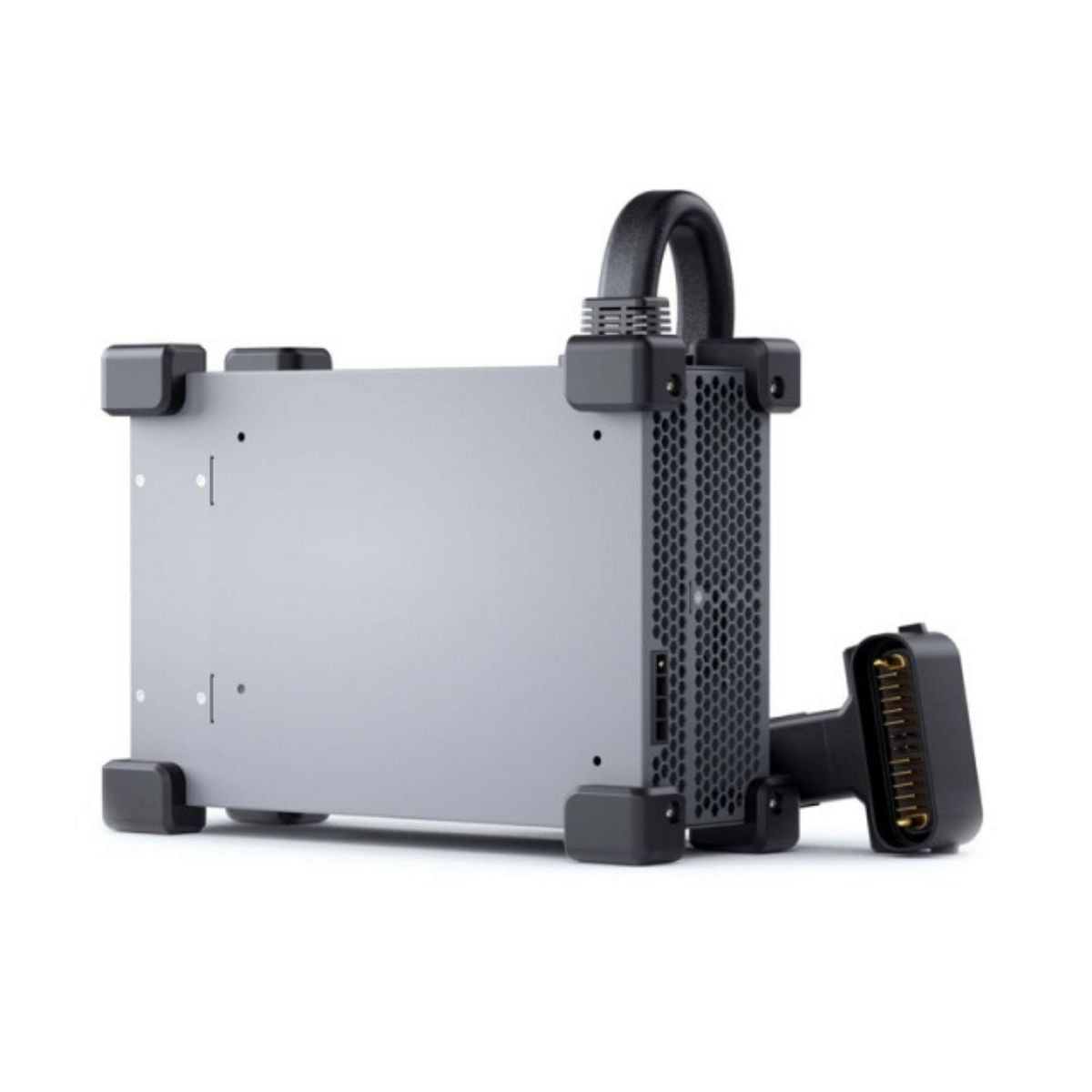
This collection brings together the T100 Intelligent Airframe and everything that runs with it: spraying, spreading and lifting systems, nozzle upgrades, DB2160 flight batteries, charging equipment and the DJI O4 Relay. It is aimed at growers, custom applicators and ag service crews who cover large acreage and want one aircraft to handle more than one kind of field work.
T100 Airframe and Mission Systems: How the Lineup Fits Together
- Intelligent Airframe: the aircraft with the DJI RC Plus 2 included; mission systems, batteries and chargers are sold separately.
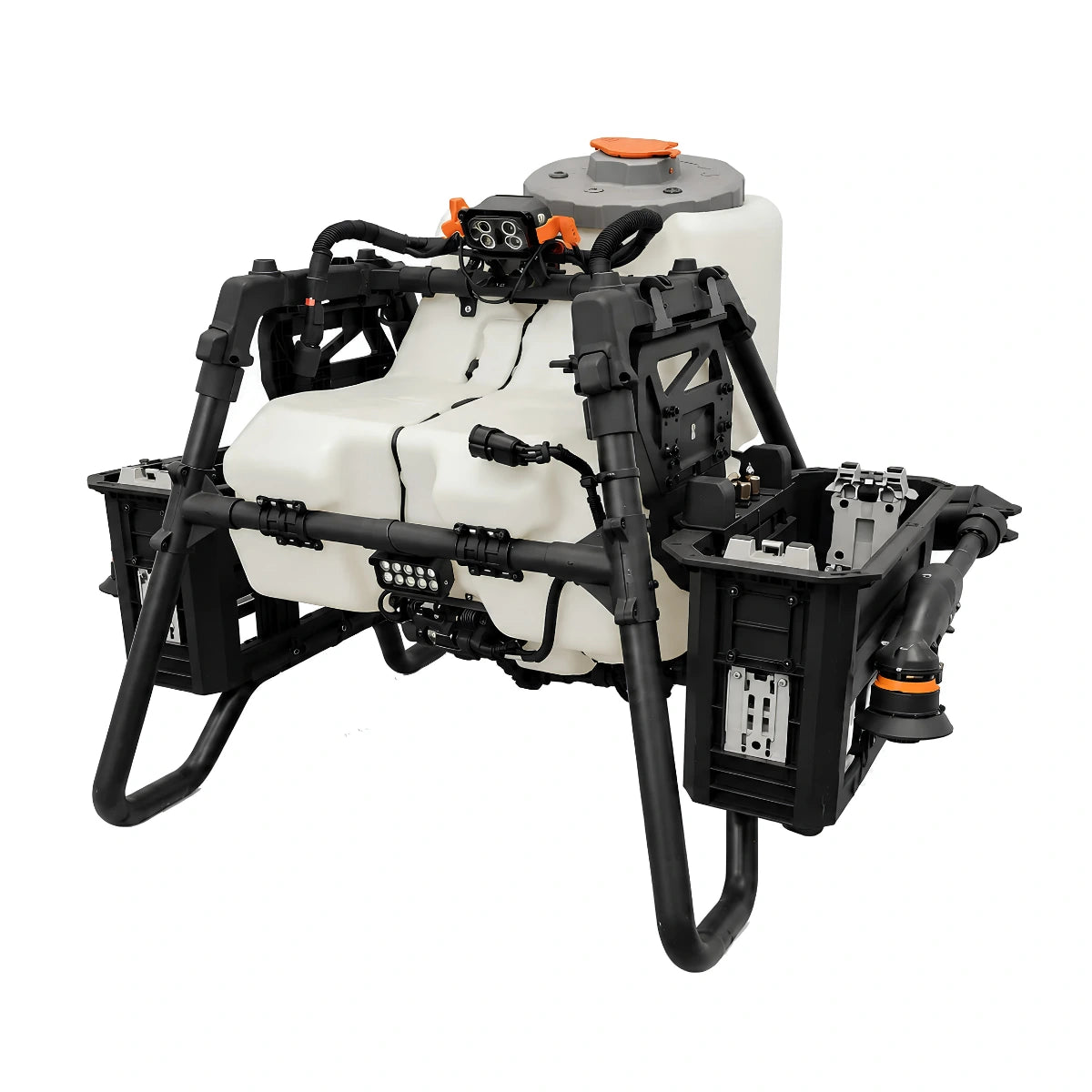
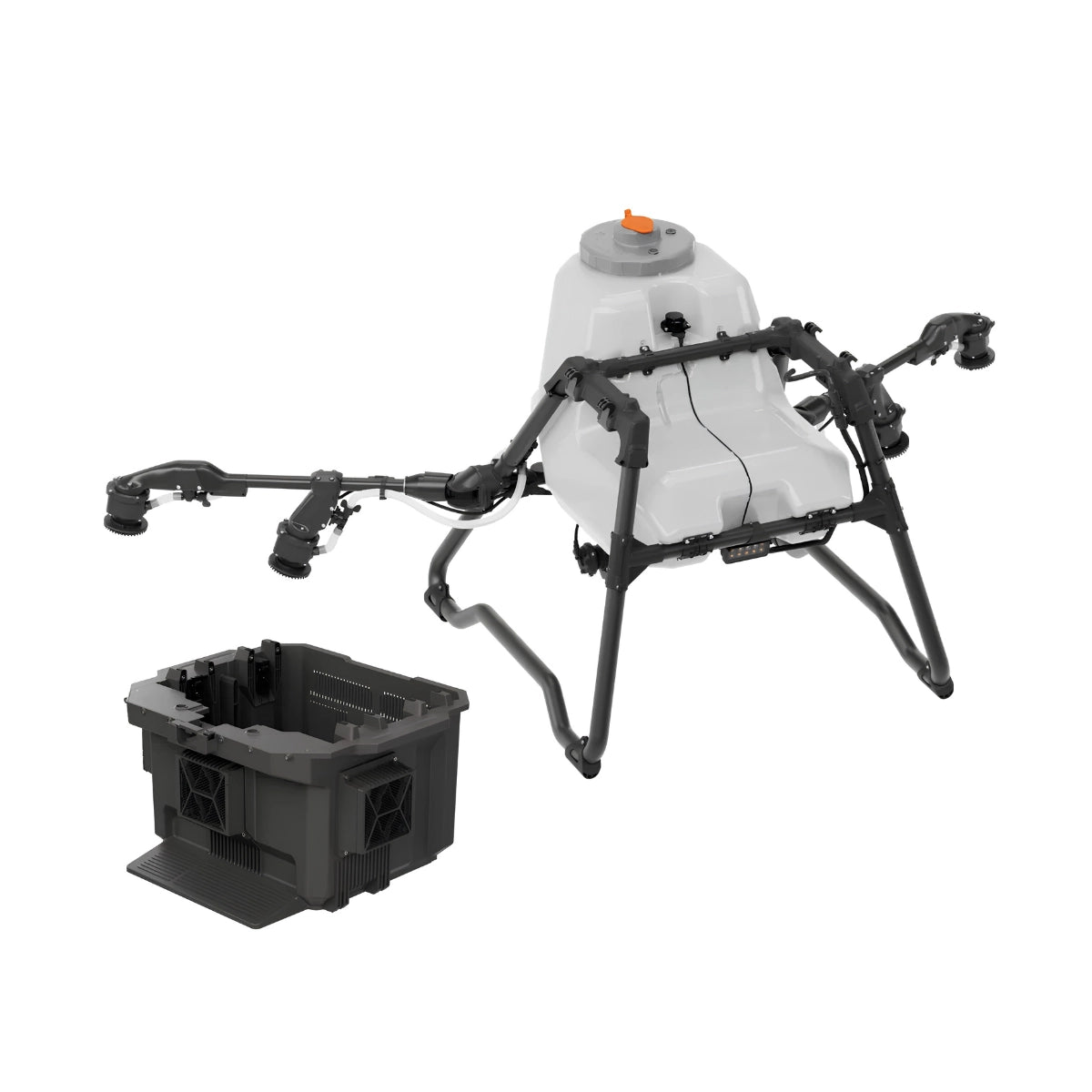
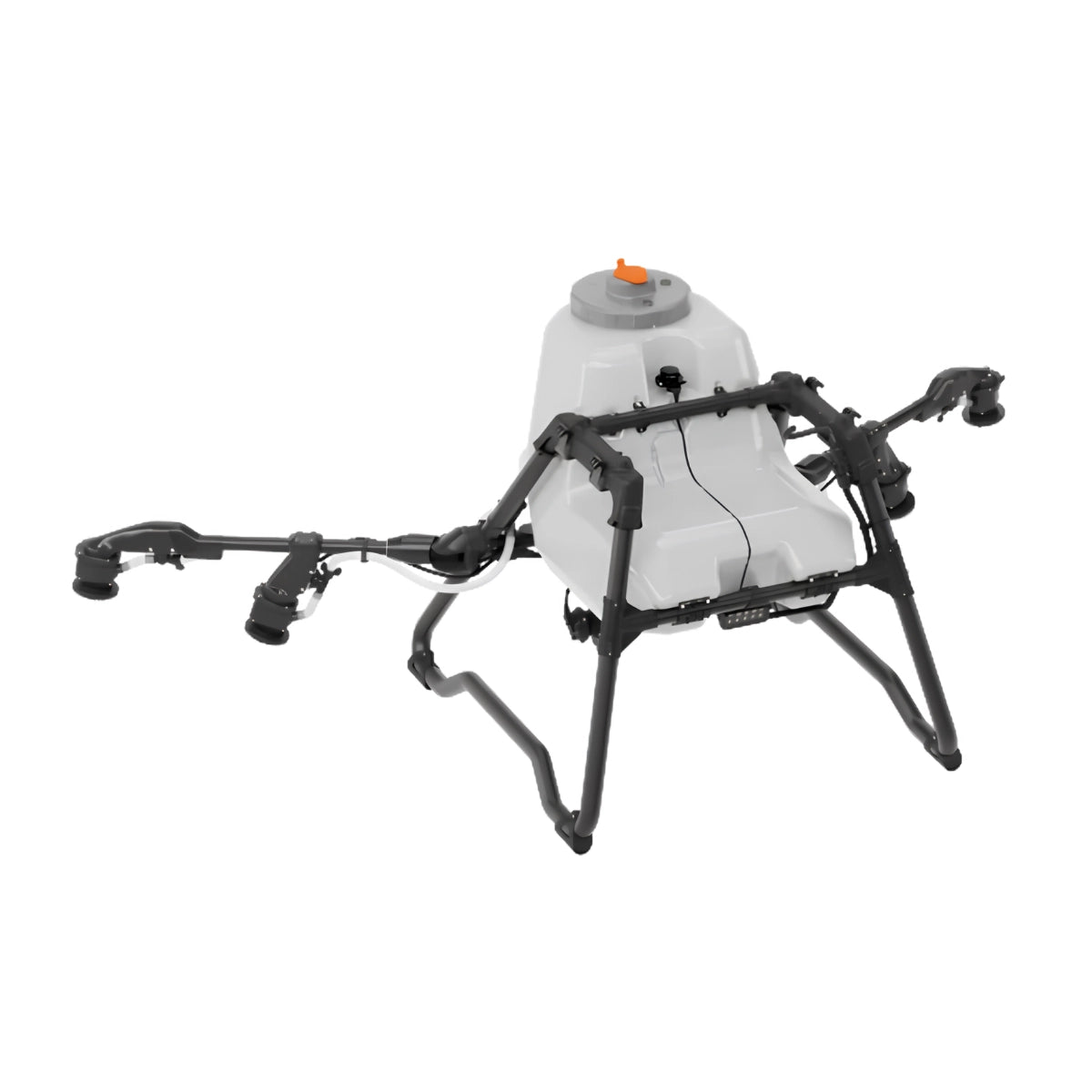
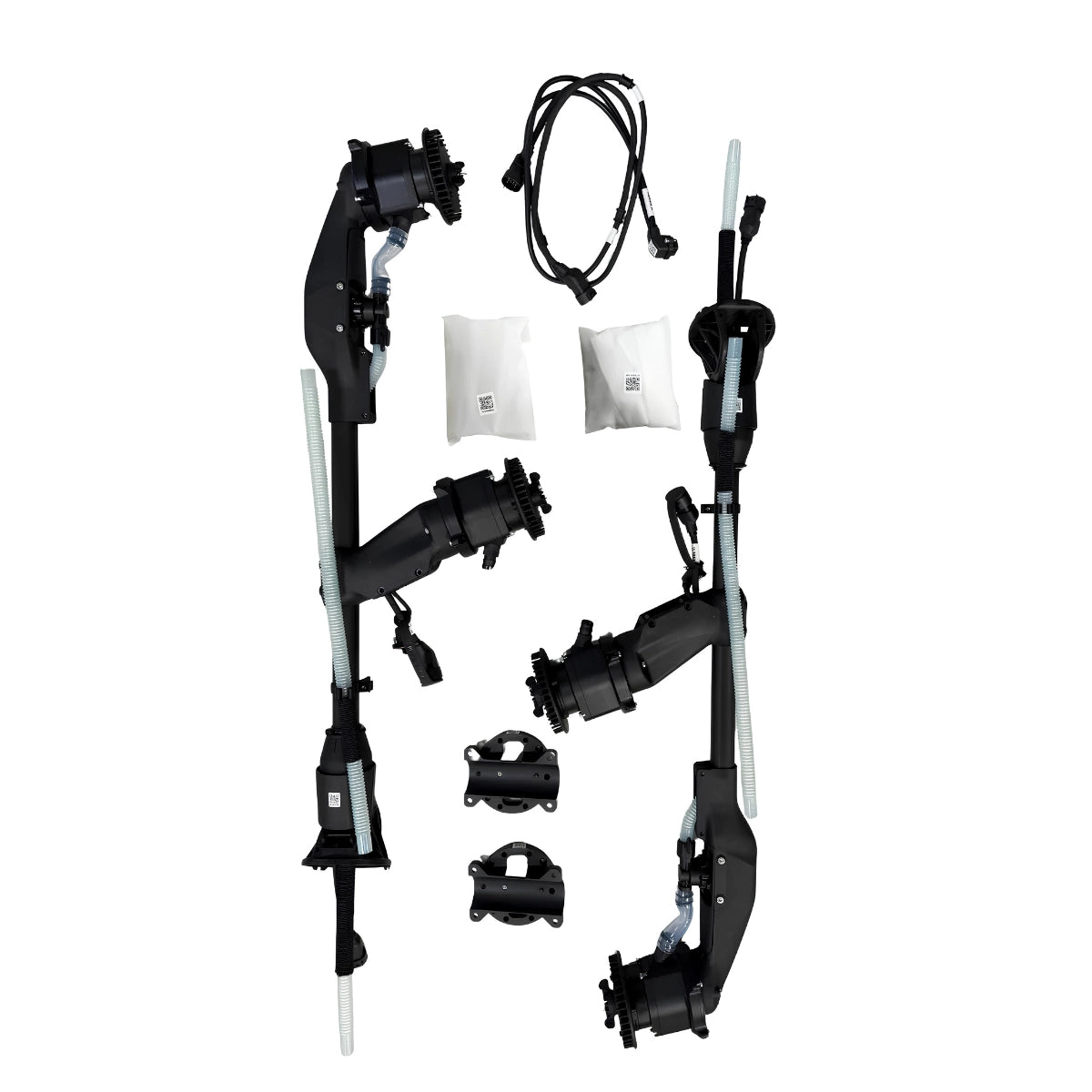
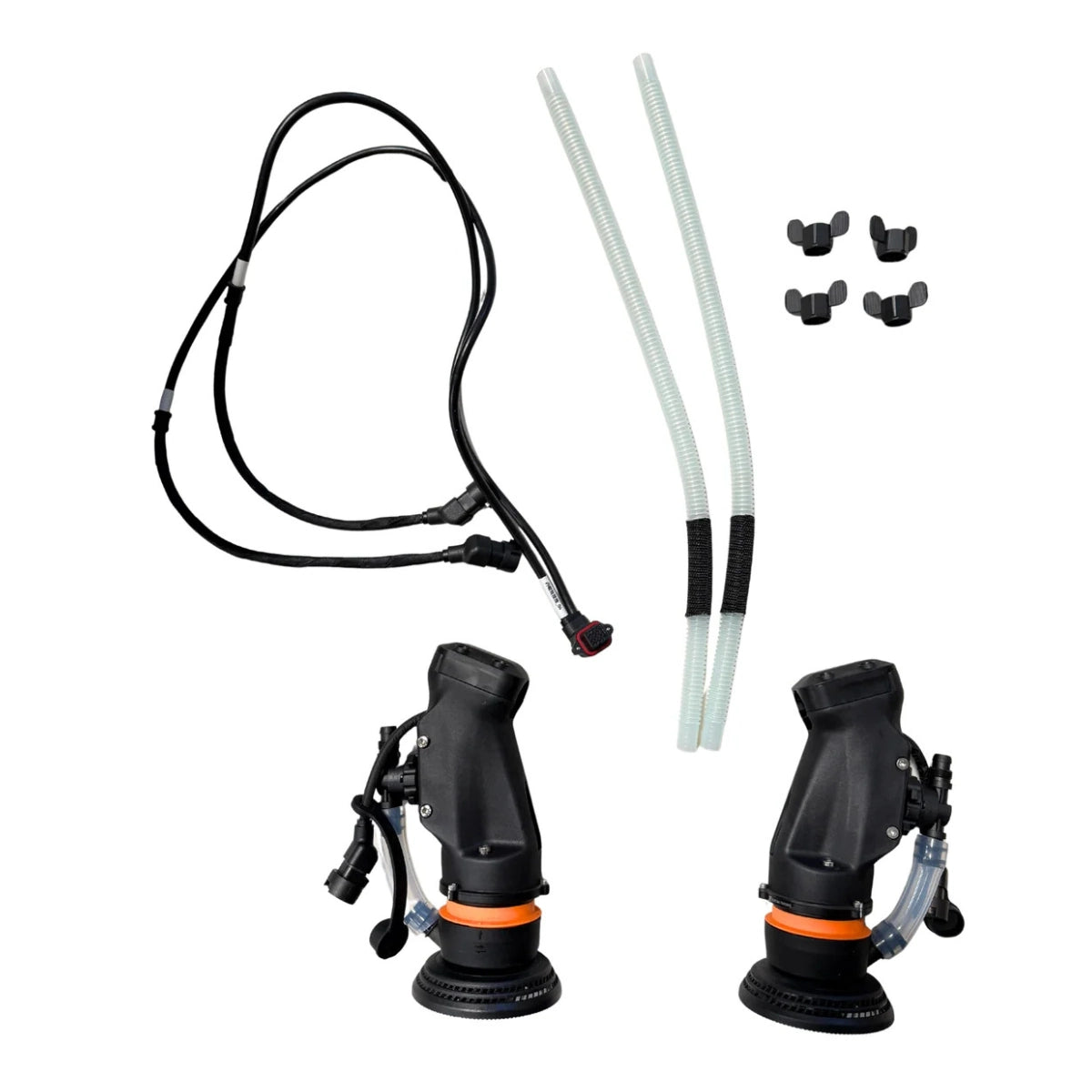
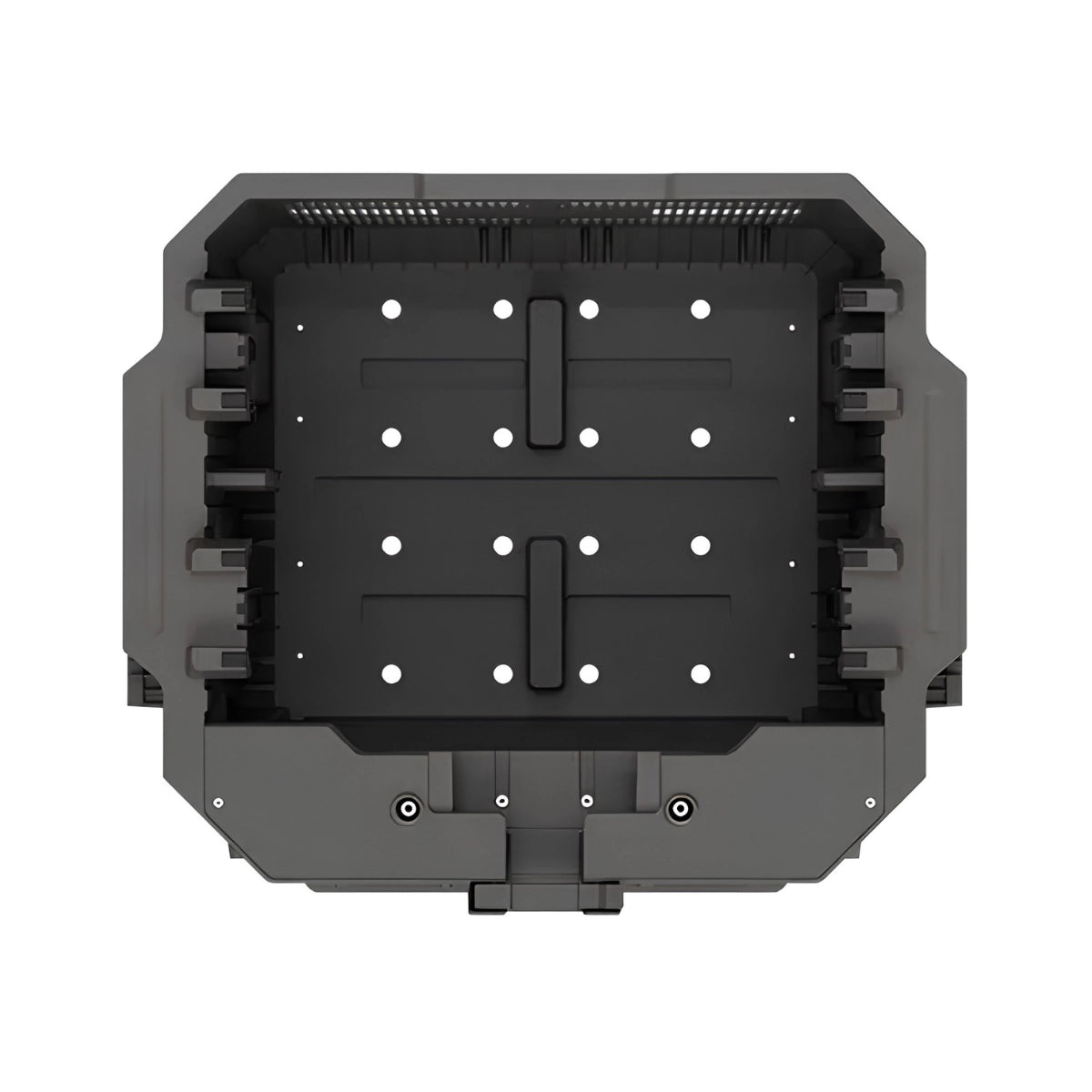
- Spraying System with Air-Cooled Heat Sink: a 26.4 gal (100 L) tank, two pumps and two standard nozzles, plus a battery heat sink.
- Mist Nozzle Package: adds two mist sprinklers to the spraying system for a four-sprinkler setup aimed at canopy work.
- Row Crop Quad Nozzle Kit: takes the spraying system from two centrifugal nozzles to four for higher flow on row crops.
- Dual-Battery Spraying System: carries two flight batteries with a 26.4 gal (100 L) tank and a 198.4 lb (90 kg) operating payload.
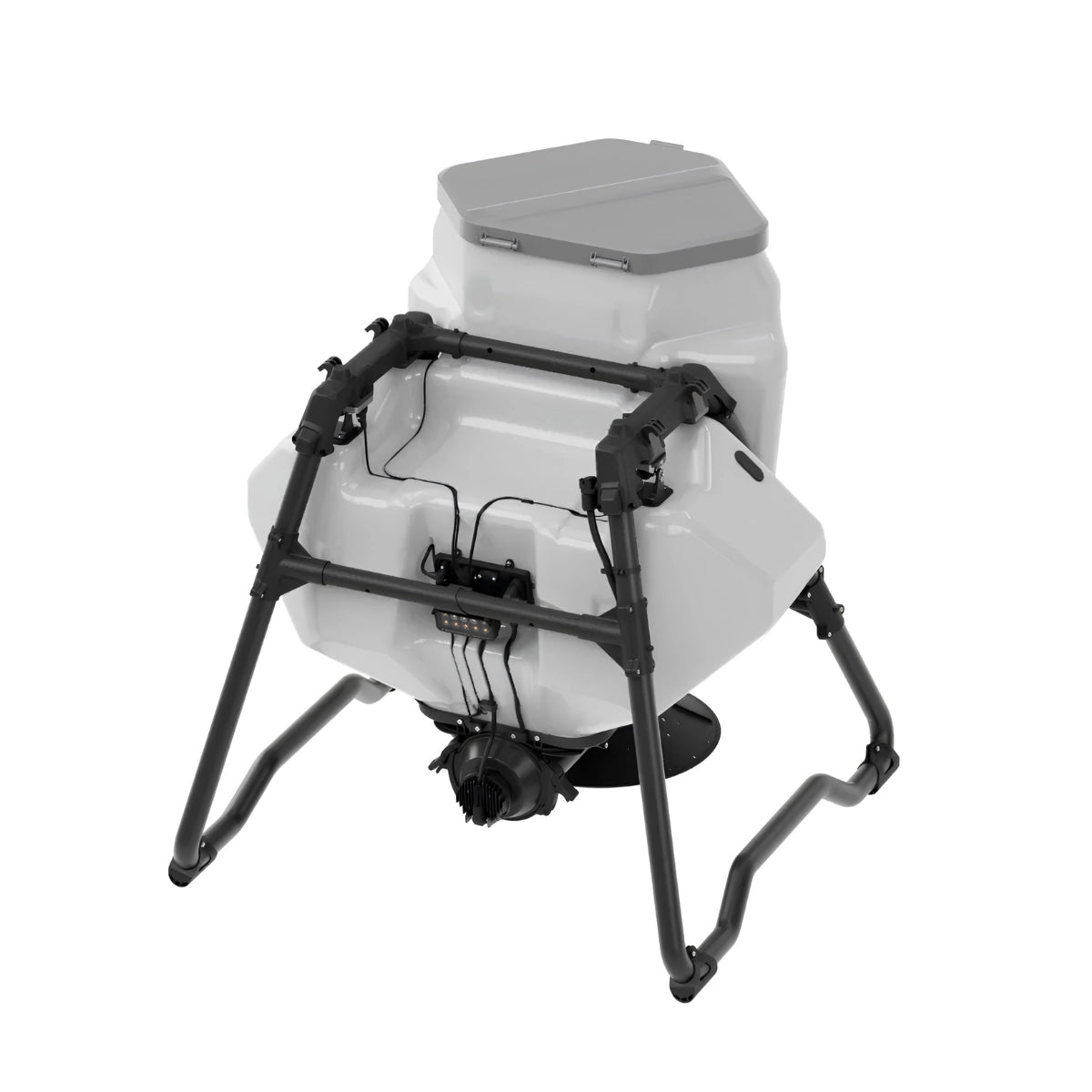
- DJI Agras T100 (150L) Spreading System: a 39.6 gal (150 L) tank for seed and fertilizer that holds up to 220 lb (100 kg) of material.
- Dual-Battery Lifting System: lifts up to 176.4 lb (80 kg) on a cable, including rope and hook, with two batteries aboard.
| Configuration | Mission SystemCapacity | OutputMax Flow Rate | WeightAircraft Weight | WeightMax Takeoff Weight |
|---|---|---|---|---|
| Spraying, 2 nozzles | 26.4 gal (100 L) tank | 7.9 gal/min (30 L/min) | 165.3 lb (75 kg) | 385.8 lb (175 kg) |
| Spraying, 4 nozzles | 26.4 gal (100 L) tank | 10.6 gal/min (40 L/min) | 169.8 lb (77 kg) | 390.2 lb (177 kg) |
| 150L spreading | 39.6 gal (150 L) tank, 220 lb (100 kg) max load | 882 lb/min (400 kg/min), compound fertilizer | 165.3 lb (75 kg) | 385.8 lb (175 kg) |
| Dual-battery lifting | 176.4 lb (80 kg), including rope and hook | Not applicable | 198.4 lb (90 kg) | 374.8 lb (170 kg) |
Scroll sideways to see all columns. Weights are measured at sea level.
T100 Performance Specs: Load, Speed and Charge Times
Every T100 configuration starts from the same core numbers. The airframe is rated for 220 lb (100 kg) at sea level, reaches operation speeds up to 44.7 mph (20 m/s), and holds hover accuracy within ±3.9 in (10 cm) with RTK enabled. It carries an IP67 rating under laboratory conditions, operates from 32 to 104°F (0 to 40°C), and can take off at altitudes up to 14,764 ft (4500 m). Eight pairs of 62 in carbon fiber propellers drive the aircraft, and DJI rates full-load power efficiency 39% higher than the T50. In DJI testing at sea level, the T100 hovers for 4.7 minutes at a 385.8 lb (175 kg) takeoff weight. The spraying system pumps up to 10.6 gal/min (40 L/min) with four nozzles, with droplet sizes from 50 to 500 μm and an effective spray width of 16.4 to 42.7 ft (5 to 13 m). On the power side, the DB2160 battery holds 41000 mAh at 52 V and recharges from 30% to 95% in 8 to 9 minutes on the C12000 or D14000iE at sea level.
T100 Onboard Sensing, Nozzle Upgrades and Ground Power Hardware
Onboard sensing and FPV camera (integrated)
- FPV camera: built into the airframe to give the pilot a live view from the aircraft.
- Penta-Vision System: integrated vision sensors mark takeoff and landing obstacles and switch views automatically.
- LiDAR and millimeter-wave radar: front, downward and rear radar work with LiDAR to sense obstacles up to 197 ft (60 m).
Field-attachable spraying upgrades
- Mist Nozzle Package: two mist sprinklers with brackets and hoses mount on the spraying system.
- Row Crop Quad Nozzle Kit: two added centrifugal nozzles bring the spraying system to four.
- Air-cooled heat sink: included with the spraying system, it cools hot batteries so charging can start.
Ground power and control hardware
- DJI RC Plus 2: 7-inch, 1400 cd/m² screen with up to 3.8 hours on the internal battery.
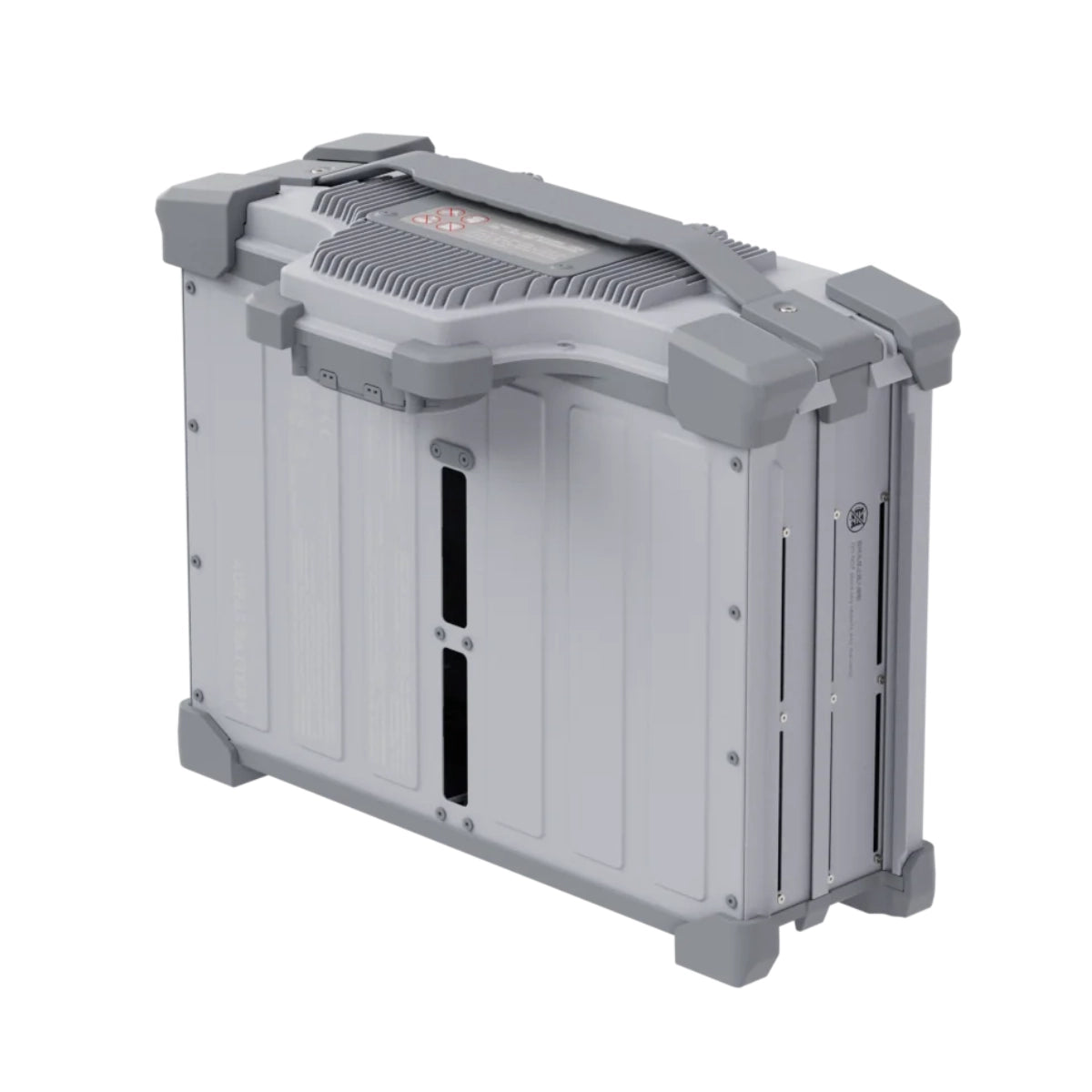
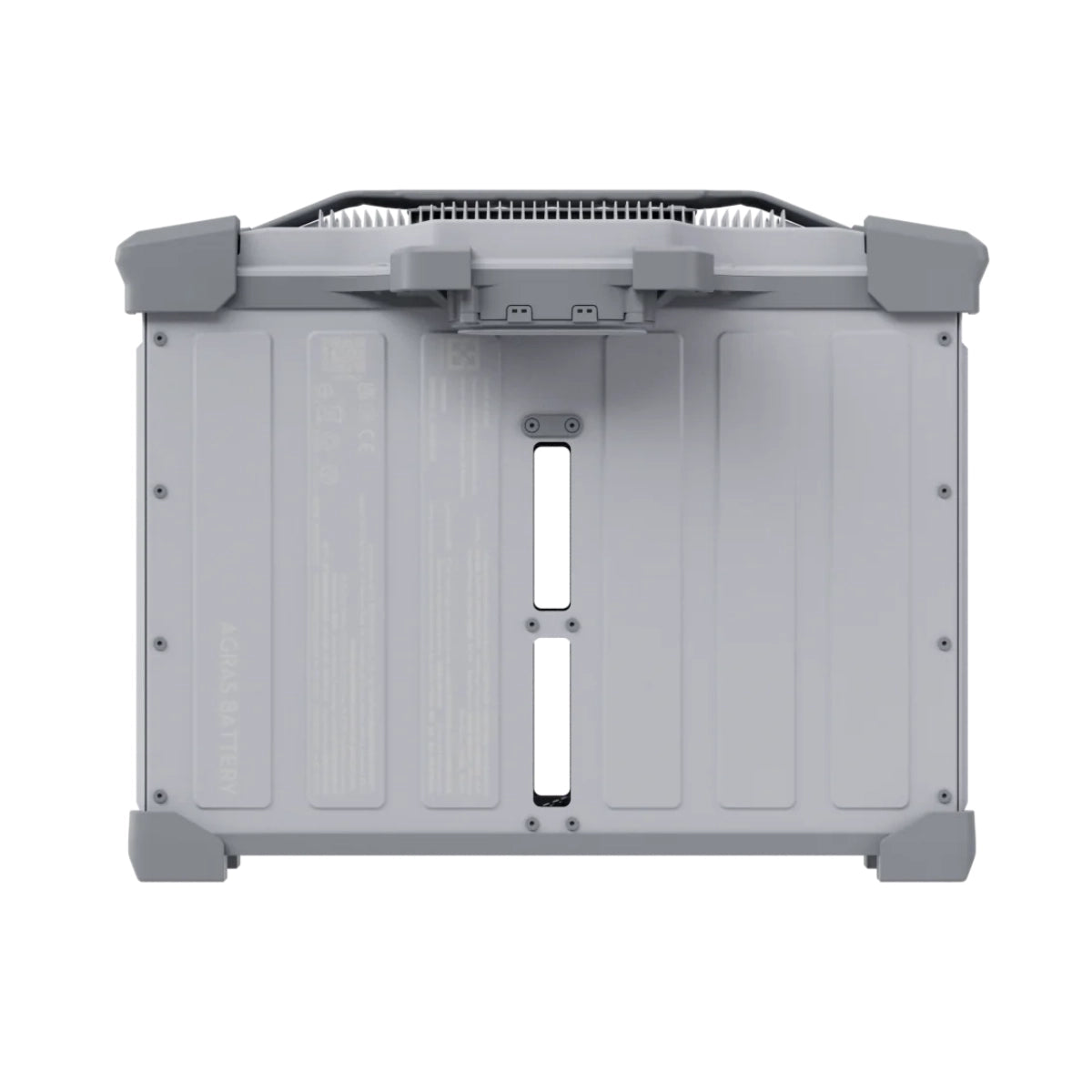
- DB2160 Intelligent Flight Battery: a 41000 mAh, 52 V pack that powers every T100 configuration.
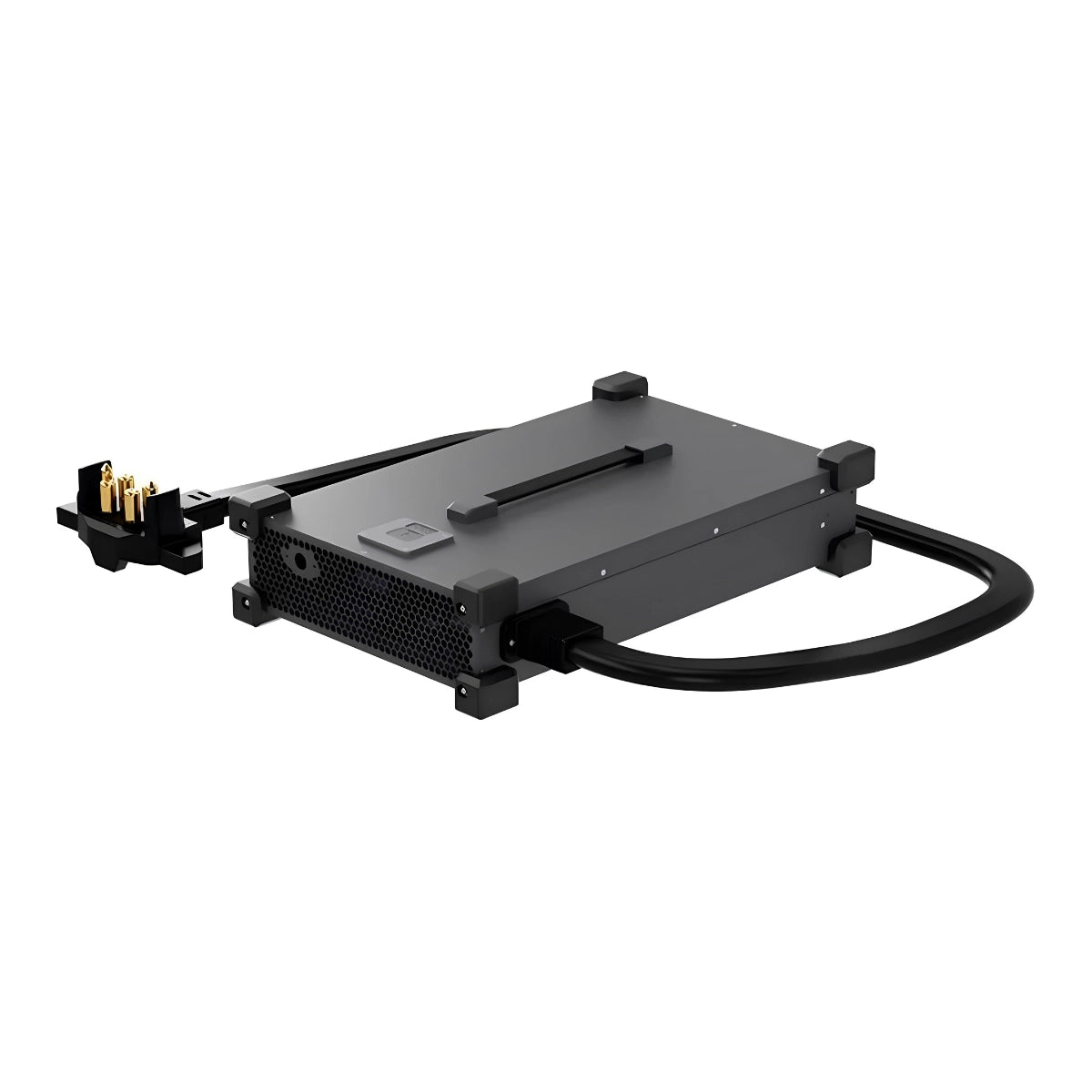
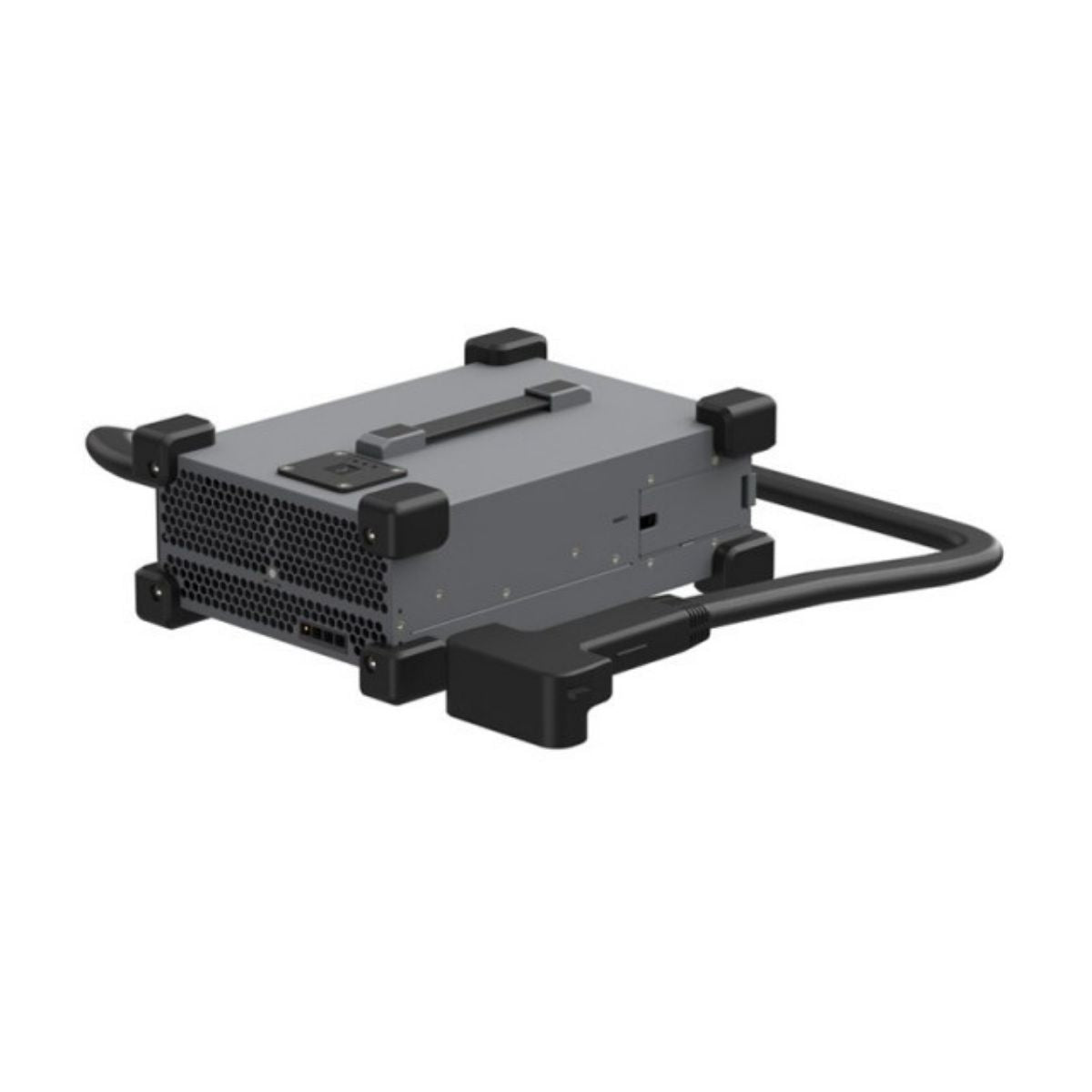
- C12000 Intelligent Power Supply: 12,000 W on three-phase 380 V input, or 3,000 W on single-phase 220 V input.
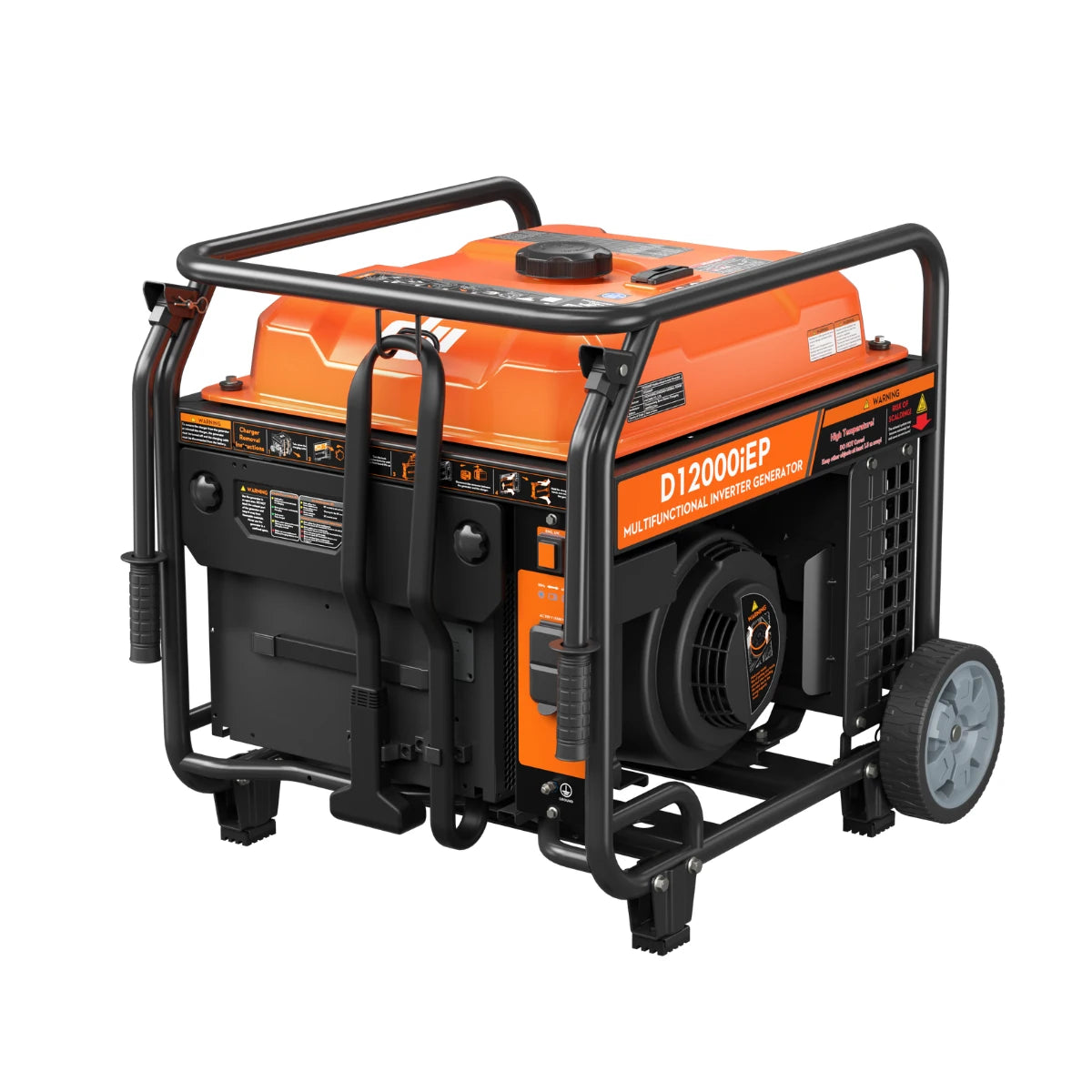
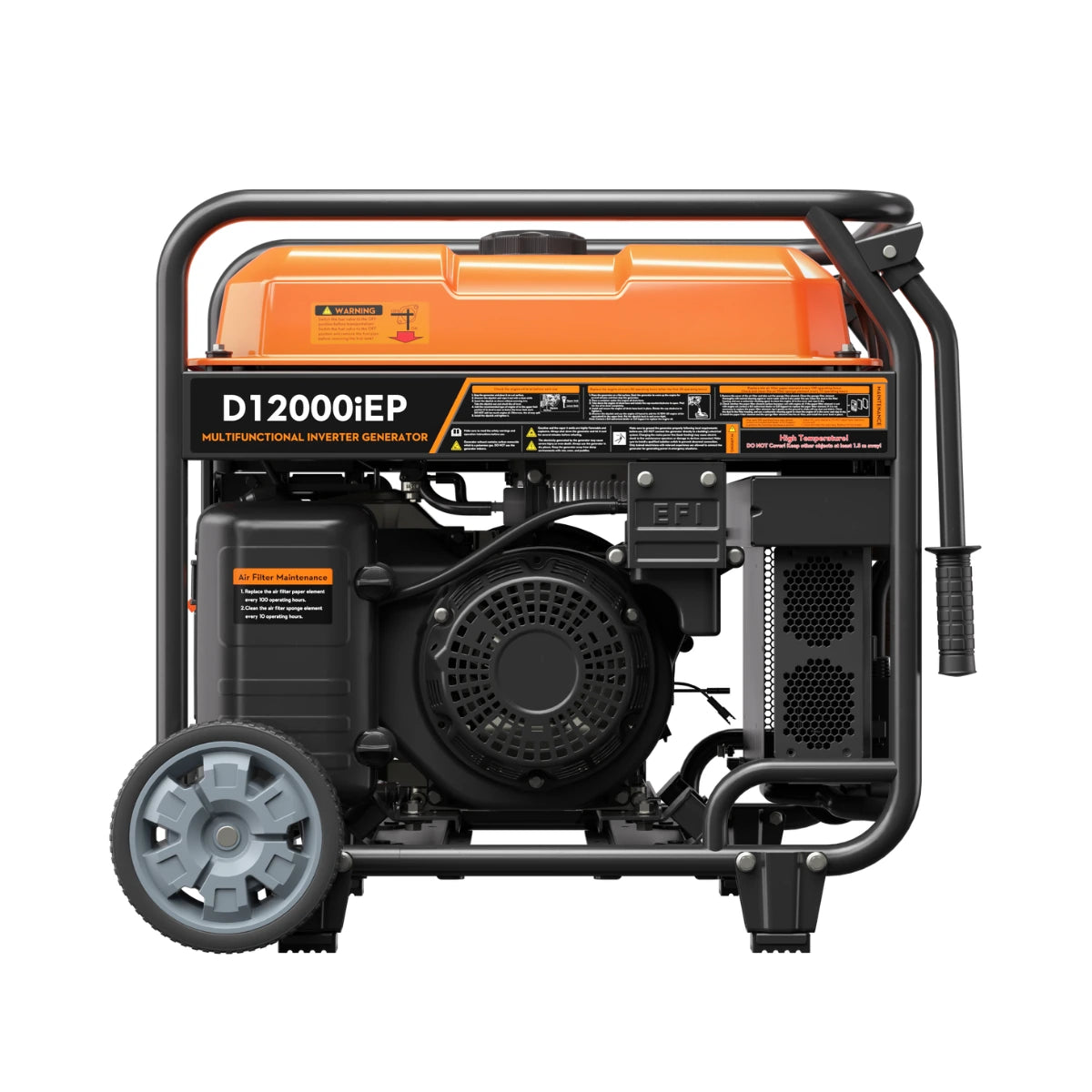
- D14000iE Multifunctional Inverter Generator: 11,500 W DC charging output, 1,500 W AC output and a 7.9 gal (30 L) fuel tank.
- C10000 Intelligent Power Supply: charges the DB2160 through the DB2100 adapter cable.
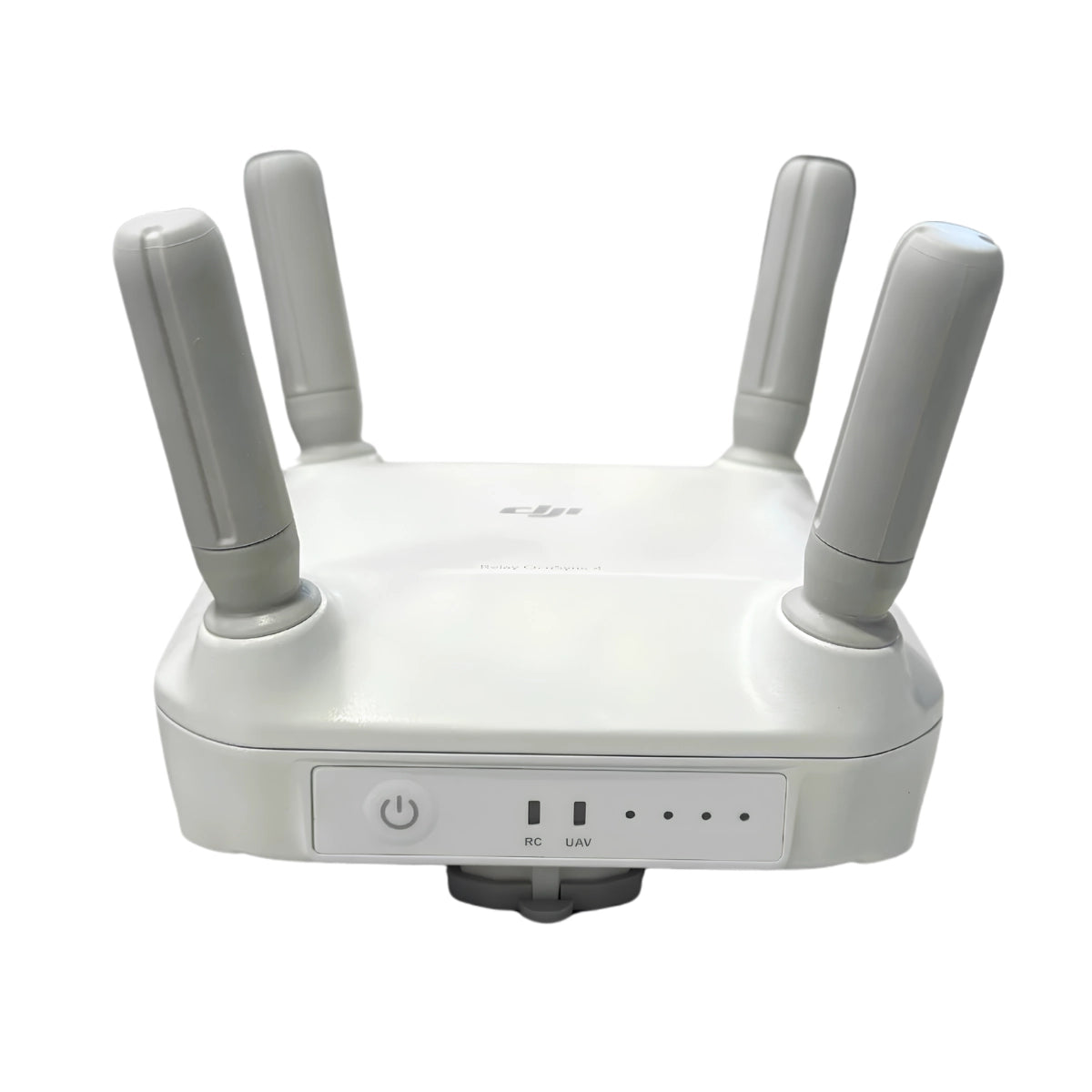
- DJI O4 Relay: extends the control link up to 5 mi (8 km) under FCC rules in open, unobstructed conditions.
What the T100 Brings to a Day in the Field
- Modular airframe: one aircraft takes spraying, spreading or lifting systems as the work changes.
- Detachable spray parts: nozzles come off when the aircraft runs spreading or lifting jobs.
- Obstacle memory: obstacles the aircraft detects can be saved so later routes avoid them.
- Wire detection: denser LiDAR point clouds improve detection of wires and poles.
- Layered sensing: LiDAR, radar and vision work together under Safety System 3.0.
- Single-side spraying: the nozzle nearest a field edge or obstacle sprays on its own.
- Higher pump output: magnetic-drive impeller pumps raise max flow 87.5% over the T50.
- Battery cooling: the included heat sink switches on automatically based on battery temperature.
- Fast turnaround: the DB2160 recharges from 30% to 95% in 8 to 9 minutes on the C12000 or D14000iE.
- IP67 rating: dust and water protection for the airframe, rated under laboratory conditions.
- Low-light control: backlit buttons on the RC Plus 2 support operation after dark.
Where T100 Crews Put It to Work
- Broadacre spraying: a 26.4 gal (100 L) tank and up to 10.6 gal/min (40 L/min) suit large blocks.
- Row crops: four-nozzle setups raise flow for jobs that call for higher application rates.
- Orchards: mist sprinklers reach dense canopies and the undersides of leaves.
- Fertilizer spreading: the 150L system covers effective widths of 9.8 to 32.8 ft (3 to 10 m).
- Grass seeding: the large spreading tank holds low-density seed with fewer refill stops.
- Aquaculture: the spreading system can discharge without the spinner disc over ponds and lotus fields.
- Field lifting: move saplings, harvested fruit or building materials on a cable.
- Wire-heavy fields: layered sensing helps around power lines, poles and tree lines.
Flight Planning in the DJI Agras App and DJI SmartFarm
T100 operations run through the DJI Agras app on the DJI RC Plus 2. Field work can be flown in A-B Route mode, Manual mode or Manual Plus mode, and the planning tools support continuous multiple plots, so several fields can be set up in one operation. Before each flight, the app recommends the actual load based on aircraft status, the environment and the task, so you fill the tank or spreader to what the conditions allow. Obstacles detected by Safety System 3.0 can be saved and taken into account when routes are flown again. For positioning, the aircraft supports RTK, including custom network RTK, for hover accuracy within ±3.9 in (10 cm). Where trees, terrain or buildings get between the pilot and the aircraft, the DJI O4 Relay carries the control link around the obstruction. Off the controller, DJI SmartFarm provides end-to-end service support for spraying and spreading operations, from viewing operation data to managing your Agras devices.
Building Out a T100: What to Buy First and What to Add Later
- Pick a mission system first: the airframe ships without one, so start with spraying or spreading.
- Plan your battery count: DB2160 batteries are sold separately and set how many sorties you can rotate.
- Match the charger to your power: the C12000 delivers 12,000 W on three-phase input and 3,000 W on single-phase.
- Charge away from the grid: the D14000iE charges DB2160 batteries directly from its own fuel supply.
- Reuse a C10000: the DB2100 adapter cable lets an existing C10000 charge the DB2160.
- Add nozzles later: the mist package or row crop kit takes the spraying system to four nozzles.
- Add the relay for blocked sightlines: the DJI O4 Relay keeps the link up around trees and terrain.
Most farms do not need three aircraft for three jobs. The T100 lets one airframe, one controller and one battery and charging setup cover spraying, spreading and lifting through the year, which keeps more of the equipment budget out working in the field. When the work shifts from spraying to spreading, the aircraft stays the same and only the system underneath changes.
Getting the T100 into service is mostly a matter of sizing: how many batteries, which charger and which mission system come first. DSLRPros brings decades of UAS experience to agricultural operators and can match the airframe, systems and power gear to your acreage before you order. Shop the DJI Agras T100 collection at DSLRPros.
Frequently Asked Questions
Does the DJI Agras T100 come with a spraying system?
No. The T100 Intelligent Airframe ships with the DJI RC Plus 2 remote controller, and all mission systems are sold separately. For spraying, add the Spraying System with Air-Cooled Heat Sink or the Dual-Battery Spraying System. DB2160 flight batteries and a charger are also sold separately.
Can one T100 handle spraying, spreading and lifting?
Yes. The spraying systems, the DJI Agras T100 (150L) Spreading System and the Dual-Battery Lifting System all mount on the same T100 airframe. When the aircraft is used only for spreading or lifting, spraying parts such as the nozzles can be removed. You fit one mission system at a time and swap it to suit the job.
What do I need to charge T100 batteries in the field?
The T100 runs on the DB2160 Intelligent Flight Battery. The C12000 Intelligent Power Supply and the D14000iE Multifunctional Inverter Generator each recharge a DB2160 from 30% to 95% in 8 to 9 minutes at sea level. The D14000iE generates its own power, while the C12000 needs a power source, and DJI calls for a three-phase generator rated at 15,000 W or more when it runs off a generator. An existing C10000 Intelligent Power Supply can also charge the DB2160 through the DB2100 adapter cable.
What is the difference between the Mist Nozzle Package and the Row Crop Quad Nozzle Kit?
Both bring the spraying system up to four nozzles, which raises max flow to 10.6 gal/min (40 L/min). The Mist Nozzle Package adds two mist sprinklers, which suit orchards and dense canopies. The Row Crop Quad Nozzle Kit adds two centrifugal nozzles for higher flow on row crops. Either one mounts on the Spraying System with Air-Cooled Heat Sink, which is sold separately.
How much can the DJI Agras T100 carry?
The T100 carries up to 220 lb (100 kg) at sea level. With the spraying system that means a 26.4 gal (100 L) tank, and the 150L spreading system holds up to 220 lb (100 kg) of material. The Dual-Battery Lifting System carries up to 176.4 lb (80 kg), including rope and hook. The DJI Agras app recommends the actual load based on aircraft status, environment and task.
When do I need the DJI O4 Relay?
The DJI O4 Relay helps when trees, terrain or buildings block the signal between the remote controller and the aircraft. It works with the Agras T100, T70P and T25P. Range is up to 5 mi (8 km) under FCC rules in an open, interference-free environment, and the relay runs for about 5 hours on its internal battery. It is sold separately.